
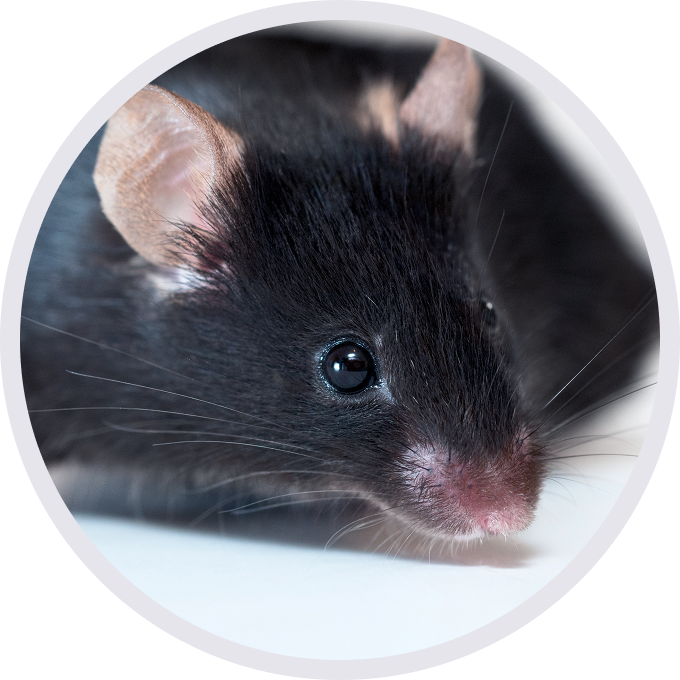
C57BL/6JNifdc-Scn10atm1(SCN10A)Bcgen /Bcgen • 113423

SCN10A: A pivotal therapeutic target for analgesic drug development

SCN10A

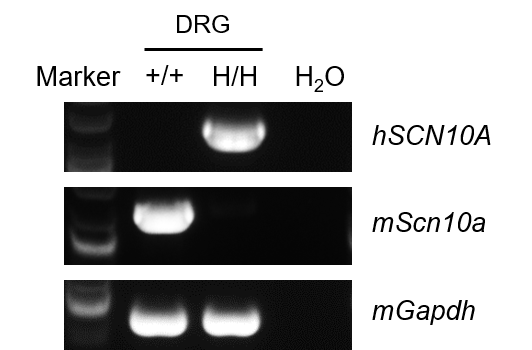
Strain-specific SCN10A expression analysis in wild-type C57BL/6JNifdc mice and homozygous B-hSCN10A mice. Dorsal root ganglia (DRG) RNA was isolated from wild-type C57BL/6JNifdc mice (+/+) and homozygous B-hSCN10A mice (H/H), then cDNA libraries were synthesized by reverse transcription, followed by PCR with mouse or human SCN10A primers. Human SCN10A mRNA was detectable only in homozygous B-hSCN10A mice but not in wild-type mice.
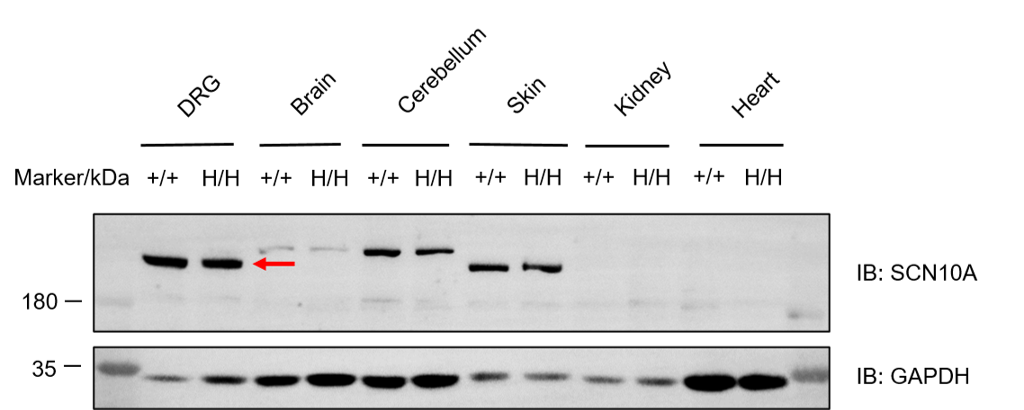
Protein expression analysis of SCN10A in homozygous B-hSCN10A mice. Various tissue lysates were collected from wild-type C57BL/6JNifdc mice (+/+) and homozygous B-hSCN10A mice (H/H), and then analyzed by western blot with anti-SCN10A antibody. 40 μg total protein was loaded for western blotting analysis. SCN10A protein was detectable in DRG, cerebellum and skin from homozygous B-hSCN10A mice and wild-type C57BL/6 mice, as the antibody was cross-reactive between human and mouse.

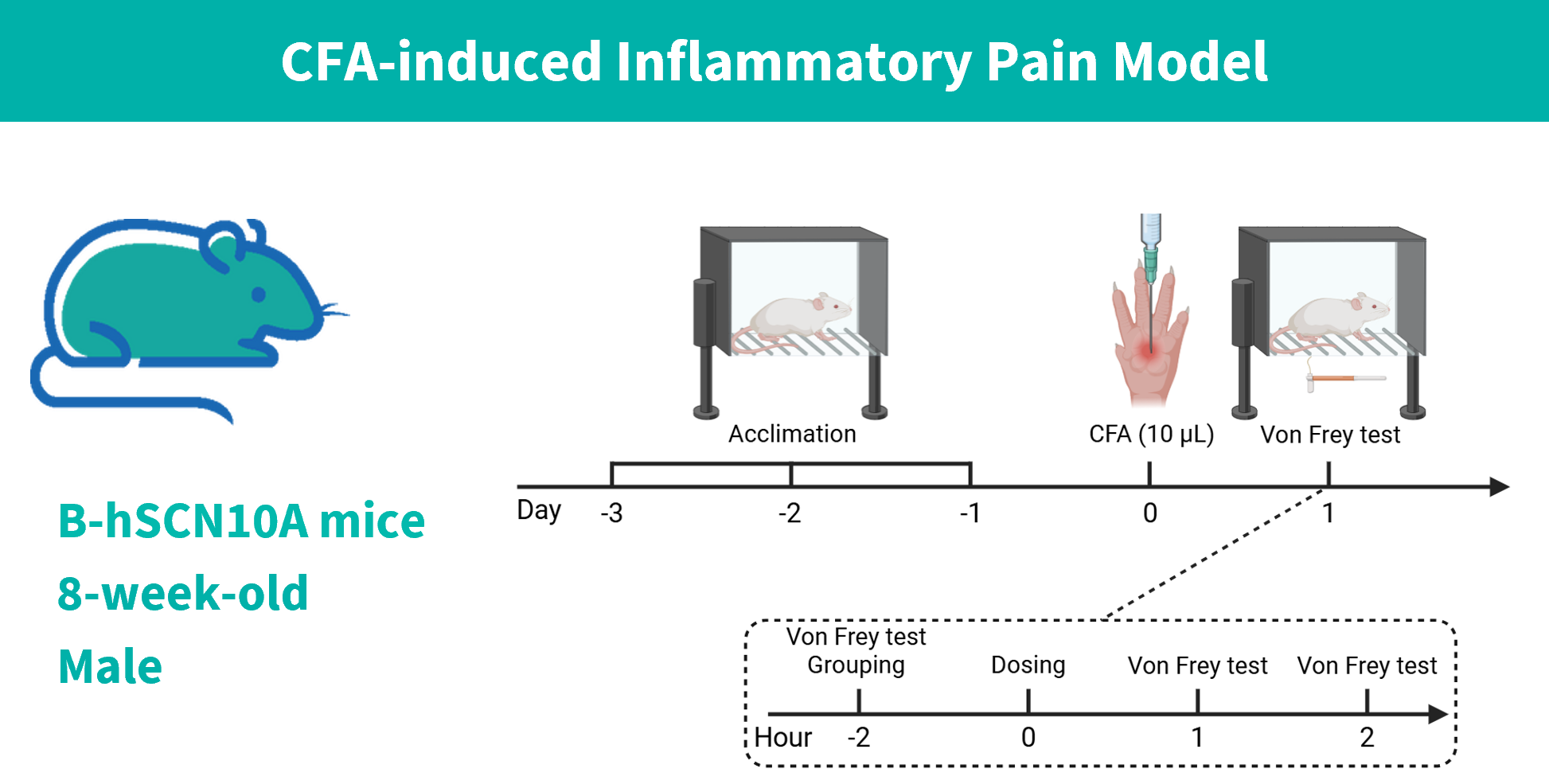
Experimental schedule for the CFA-induced Inflammatory Pain Model and in vivo efficacy of Suzetrigine analog in wild-type mice and B-hSCN10A mice. The mice underwent a 3-day acclimation period in test cages. Mice received subcutaneous CFA injection in the hind paws on Day 0 to establish an inflammatory pain model induced by CFA. Pain thresholds were measured with the Von Frey test 2 h before compound administration. Suzetrigine Analog was orally administered, and follow-up Von Frey threshold measurements were performed at 1 h and 2 h after dosing.

CFA-induced inflammatory pain and analgesic effects of Suzetrigine analog in wild-type mice and B-hSCN10A mice. In wild-type mice and B-hSCN10A mice, intraplantar CFA injection markedly reduced mechanical pain thresholds. In wild-type mice, VX-548 at 1 mpk didn’t alleviate CFA-induced inflammatory pain. In B-hSCN10A mice, VX-548 at 1 mpk significantly alleviated inflammatory pain with an analgesic effect lasting up to 2 h. B-hSCN10A mice provide a powerful preclinical model for in vivo evaluation of the efficacy of targeted human SCN10A analgesic drugs. **P < 0.01, ***P < 0.001.