当社は、
RenNanoを使用して腫瘍関連抗原、GPCR、免疫チェックポイント、サイトカイン/ケモカイン、神経疾患に関連する因子など、潜在的治療ターゲットに対する Hu-VHH 抗体ライブラリを作成しています。
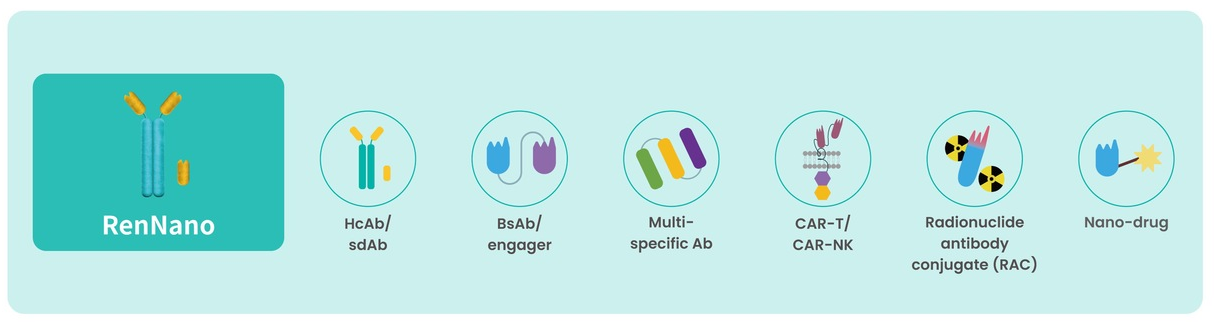
自社の大規模なHu-VHH開発能力と、細胞治療、二重特異性および多重特異性抗体、ADC、RACなど、Hu-VHH関連治療におけるパートナーの専門知識を融合し、ファーストインクラス/ベストインクラスの潜在力を持つ新薬を開発するために、世界中の製薬企業やバイオテクノロジー企業との提携を積極的に模索しています。共同開発またはライセンスに関するお問い合わせは、今すぐご連絡ください!
Frequently Asked Questions (FAQs) About Hu-VHH Platform
1. What is a VHH antibody?
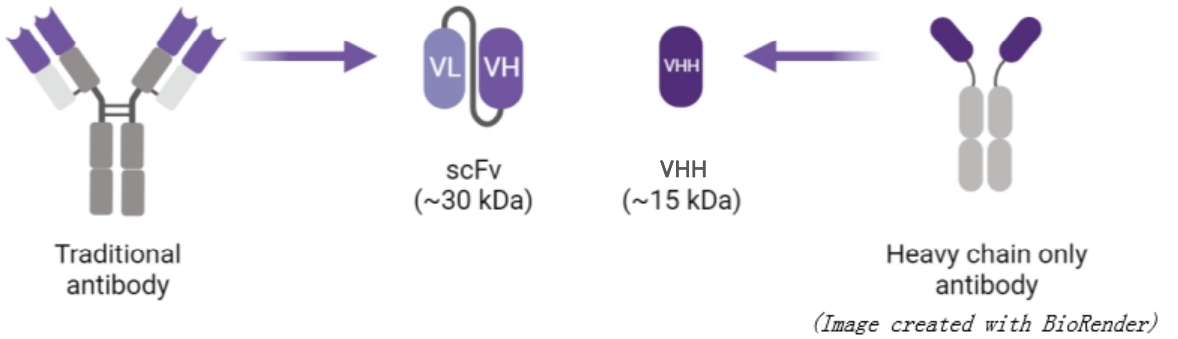
A VHH antibody is a single-domain antibody derived from the variable region of HCAbs. It independently recognizes and binds an antigen without a light chain. With a molecular weight of approximately 12-15 kDa, VHHs represent compact antigen-binding units that can serve as building blocks for diverse therapeutic antibody formats.
2. What are the key advantages of VHH antibodies?
VHH antibodies are compact single-domain binders with advantages in flexible molecular engineering and tissue penetration, especially in solid tumors and blood-brain barrier (BBB).
RenNano®-derived fully human VHHs also offer diverse CDR3 sequences, good specificity and affinity, and robust biological activity in both
in vitro and
in vivo studies.
3. How does Biocytogen discover and select fully human VHH antibody candidates?
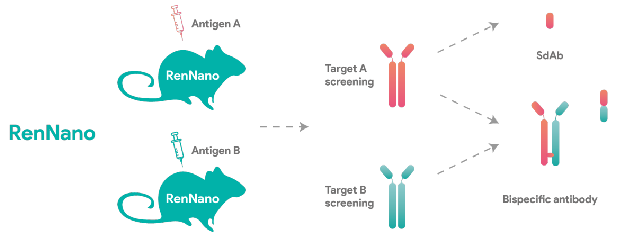
Following immunization of RenNano® mice, Biocytogen identifies VHH candidates efficiently through high-throughput Beacon B-cell sorting or
AI-powered RenSuper™ antibody discovery platform. AI-prioritized candidates subsequently undergo experimental validation for properties including binding, affinity, developability, and cross-reactivity.
4. What therapeutic targets does Biocytogen’s fully human VHH platform cover?
Biocytogen’s fully human VHH (Hu-VHH) platform covers therapeutic targets including
tumor-associated antigens,
GPCRs, immune checkpoints, cytokines and chemokines, and targets related to
neurological diseases. The platform also supports VHH discovery for
blood-brain barrier (BBB) penetration and
in vivo CAR-T delivery, expanding the potential applications of fully human VHH antibodies.
5. Why are Hu-VHHs well suited as building blocks for bispecific and multispecific therapeutics?
VHHs/HCAbs bind antigens without light chains, reducing risk of heavy-light chain mispairing. Their compact, modular structure makes them flexible building blocks for
bispecific and multispecific antibody engineering. For example, in multispecific
ADC design, a heavy-chain-only binder can serve as one targeting arm and be paired with a Fab, another HCAb, or other antibody formats to introduce additional binding specificities while simplifying molecular assembly.
6. When should drug developers choose a HCAb versus a single VHH format?
The choice depends on the intended therapeutic application. HCAb formats retain an Fc region for FcRn-mediated recycling and extended pharmacokinetics. They suit applications requiring sustained exposure, including immune cell engagers, bispecific or multispecific antibodies. Single VHH formats offer compact size and flexible integration into multispecific antibodies, conjugates, and CAR-T constructs. Their small size can improve tissue access and recognition of challenging epitopes.