

このページで
炎症性腸疾患(IBD)は、潰瘍性大腸炎(UC)とクローン病(CD)を含む、消化管の慢性かつ再発性の炎症性疾患です。IBD の臨床症状には、しばしば再発性の下痢、腹痛、腸管出血(血便)、発熱、体重減少が含まれます。正確な発症メカニズムはまだ完全には解明されていませんが、遺伝的感受性、免疫調節異常、環境要因、腸内細菌叢の不均衡といった要素が、疾患発症の主要な要因となっています。
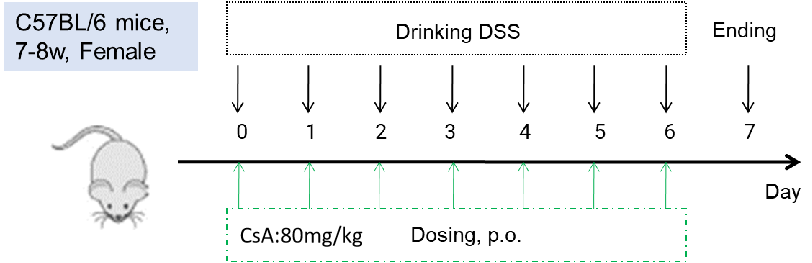
疾患メカニズムをより深く理解し、新規治療法を評価するために、研究者はヒト疾患の病態を再現するために前臨床 IBD モデルや IBD マウスモデルを広く活用しています。その中でも、DSS 誘発型大腸炎モデルは確立された in vivo IBD モデルの一つです。硫酸デキストランナトリウム(DSS)を飲料水に添加して投与すると、腸管上皮バリアが損傷を受け、自然免疫細胞が活性化し、サイトカインの放出が促進され、粘膜の完全性が崩れます。これにより、体重減少、下痢、血便、炎症細胞浸潤などの大腸炎症状が引き起こされ、これらの症状はヒトの潰瘍性大腸炎を酷似しています。
バイオサイトジェン(Biocytogen)が C57BL/6 マウスを用いて開発した DSS 誘発型 IBD モデルは、薬物効果評価と抗炎症治療薬の試験のための、安定的、再現性があり、且つ検証済みの前臨床プラットフォームです。さらに、バイオサイトジェンの標的ヒト化 IBD モデル(例:B-hTL1A マウス)は完全なヒト TL1A タンパク質を発現しており、標的検証、IBD のメカニズム研究、以及ヒト疾患に関連する前臨床薬物開発のために、より精密なトランスレーショナルモデルを提供しています。
| Mice strains |
| B-hCXCR2 |
| B-hTL1A |
| B-hTL1A/hIL23A/hIL12B |
| Readout | ||
| Included tests | Clinical scores | Body weight |
| DAI score | ||
| Colon | Colon length | |
| Colon weight | ||
| Histopathology | H&E | |
| Optional tests | Tissue homogenate | Cytokines test |
| Tissue histopathology | IHC | |
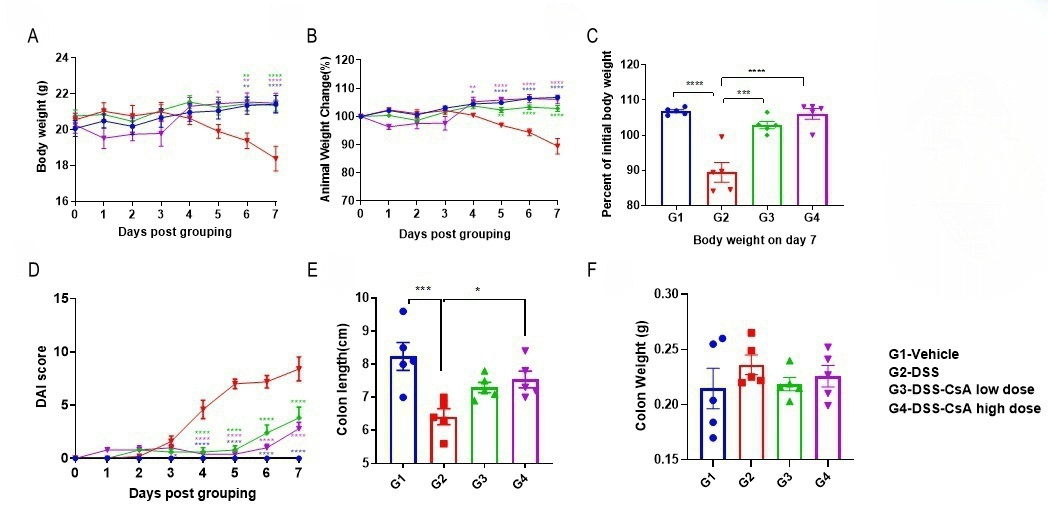
IBDマウスモデルにおけるCsA(シクロスポリンA)の有効性検証 C57BL/6マウスにDSSを含む飲水を与え、7日間連続で体重変化を記録し、試験終了時に臨床スコア(A-D)を算出しました。試験終了時には、大腸の重量と長さを記録しました。二次元配置分散(A-D)または一次元配置分散分析(E-F)を実施し、多重比較を行いました。値は平均値±標準誤差(SEM)で表されます。****p<0.0001、***p<0.001、**p<0.01、*p<0.05。
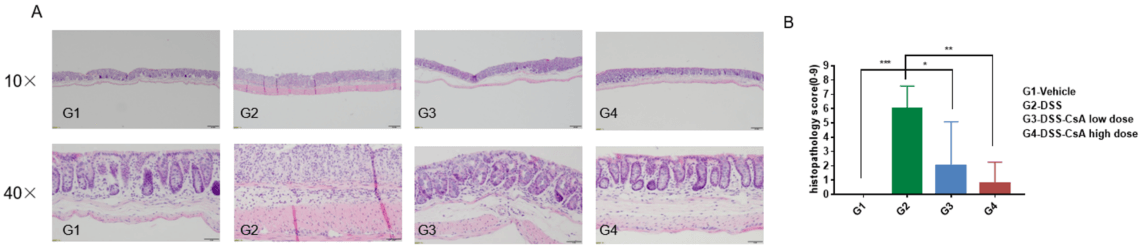
IBDマウスモデルにおけるDSS誘発大腸炎の組織学的評価 組織病理スコアとH&E染色の光学顕微鏡写真(10倍および40倍の倍率)の値は、平均値 ± 標準誤差で表されます。****p<0.0001, ***p<0.001, **p<0.01, *p<0.05。
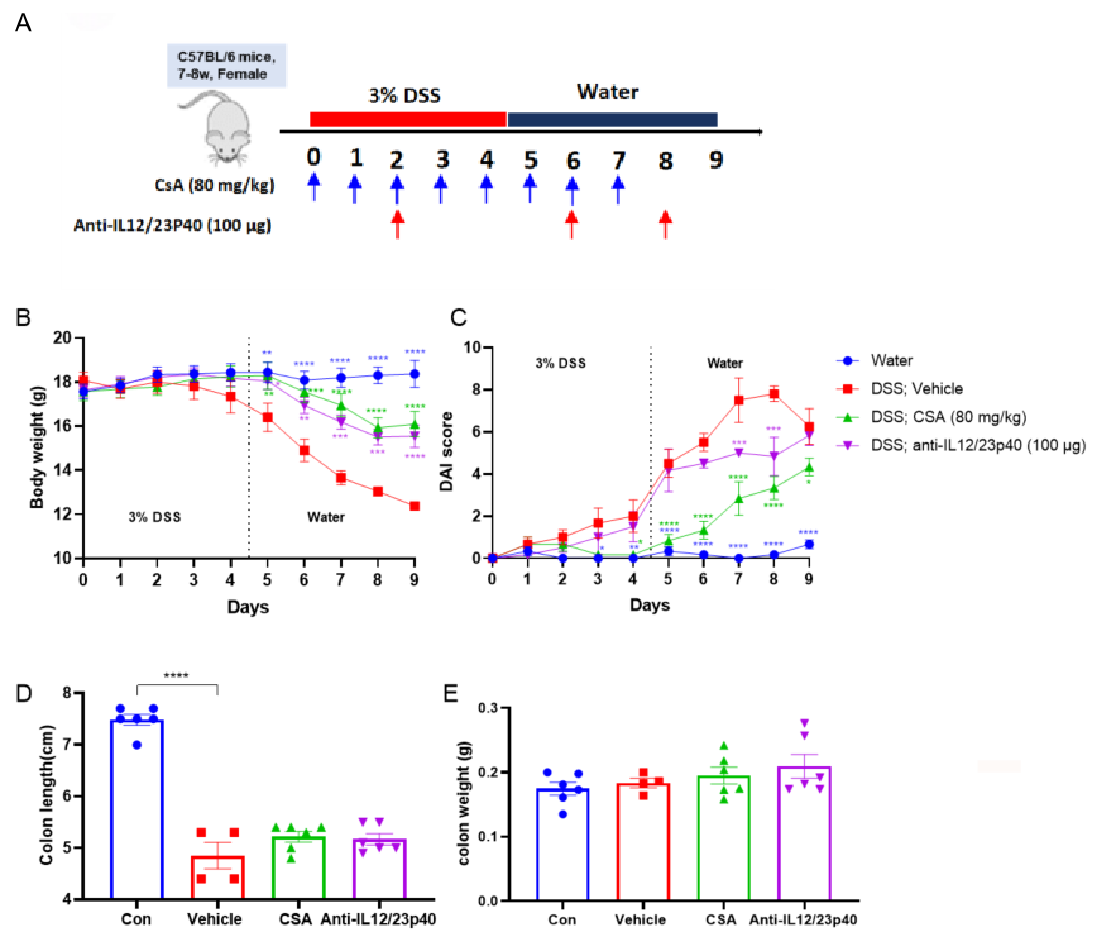
DSS誘発急性大腸炎マウスに対するAnti-IL12/23p40の作用
C57BL/6マウスに5日間、飲料水に3% DSSを混合して投与し、0日目から7日目までCsAを毎日マウスに投与し、2日目、6日目、8日目にAnti-IL12/23P40を投与しました(A)。体重と排泄物を毎日記録しました(B、C)。最後に、大腸を採取し、H&E染色を行い、大腸の長さ(D)と重量(E)を記録しました。その結果、CsAとAnti-IL12/23p40は、3% DSS誘発性潰瘍性大腸炎を軽減しました。二次元配置分散を行った後、多重比較を行った。値は平均±SEMとして表されます。****p<0.0001, ***p<0.001, **p<0.01, *p<0.05。
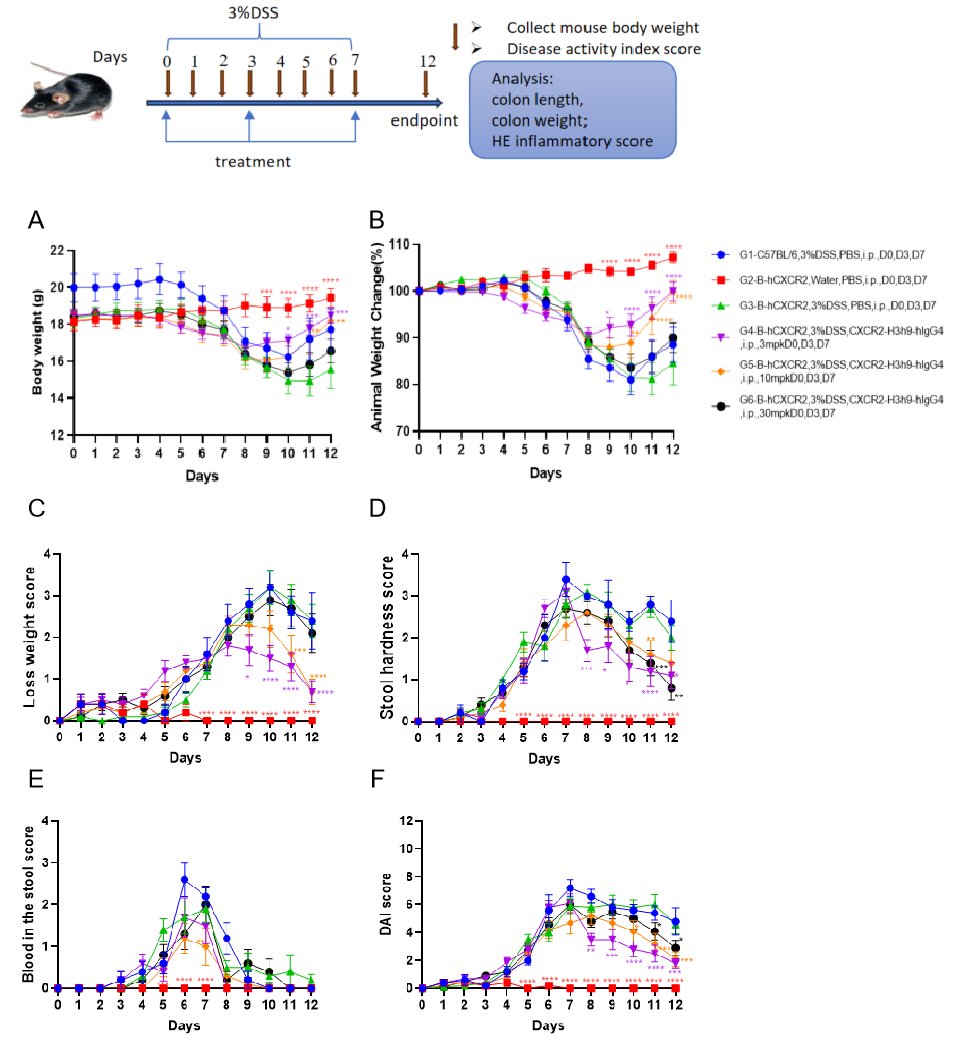
IBD(B-hCXCR2マウス)マウスモデルにおける有効性検証
C57BL/6マウスおよびB-hCXCR2マウスに、DSSを含む飲水を7日間連続で与え、その後通常の飲水に戻しました。体重の変化と臨床スコア(体重減少スコア、便硬度スコア、血便スコア、および総DAIスコア)を、試験期間を通して記録しました。二次元配置分散分析に続いて多重比較を行い、全群をG3と比較しました。値は平均値±標準誤差(SEM)で表されます。****p<0.0001, ***p<0.001, **p<0.01, *p<0.05。
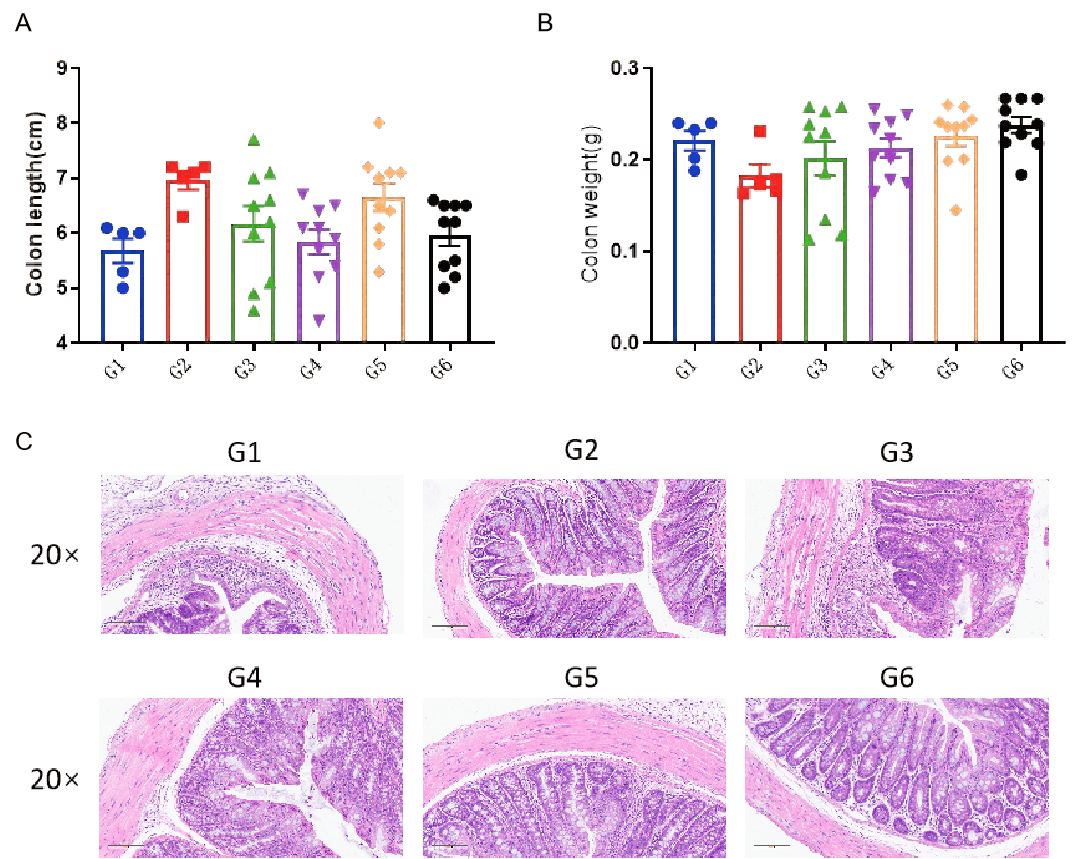
IBDマウスモデルにおける大腸の肉眼的サンプル採取と評価、および組織学的評価 C57BL/6マウスおよびB-hCXCR2マウスに、DSSを含む飲水を7日間連続与え、その後通常の飲水に戻しました。試験終了時に、大腸の長さ(A)および重量(B)を測定しました。大腸組織は、H&E染色に使用しました(C)。一次元配置分散分析に続いて多重比較を行い、全群をG3と比較しました。値は平均値±標準誤差(SEM)として表されます。
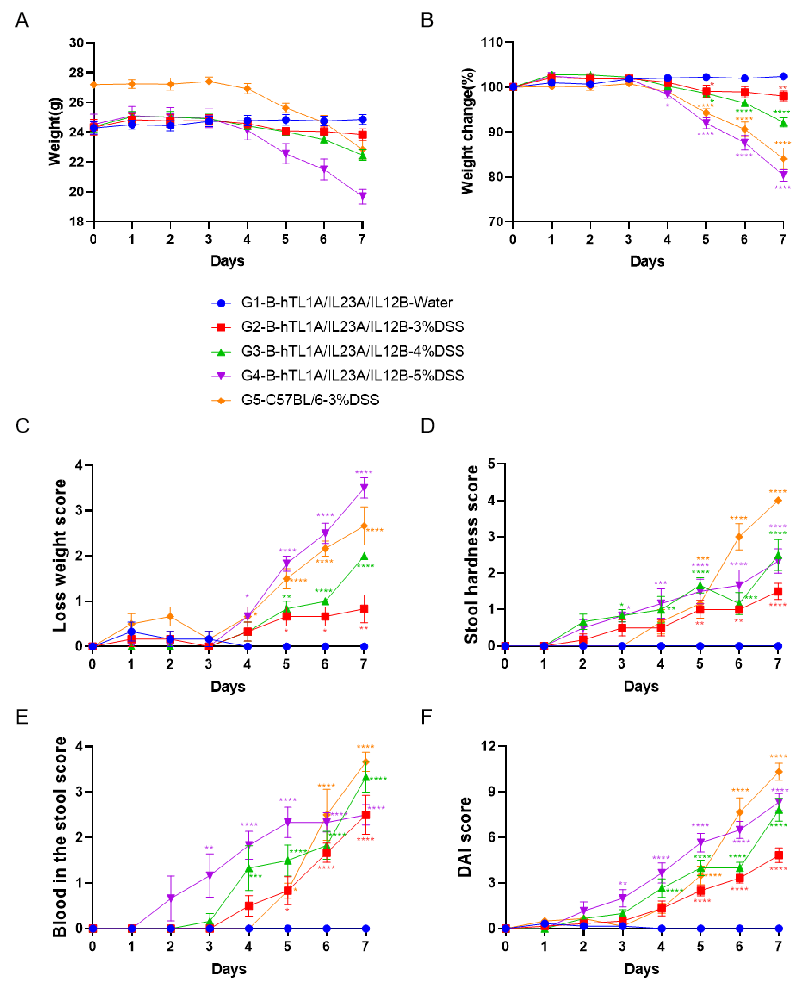
C57BL/6マウスおよびB-hTL1A/IL23A/IL12Bマウスに、異なる濃度のDSSを含む飲水を7日間連続で与えました。体重変化および臨床スコア(体重減少スコア、便硬度スコア、血便スコア、総DAIスコア)を全期間にわたって記録しました。二次元配置分散分析を実施し、その後多重比較を行い、全群をG1と比較しました。値は平均値±標準誤差(SEM)で表されます。****p<0.0001、***p<0.001、**p<0.01、*p<0.05。
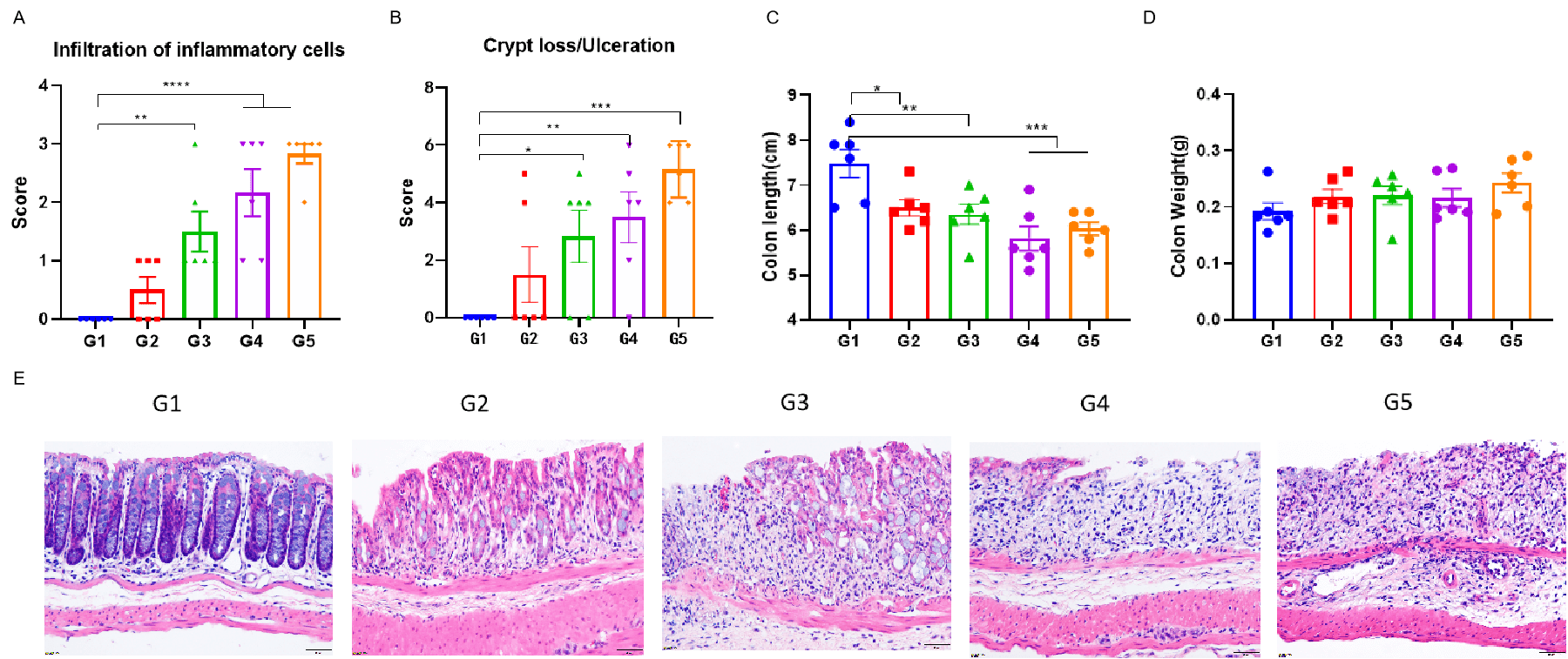
C57BL/6マウスおよびTL1A/IL23A/IL12Bヒト化マウス(B-hTL1A/IL23A/IL12Bマウス)に、異なる濃度のDSSを含む飲水を7日間連続して与えました。終了時に結腸の長さと大腸の重さを測定し、結腸組織をH&E染色しました。一次元配置分散分析と多重比較を行い、G1と比較しました。値は平均±SEMで表されます。****p<0.0001、***p<0.001、**p<0.01、*p<0.05。

| Mice strains |
| B-hTL1A |
| Readout | ||
| Included tests | Clinical scores | Body weight |
| DAI score | ||
| Colon | Colon length | |
| Colon weight | ||
| Histopathology | HE | |
| Sirius Red staining | ||
| Optional tests | Tissue homogenate | Cytokines test |
| Tissue histopathology | IHC | |
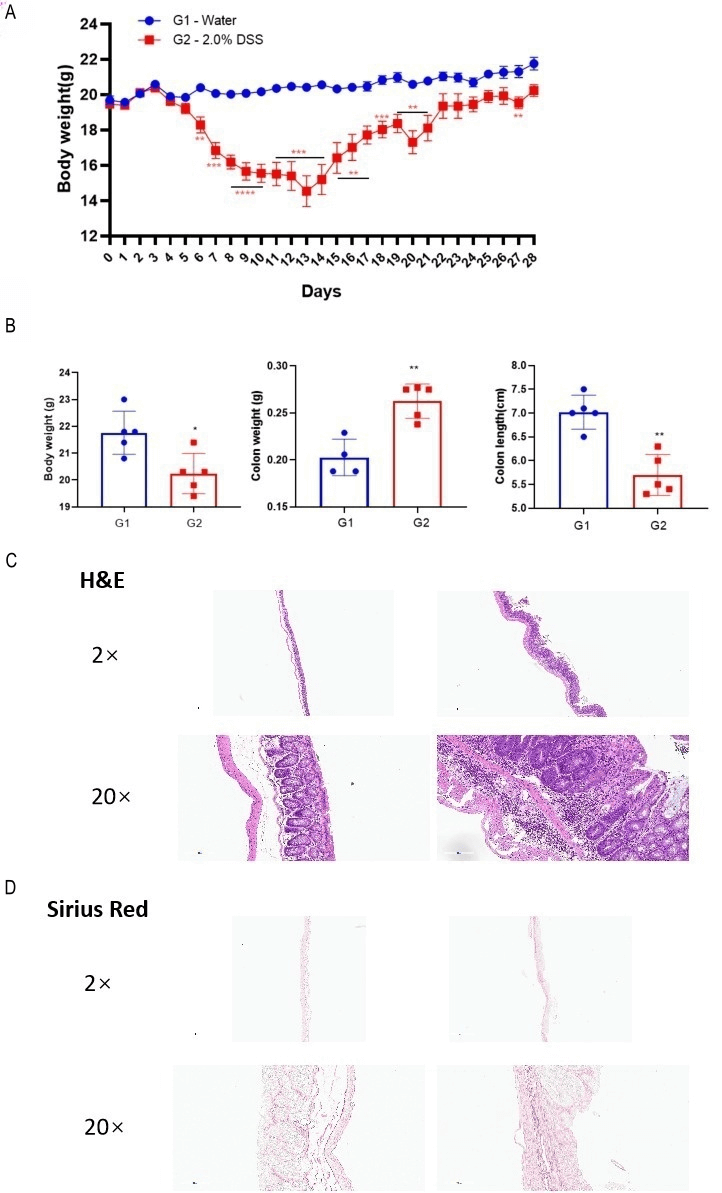
DSS誘発による慢性大腸炎 マウスは4サイクルのDSSに繰り返し曝露されました。各サイクルでは、5日間2%のDSSを投与し、その後2日間は水を与えました(A)。体重、大腸の重量および長さを記録しました(B)。H&E染色(C)およびシリウスレッド染色(D)。大腸は組織学的分析のために採取しました。DSSを投与されたマウスは、水を与えられたマウスよりも体重が低く、大腸の重量は重く長さは短いことが示されました、多重t検定の平均値は±SEMで表されます。n=5、****p<0.0001、***p<0.001、**p<0.01、*p<0.05。
| Mice strains |
| B-hTL1A |
| Readout | ||
| Included tests | Clinical scores | Body weight |
| Colon | Colon length | |
| Colon weight | ||
| Histopathology | HE | |
| Optional tests | Tissue homogenate | Cytokines test |
| Tissue histopathology | IHC | |
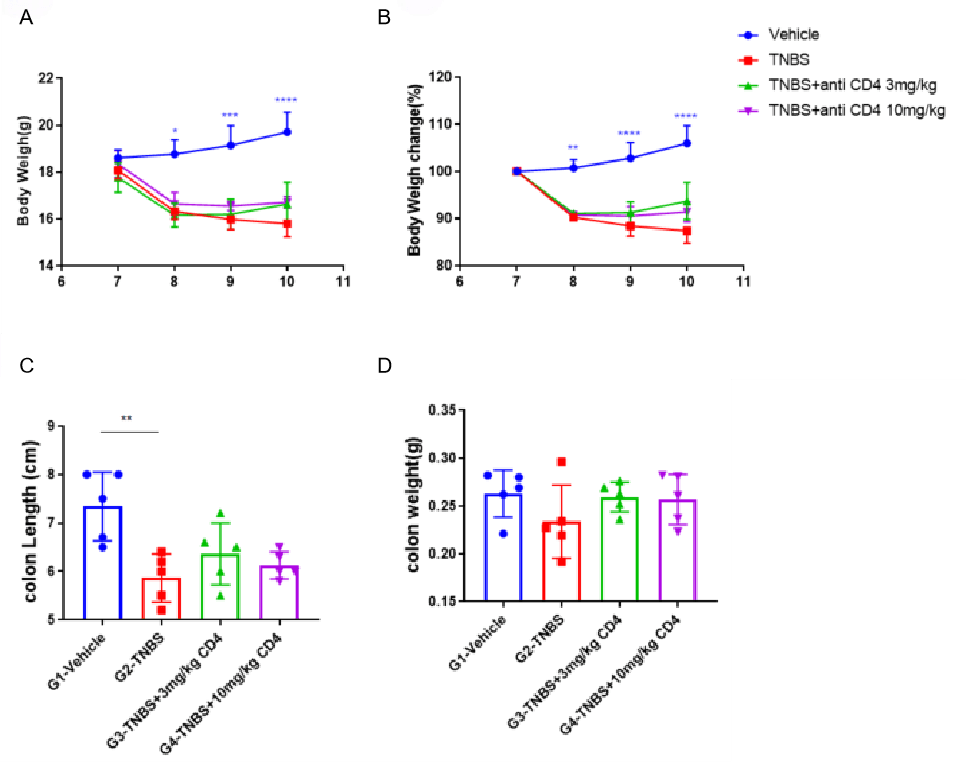
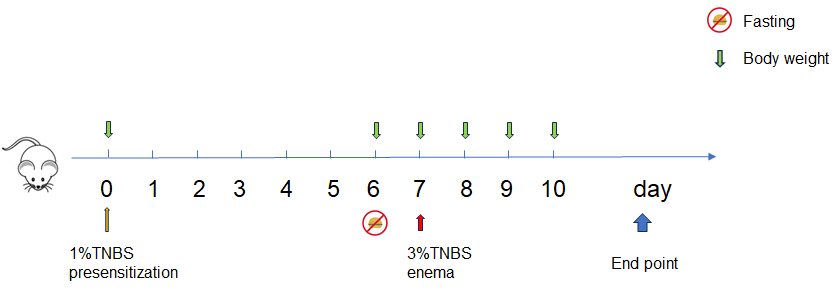
TNBS誘導急性腸炎に対するCD4-GK1.5-mlgG2aの影響 0日目にマウスの剃毛皮膚にTNBS溶液を塗布して前感作し、7日目にTNBSを大腸内投与しました。体重(A)と体重変化(B)を毎日記録し、CD4-GK1.5-mlgG2a(3、10 mg/kg、腹腔内投与)を6日目に投与しました。10日目に大腸を採取して、長さ(C)と重量(D)を記録しました。二次元配置分散と一次元配置分散分析を実施し、その後Dunnett多重比較法を用いて全群を比較しました。値は平均±SEMとして表されます。****p<0.0001、***p<0.001、**p<0.01、*p<0.05。
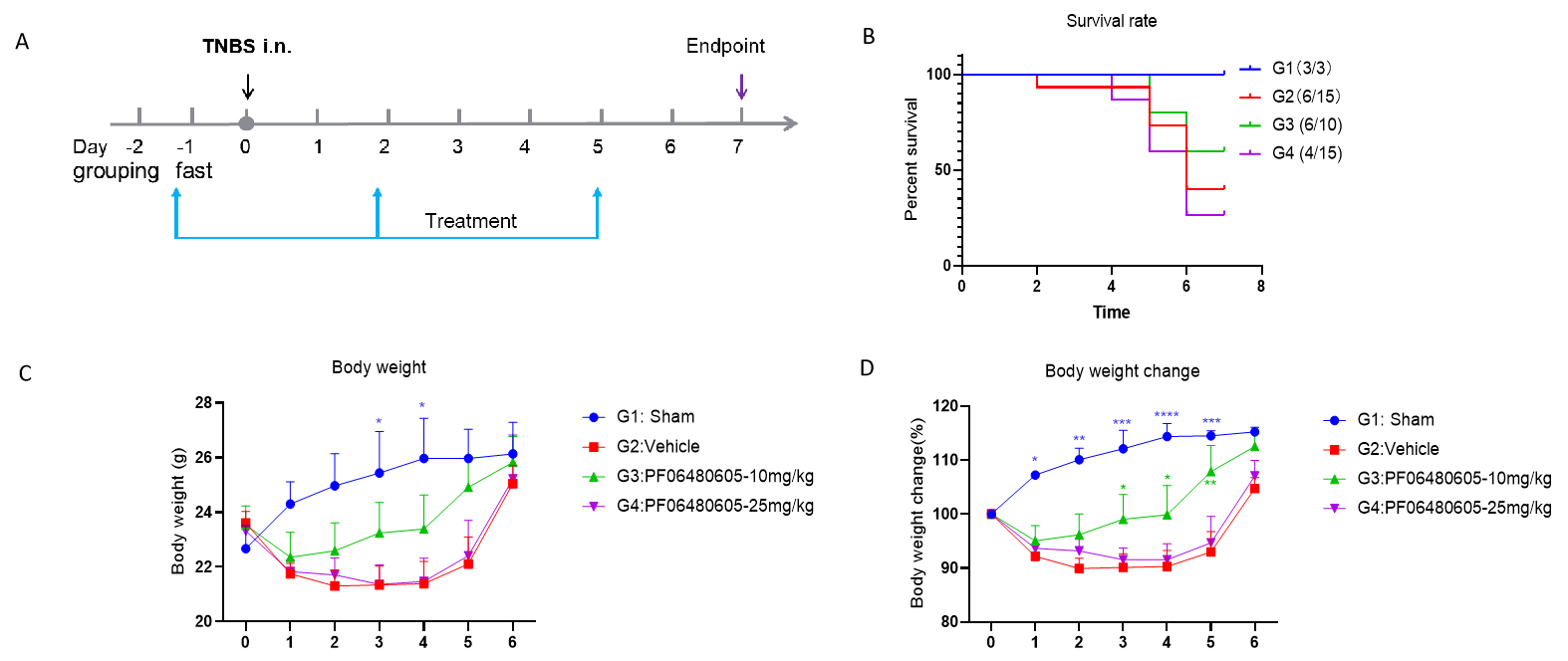
B-hTL1AマウスのTNBS誘発急性IBDに対するPF06480605の有効性評価 0日目にTNBSをマウスの大腸に投与しました。-1日、2日、および5日目に、それぞれ10または25 mg/kgのPF06480605をTA投与しました。スキームの模式図(A)。生存率(B)を計算し、毎日の体重(C-D)を記録しました。二次元配置分散とDunnett多重比較を行い、すべてのグループをG2と比較しました。値は平均±SEMで表されます。****p<0.0001、***p<0.001、**p<0.01、*p<0.05。
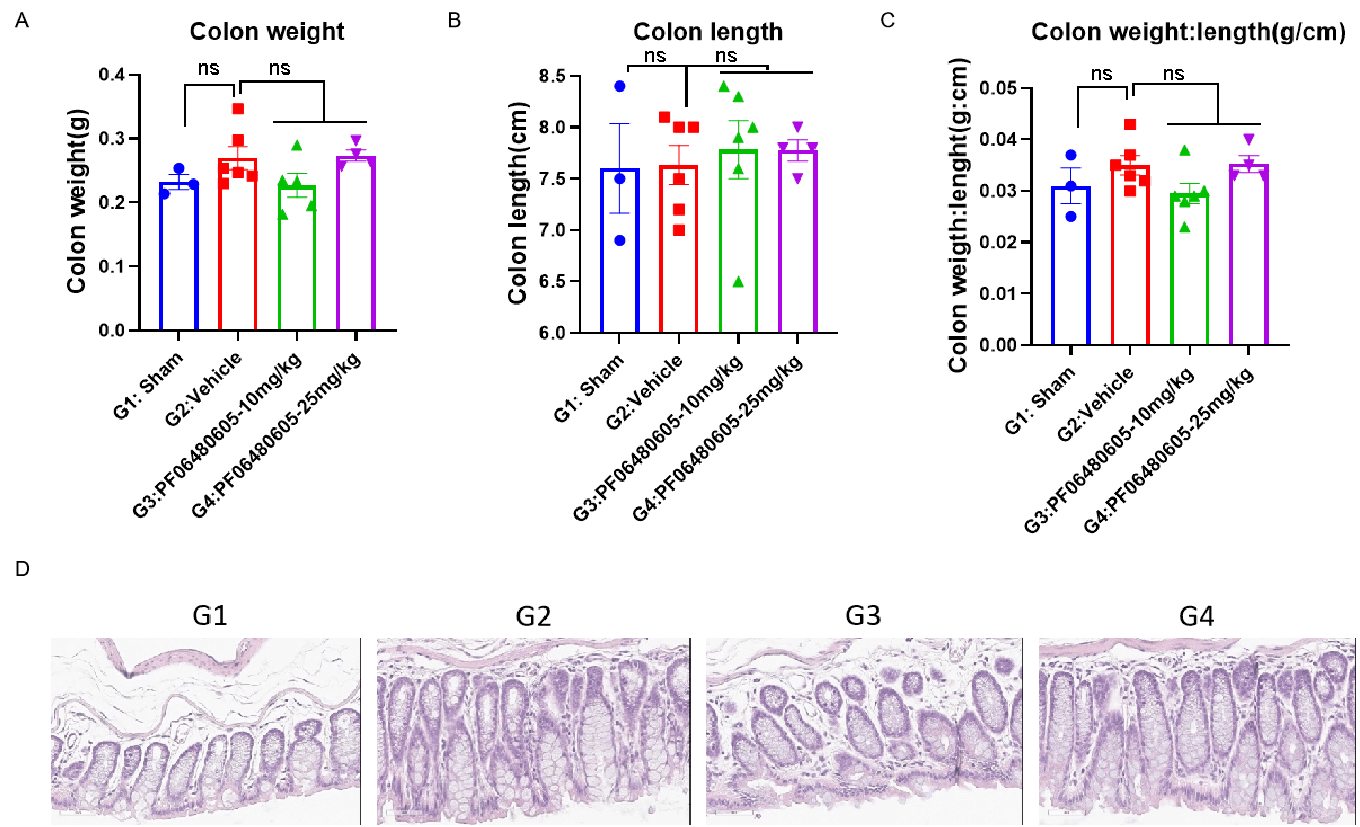
0日目にTNBSを大腸に投与し、毎日の体重記録と生存率を計算しました。-1日、2日、および5日目にそれぞれ10または25 mg/kgのPF06480605をTA投与しました。7日目にサンプルを採取して、大腸の重さ(A)および長さ(B)を記録しました。大腸組織をH&E染色して、一次元配置分散と多重比較を行い、すべてのグループをG2と比較しました。値は平均±SEMで表されます。****p<0.0001、***p<0.001、**p<0.01、*p<0.05。
| Mice strains |
| B-hPSGL1(spleen donor) |
| Readout | ||
| Included tests | Clinical scores | Body weight |
| DAI score | ||
| Colon | Colon length | |
| Colon weight | ||
| Histopathology | H&E | |
| Optional tests | Tissue homogenate | Cytokines test |
| Tissue histopathology | IHC | |
| Histopathology | Sirius Red staining | |
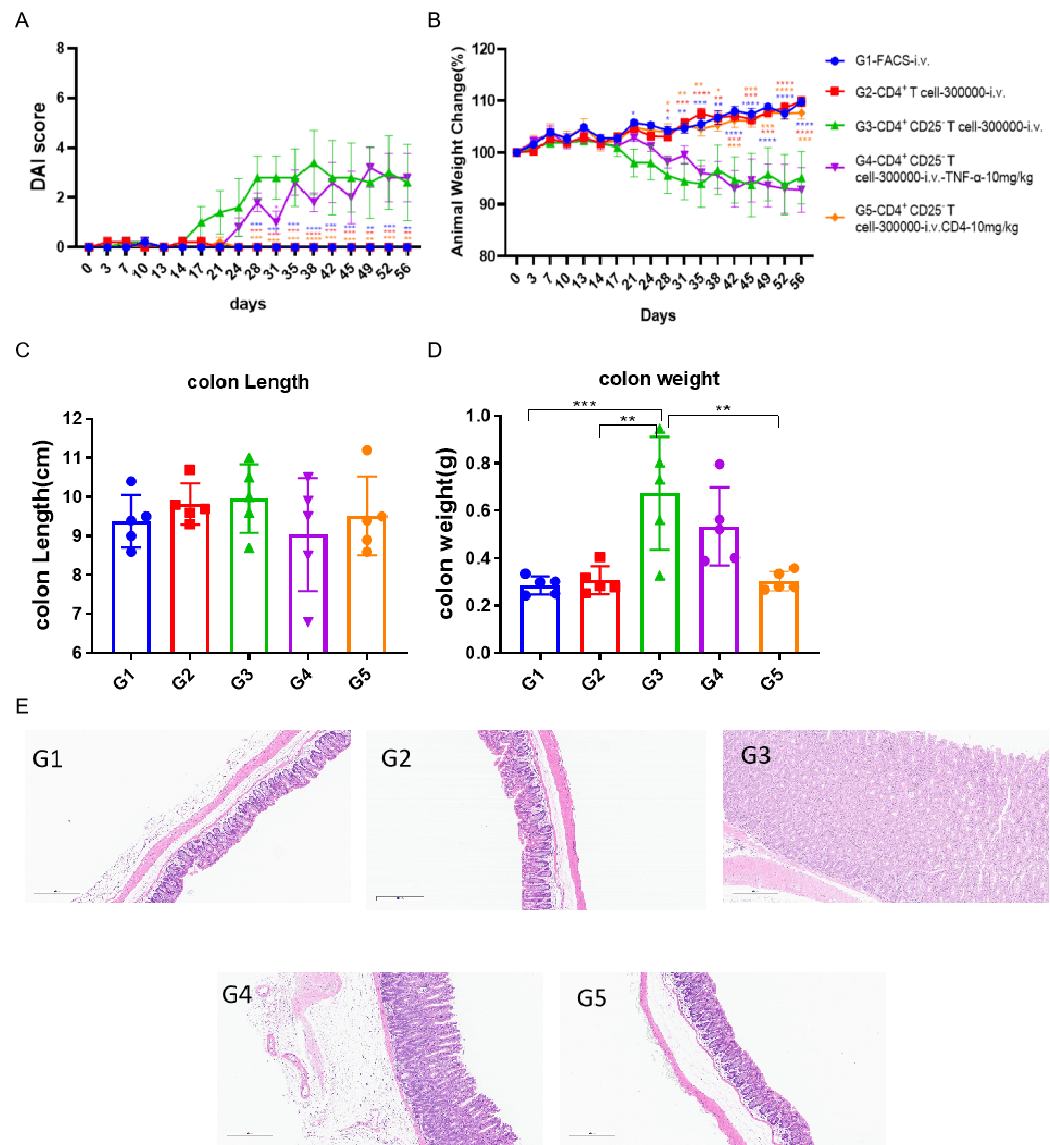
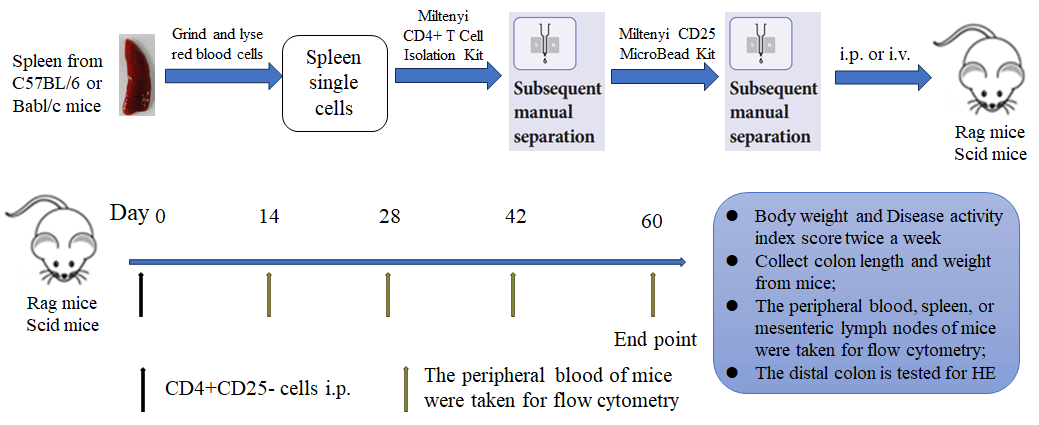
T細胞移植誘導IBDモデルの有効性
市販のキットを使用して、Balb/c マウスの脾臓から CD4+CD25- T 細胞または CD4+ T 細胞を採取しました。G2グループに3×10⁵ CD4+ T細胞を投与して、G3-G5グループには同じ量のCD4+CD25- T細胞を投与しました。G4グループに毎週10 mg/kgの抗TNFαを、G5グループには毎週10 mg/kgの抗CD4を投与しました。二次元配置分散または一次元配置分散と多重比較を行い、各グループをG3と比較しました。値は平均±SEMで表されます。****p<0.0001、***p<0.001、**p<0.01、*p<0.05。