


B-hEGFR*L858R*T790M MC38

• 322503

B-hEGFR*L858R*T790M MC38

Product nameB-hEGFR*L858R*T790M MC38
Catalog number322503
Strain backgroundC57BL/6
Chromosome11
TissueColon
DiseaseColon carcinoma

このページで

  • Description
  • Phenotypic analysis
  • Tumorigenicity

ポスター

すべて表示

    出版物

      Description
      • Origin: The MC38 cell line is derived from C57BL/6 murine colon adenocarcinoma cells. The cell line is a commonly used murine model for colorectal carcinoma.
      • Background Information: This gene encodes a protein that facilitates epidermal growth factor (EGF) binding and functions as its receptor. It is integral to the ERBB2-EGFR signaling pathway, mediating cellular responses to amino acids and promoting fibroblast proliferation. Its biological roles include contributing to eyelid development, protein modification, and regulating its own signaling pathway. The protein is localized to various cellular compartments, including the basolateral plasma membrane, endocytic vesicles, and the perinuclear region, with activity primarily on the plasma membrane. It is widely expressed in systems such as the alimentary tract, brain, skin, limbs, and sensory organs. Research links this gene to Coronavirus infectious disease and aortic valve disease, while its human ortholog is associated with numerous pathologies, including colorectal, lung, pancreatic, and prostate cancers, as well as pulmonary tuberculosis. This gene is orthologous to human EGFR.
      • Gene targeting strategy: The expression cassette containing an exogenous promoter, the extracellular region of human EGFR, and the transmembrane and intracellular regions of mouse Egfr was randomly inserted into the genome B-hEGFR*L858R*T790M MC38 cells.
      • Application: B-hEGFR*L858R*T790M MC38 tumor models can be used for preclinical evaluation of antibodies.
      Protein expression analysis

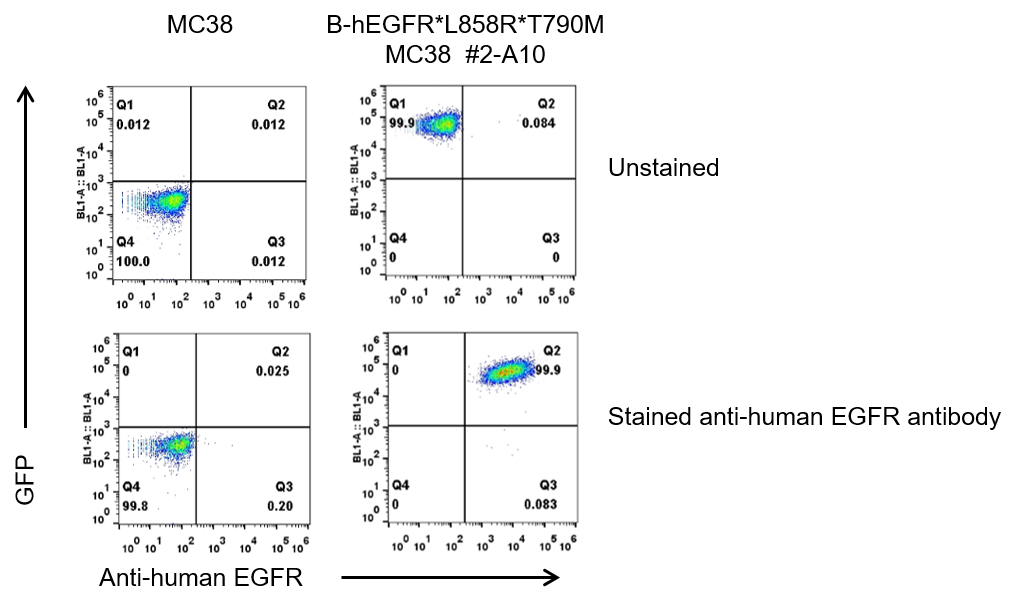
      Human EGFR expression analysis in B-hEGFR*L858R*T790M MC38 by flow cytometry. Single cell suspensions from wild-type MC38 and B-hEGFR*L858R*T790M MC38 cells #2-A10 cultures were detected with species-specific Anti-human EGFR(Biolegend, 352904). Human EGFR and GFP were detected on the surface of B-hEGFR*L858R*T790M MC38 cells but not wild-type MC38 cells.


      Tumor growth curve & body weight changes

      Subcutaneous tumor growth of B-hEGFR*L858R*T790M MC38. B-hEGFR*L858R*T790M MC38 (5×10⁵) and wild-type MC38 cells (5×10⁵) were subcutaneously implanted into B-hEGFR mice (Male, 8-week-old, n=6). Tumor volume and body weight were measured twice a week. (A) Average tumor volume. (B) Body weight. Volume was expressed in mm3 using the formula: V=0.5 × long diameter × short diameter2. Results indicate that B-hEGFR*L858R*T790M MC38 cells were able to establish tumors in vivo and can be used for efficacy studies. Values are expressed as mean ± SEM.
      Protein expression analysis of tumor tissue

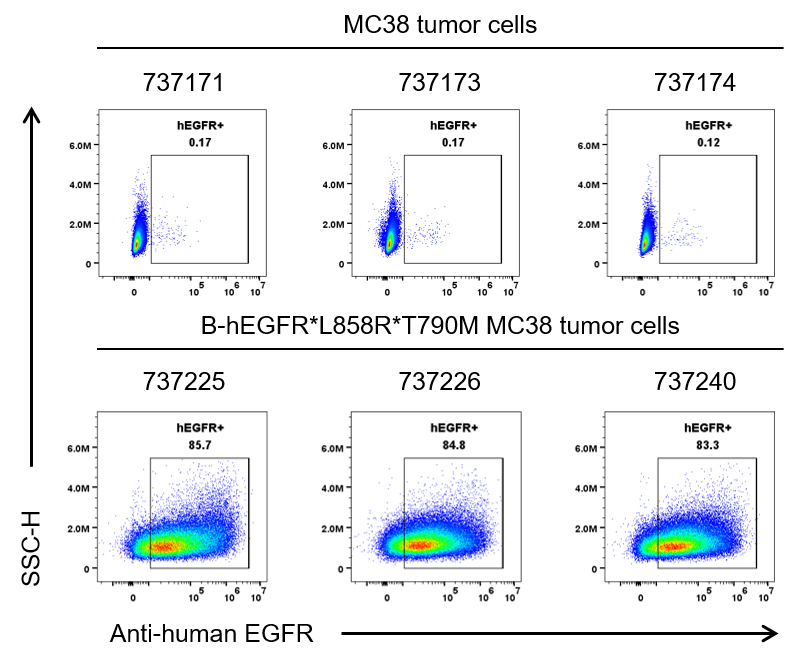
      Human EGFR expression evaluated in B-hEGFR*L858R*T790M MC38 tumor cells by flow cytometry. B-hEGFR*L858R*T790M MC38 cells were subcutaneously transplanted into B-hEGFR mice (Male, 8-week-old, n=6). Upon conclusion of the experiment, tumor cells were harvested and assessed with species-specific anti-human EGFR (Biolegend, 352904). Human EGFR was highly expressed on the surface of tumor cells. Therefore, B-hEGFR*L858R*T790M MC38 cells can be used for in vivo efficacy studies evaluating novel EGFR therapeutics.