
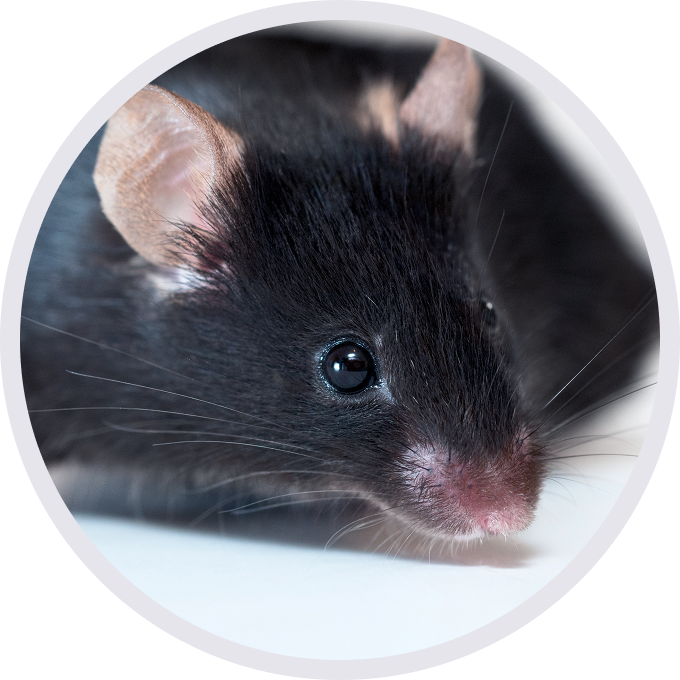
C57BL/6N-F3tm1(F3)Bcgen/Bcgen • 110967

Gene targeting strategy for B-hF3 mice. The exons 1-6 of mouse F3 gene that encode signal peptide, extracellular domain, transmembrane domain, cytoplasmic region are replaced by human counterparts in B-hF3 mice. The human F3 expression is driven by endogenous mouse F3 promoter, while mouse F3 gene transcription and translation will be disrupted.

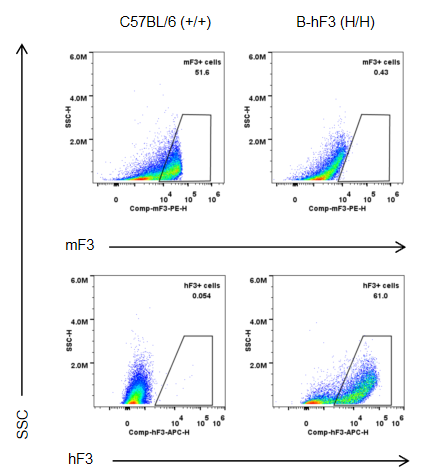
Strain specific F3 expression analysis in homozygous B-hF3 mice by flow cytometry. Endotheliocytes from lung were collected from wild-type C57BL/6 mice (+/+) and homozygous B-hF3 mice (H/H), and analyzed by flow cytometry with species-specific anti-F3 antibody. Mouse F3 was detectable in wild-type mice. Human F3 was exclusively detectable in homozygous B-hF3 mice but not in wild-type mice.
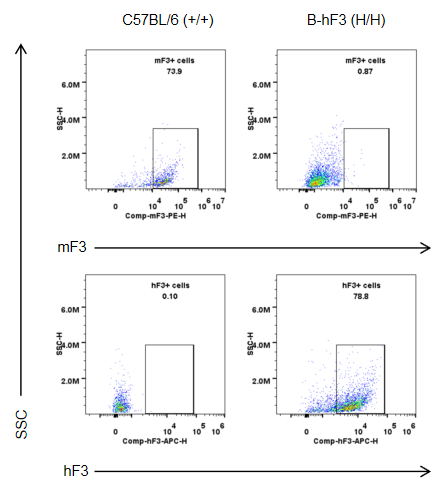
Strain specific F3 expression analysis in homozygous B-hF3 mice by flow cytometry. Endotheliocytes from brain were collected from wild-type C57BL/6 mice (+/+) and homozygous B-hF3 mice (H/H), and analyzed by flow cytometry with species-specific anti-F3 antibody. Mouse F3 was detectable in wild-type mice. Human F3 was exclusively detectable in homozygous B-hF3 mice but not in wild-type mice.
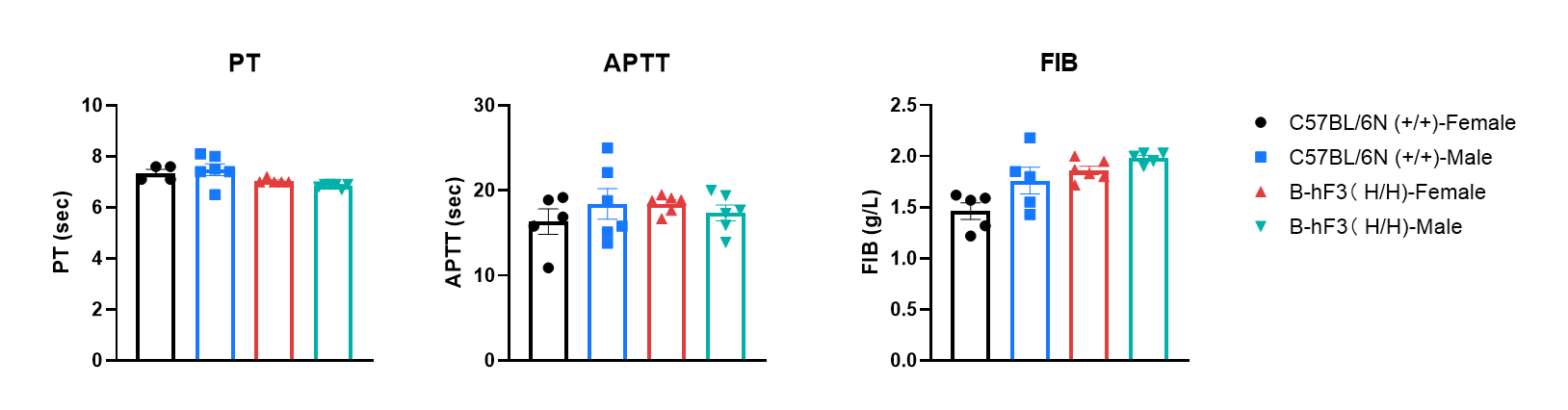
Functional analysis of coagulation in homozygous B-hF3 mice. Plasma was collected from wild-type C57BL/6N mice (+/+, 6-week-old, n=6) and homozygous B-hF3 mice (H/H, 6-week-old, n=6). Plasma prothrombin time (PT, sec), activated partial thromboplastin time (APTT, sec), and fibrinogen (FIB, g/L) were measured to assess baseline coagulation. No statistically significant differences in PT, APTT, or FIB were detected between wild-type C57BL/6N mice and homozygous B-hF3 mice. Values are expressed as mean ± SEM. Analyzed by 2 way-ANOVA, *P<0.05, **P<0.01, ***P<0.001.