

B-hHBA1/hHBA2/hHBG1/hHBG2/hHBD/hHBBs mice(B6; 129S)

B6; 129S-Hba-a1/Hba-a2tm1(HBA1/HBA2)Bcgen Hbb-bs/Hbb-bttm1(HBG1/hHBG2/hHBD/hHBBs)Bcgen /Bcgen • 113686


B-hHBA1/hHBA2/hHBG1/hHBG2/hHBD/hHBBs mice(B6; 129S)

Product nameB-hHBA1/hHBA2/hHBG1/hHBG2/hHBD/hHBBs mice(B6; 129S)
Catalog number113686
Strain nameB6; 129S-Hba-a1/Hba-a2tm1(HBA1/HBA2)Bcgen Hbb-bs/Hbb-bttm1(HBG1/hHBG2/hHBD/hHBBs)Bcgen /Bcgen
Strain backgroundB6;129S
NCBI gene ID3039,3040,3047,3048,3043,3045 (Human)
AliasesHBH; ECYT7; HBA-T3; METHBA; HBH; ECYT7; HBA-T2; HBGA; HBGR; HBG-T2; HSGGL1; PRO2979; TNCY; HBG-T1; ECYT6; CD113t-C; beta-globin; HBK

このページで

  • Description
  • Targeting strategy
  • Phenotypic analysis

ポスター

すべて表示

    出版物

      Description
      • Background: Sickle cell disease (SCD) is an autosomal recessive hereditary hemolytic anemia caused by a point mutation in the β-globin gene, which results in the synthesis of abnormal hemoglobin S (HbS) and the deformation of red blood cells into a sickle shape under hypoxic conditions. The rigid sickle-shaped erythrocytes are prone to vascular occlusion and hemolysis, leading to recurrent painful crises, progressive organ damage, and a significantly reduced quality of life in affected individuals.
      • Gene editing strategy: The mouse's Hba-a1/Hba-a2 genes were replaced with human hHBA1/HBA2 in B-hHBA1/hHBA2 mice(129S2). The mouse's Hbb-bs/Hbb-bt genes were replaced with human hHBG1/hHBG2/hHBD/hHBBs in B-hHBG1/hHBG2/hHBD/hHBBs mice. B-hHBA1/hHBA2/hHBG1/hHBG2/hHBD/hHBBs mice(B6; 129S) were obtained by mating B-hHBA1/hHBA2 mice(129S2) and B-hHBG1/hHBG2/hHBD/hHBBs mice.
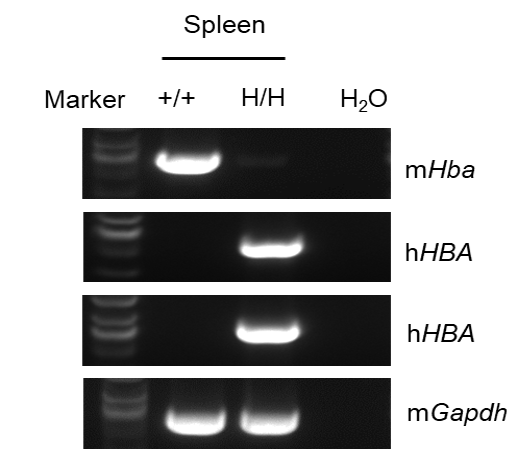
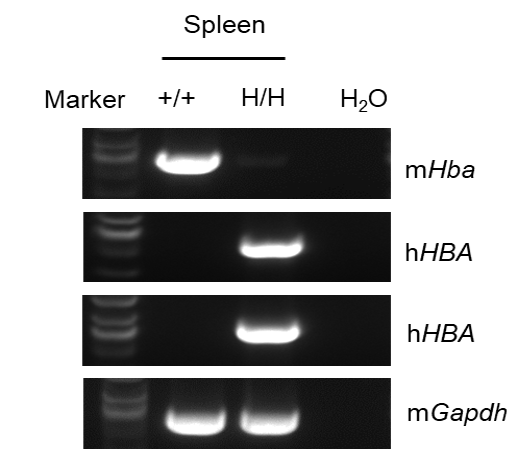
      • mRNA expression analysis: Mouse Hba mRNA was exclusively detectable in wild-type mice but not in homozygous B-hHBA1/hHBA2 mice(129S2). Human HBA1 and HBA2 mRNA was exclusively detectable in homozygous B-hHBA1/hHBA2 mice(129S2). HBG1, HBG2, HBD and HBB mRNA were exclusively detectable in heterozygous B-hHBG1/hHBG2/hHBD/hHBBs mice but not in wild-type mice.
      • The complete blood count test results revealed a substantial decline in RBC, HGB, HCT and PLT and a significant increase in WBC, RDW, NRBC#, NRBC%, RET#, and RET% in homozygous B-hHBA1/hHBA2/hHBG1/hHBG2/hHBD/hHBBs mice(B6; 129S) compared with wild-type C57BL/6JNifdc mice and homozygous B-hHBA1/hHBA2/hHBG1/hHBG2/hHBD/hHBB mice(B6; 129S). The blood biochemistry test results revealed a substantial increase in ALT, AST and TBIL in homozygous B-hHBA1/hHBA2/hHBG1/hHBG2/hHBD/hHBBs mice(B6; 129S).
      • Application: This product is used for pharmacodynamics and safety evaluation of cardiovascular diseases such as Sickle cell disease (SCD).
      Targeting strategy

      Gene targeting strategy for B-hHBA1/hHBA2/hHBG1/hHBG2/hHBD/hHBBs mice(B6; 129S).

      1.The mouse's Hba-a1/Hba-a2 genes were replaced with human HBA1/HBA2 in B-hHBA1/hHBA2 mice(129S2).

      2. The mouse's Hbb-bs/Hbb-bt genes were replaced with human HBG1/hHBG2/hHBD/hHBBs in B-hHBG1/hHBG2/hHBD/hHBBs mice.

      B-hHBA1/hHBA2/hHBG1/hHBG2/hHBD/hHBBs mice(B6; 129S) were obtained by mating B-hHBA1/hHBA2 mice(129S2) and B-hHBG1/hHBG2/hHBD/hHBBs mice

      mRNA expression analysis

      Strain specific analysis of HBA1 and HBA2 mRNA expression in wild-type 129S mice and homozygous B-hHBA1/hHBA2 mice(129S2) by RT-PCR. Spleen RNA were isolated from wild-type 129S mice (+/+) and homozygous B-hHBA1/hHBA2(129S2) (H/H), then cDNA libraries were synthesized by reverse transcription, followed by PCR with human HBA1 and HBA2 primers. Mouse Hba mRNA was exclusively detectable in wild-type mice but not in homozygous B-hHBA1/hHBA2 mice(129S2). Human HBA1 and HBA2 mRNA was exclusively detectable in homozygous B-hHBA1/hHBA2 mice(129S2).
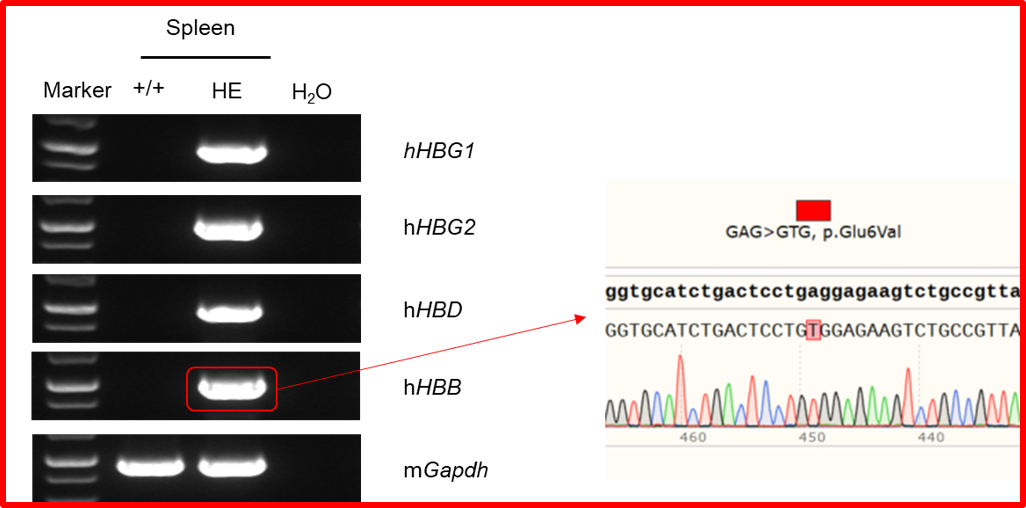
      Strain specific analysis of HBB mRNA expression in wild-type C57BL/6JNifdc mice and heterozygous B-hHBG1/hHBG2/hHBD/hHBBs mice by RT-PCR. Spleen RNA were isolated from wild-type C57BL/6JNifdc mice (+/+) and heterozygous B-hHBG1/hHBG2/hHBD/hHBBs mice (H/+), then cDNA libraries were synthesized by reverse transcription, followed by PCR with human HBG1, HBG2, HBD and HBB primers. mGapdh was detected as internal control. HBG1, HBG2, HBD and HBB mRNA were exclusively detectable in heterozygous B-hHBG1/hHBG2/hHBD/hHBBs mice but not in wild-type mice.
      Hematology analysis

      Complete blood count (CBC) of wild-type C57BL/6JNifdc mice, homozygous B-hHBA1/hHBA2/hHBG1/hHBG2/hHBD/hHBB mice(B6; 129S) and homozygous B-hHBA1/hHBA2/hHBG1/hHBG2/hHBD/hHBBs mice(B6; 129S). Values are expressed as mean ± SD.
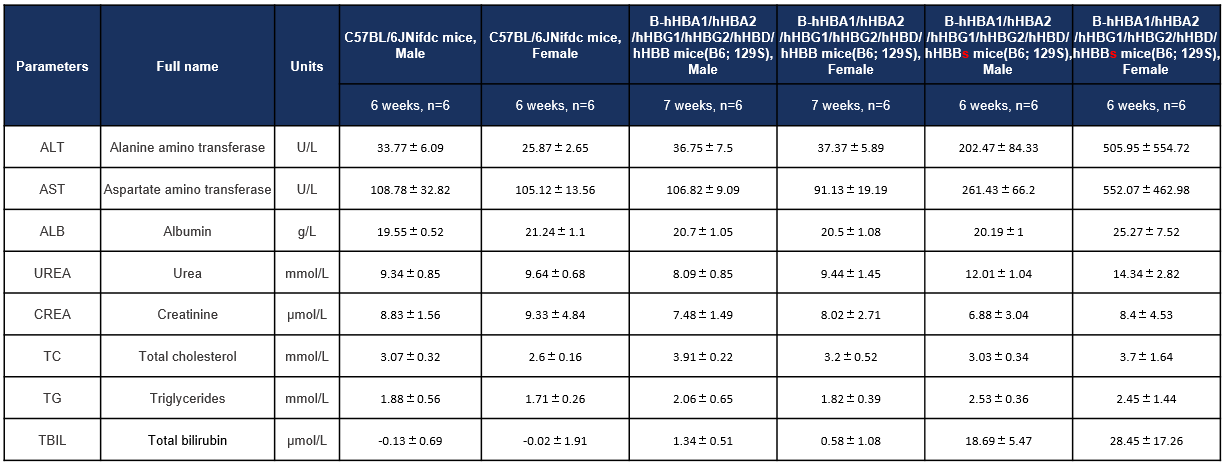
      Biochemistry analysis

      Biochemical test of wild-type C57BL/6JNifdc mice, homozygous B-hHBA1/hHBA2/hHBG1/hHBG2/hHBD/hHBB mice(B6; 129S) and homozygous B-hHBA1/hHBA2/hHBG1/hHBG2/hHBD/hHBBs mice(B6; 129S). Values are expressed as mean ± SD.
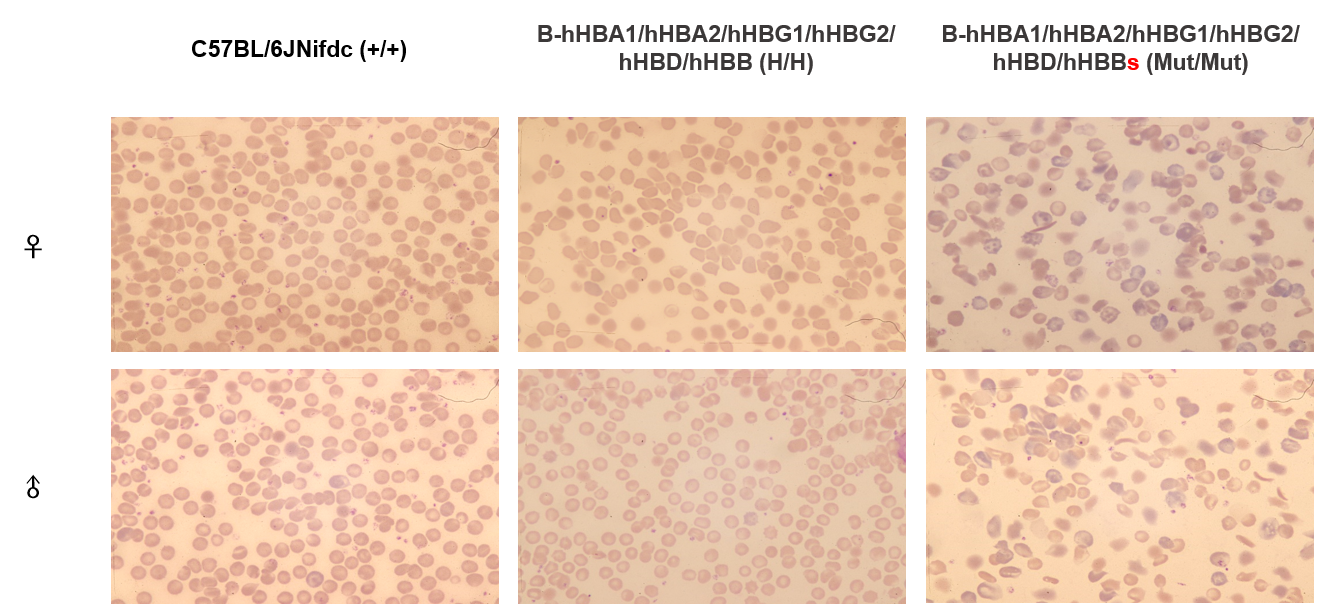
      Blood smear analysis

      Blood smear analysis in wild-type C57BL/6JNifdc mice, homozygous B-hHBA1/hHBA2/hHBG1/hHBG2/hHBD/hHBB mice(B6; 129S) and homozygous B-hHBA1/hHBA2/hHBG1/hHBG2/hHBD/hHBBs mice(B6; 129S). The blood smear analysis results showed that the homozygous B-hHBA1/hHBA2/hHBG1/hHBG2/hHBD/hHBBs mice(B6; 129S) exhibited a distinct sickle cell phenotype.
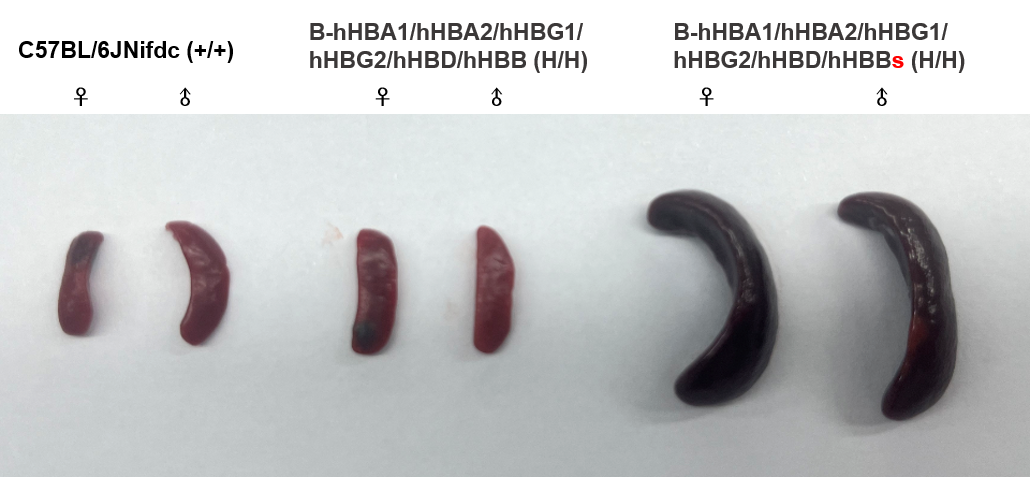
      Spleen analysis

      Spleen analysis in wild-type C57BL/6JNifdc mice, homozygous B-hHBA1/hHBA2/hHBG1/hHBG2/hHBD/hHBB mice(B6; 129S) and homozygous B-hHBA1/hHBA2/hHBG1/hHBG2/hHBD/hHBBs mice(B6; 129S). The spleen size of homozygous B-hHBA1/hHBA2/hHBG1/hHBG2/hHBD/hHBBs mice was significantly larger than that of wild-type C57BL/6JNifdc mice and homozygous B-hHBA1/hHBA2/hHBG1/hHBG2/hHBD/hHBB mice.

      * When publishing results obtained using this animal model, please acknowledge the source as follows: The animal model [B-hHBA1/hHBA2/hHBG1/hHBG2/hHBD/hHBBs mice(B6; 129S)] (Cat# 113686) was purchased from Biocytogen.