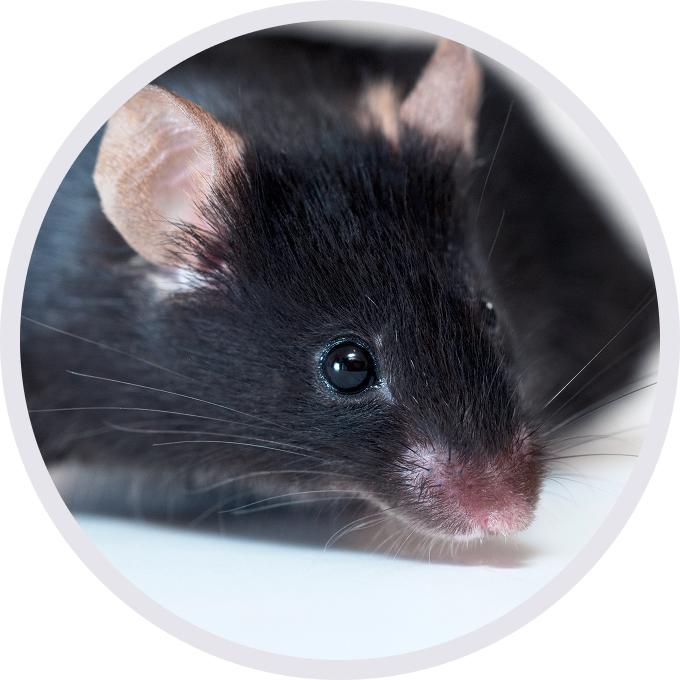
C57BL/6JNifdc-B2mtm1(B2M/HLA-A30.1/H2-D)Bcgen/Bcgen • 114303


Gene targeting strategy for B-HLA-A30.1 mice. The B2M gene (Exon1 to Exon3) of mouse were replaced by the sequence encompassing the human B2M CDS and HLA-A*30:01 gene that included leader sequence, α1 and α2 domains ligated to a fragment of the murine H-2Db gene containing the α3, transmembrane and cytoplasmic domains.

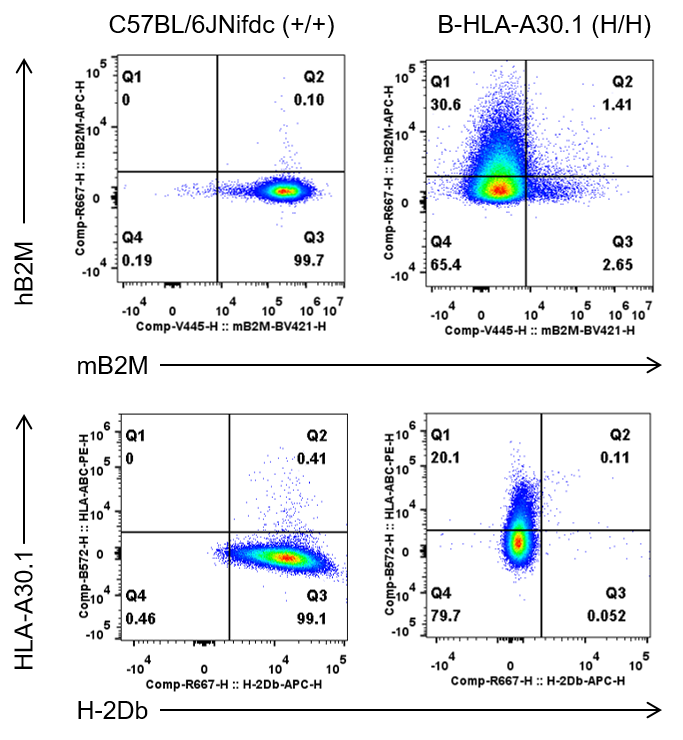
Strain specific B2M and HLA-A30.1 expression analysis in wild-type C57BL/6JNifdc mice and homozygous humanized B-HLA-A30.1 mice by flow cytometry. Splenocytes were collected from wild-type C57BL/6JNifdc mice (+/+) and homozygous B-HLA-A30.1 mice (H/H), respectively, and analyzed by flow cytometry with species-specific anti-HLA-A30.1 (Biolegend, 311406), anti-H-2Db (Biolegend, 111513), anti-hB2M (Biolegend, 395712), and anti-mB2M (BD Biosciences, 744802) antibody. HLA-A30.1 and human B2M were exclusively detectable in homozygous B-HLA-A30.1 mice.
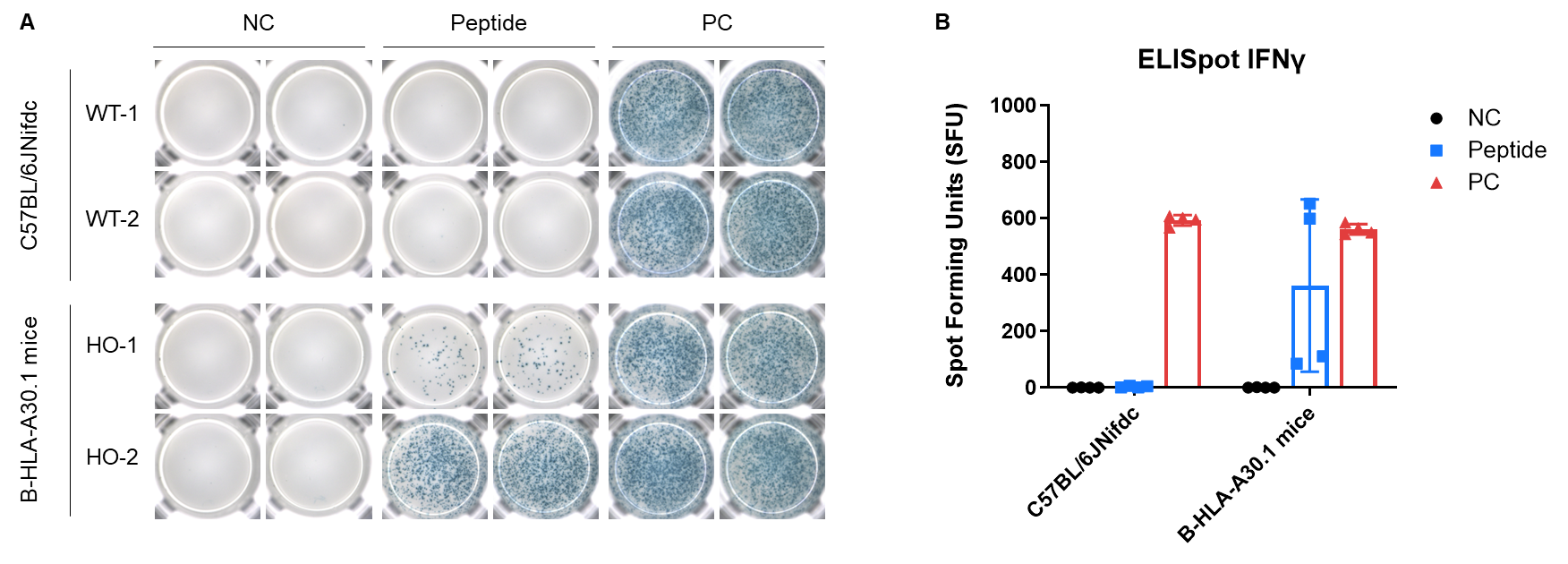
Detection of vaccine-induced immune responses in B-HLA-A30.1 mice by IFN-γ ELISpot assay. Female C57BL/6JNifdc mice and B-HLA-A30.1 mice at the age of 7–8 weeks were divided into PBS group and peptide group (n = 2), and then inoculated PBS or the peptide at the inside muscle of both legs. Three weeks after the last immunization, mice were sacrificed. The splenocytes were extracted, stimulated with individual peptide or PBS as negative control (NC) or PMA/Ionomycin(R&D, 423302) as positive control(PC), and then measured for IFN-γ secretion. No significant difference in body weight among groups (Data was not shown). (A) Representative results showing stimulation of splenocytes harvested from immunized mice with negative control, the peptide, or positive control in duplicates. (B) Summary of results. The results demonstrate that B-HLA-A30.1 mice provide a powerful preclinical model for in vivo evaluation of vaccines. NC: negative control, PC: positive control. The peptide was provided by the client.