
C57BL/6N-Tacstd2tm1(TACSTD2)Bcgen/Bcgen • 110966
このページで

TROP2 MOA: TROP2 is a tumor-associated antigen that promotes cancer progression and metastasis.

TROP2

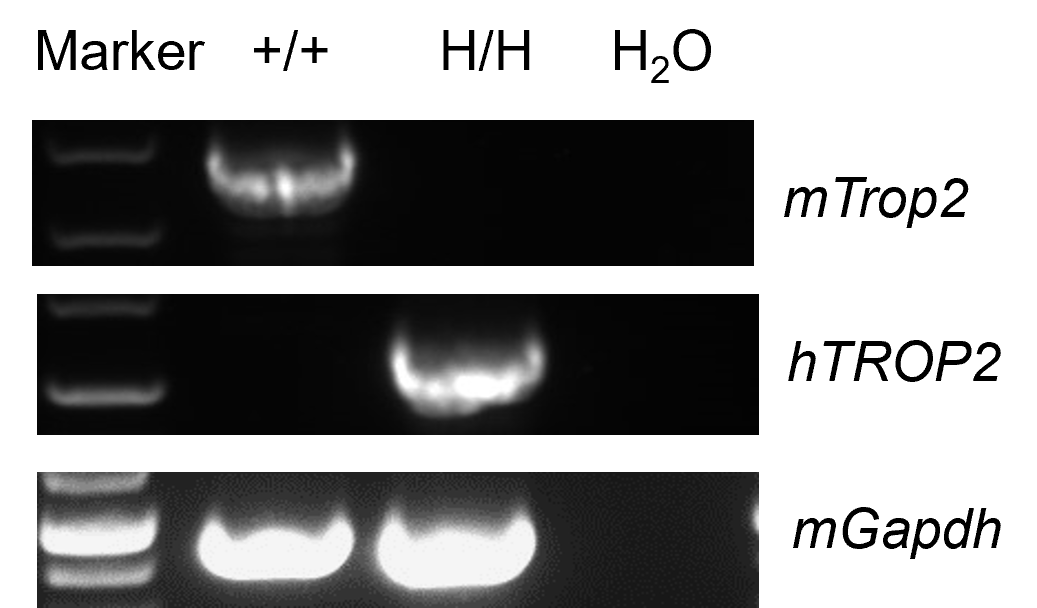
Strain specific analysis of TROP2 mRNA expression in wild-type C57BL/6 mice and homozygous B-hTROP2 mice by RT-PCR. Skin RNA were isolated from wild-type C57BL/6 mice (+/+) and homozygous B-hTROP2 mice (H/H), then cDNA libraries were synthesized by reverse transcription, followed by PCR with mouse or human TROP2 primers.
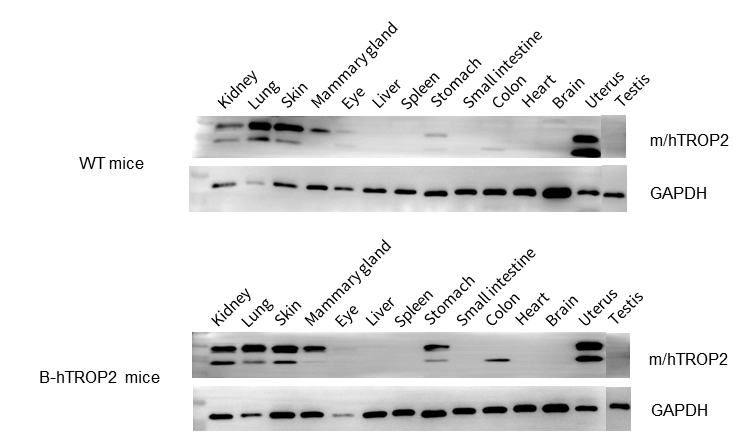
Western blot analysis of TROP2 protein expression in homozygous B-hTROP2 mice. Fourteen major tissues were collected from wild-type mice and homozygous B-hTROP2 mice (2 males and 2 females, 8 week-old), and analyzed by western blotting with anti-TROP2 antibody (Abcam, ab214488).
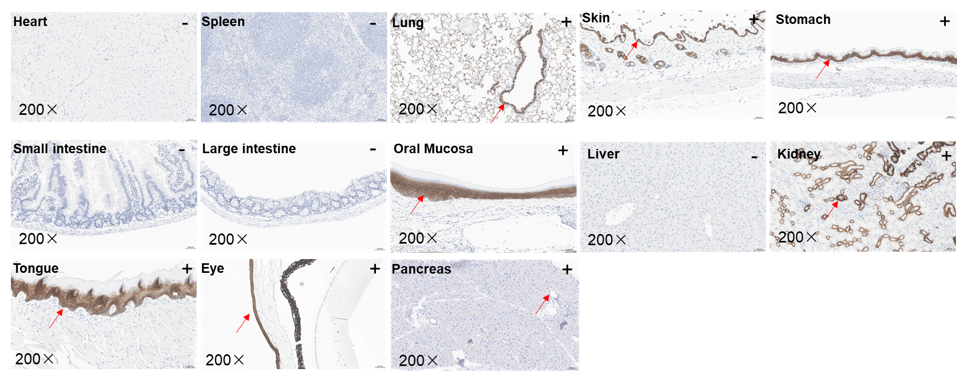
Immunohistochemical (IHC) analysis of TROP2 protein expression in B-hTROP2 mice. Major were collected from homozygous B-hTROP2 mice (H/H) and analyzed by IHC with anti-human TROP2 antibody (Abcam, ab214488)

Analysis of leukocyte subpopulations by flow cytometry in immune organs and blood. Splenocytes, peripheral blood, and lymph nodes were isolated from female C57BL/6 and B-hTROP2 mice (female, 8-week-old, n=3). Single live cells were gated on the CD45⁺ population and analyzed by flow cytometry as indicated. Values are expressed as mean ± SEM.

Analysis of T-cell subpopulations by flow cytometry in immune organs and blood. Splenocytes, peripheral blood, and lymph nodes were isolated from female C57BL/6 and B-hTROP2 mice (female, 8-week-old, n=3). Single live cells were gated on the TCRβ⁺ T-cell population and analyzed by flow cytometry as indicated. Values are expressed as mean ± SEM.

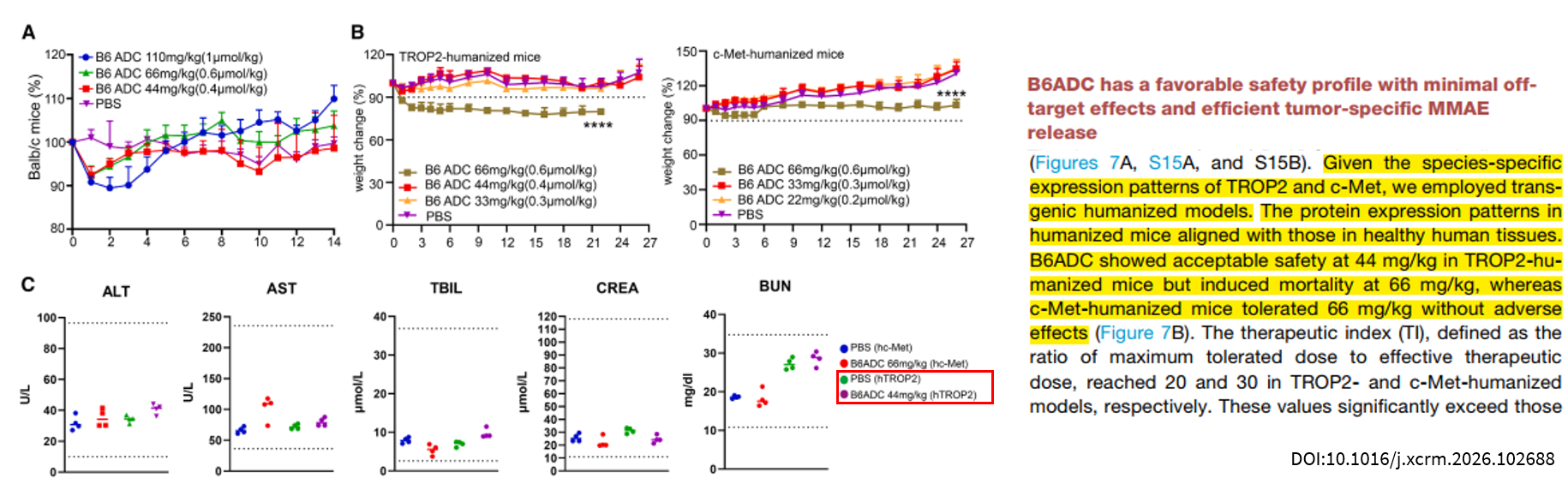
Safety and pharmacokinetics of bispecific nanobody-drug conjugate (B6ADC) (by the clients). (A) Body weight changes in BALB/c mice treated with B6ADC at doses of 44 mg/kg, 66 mg/kg, and 110 mg/kg (n = 4∼6/group). (B) Dose-dependent safety evaluation of B6ADC in TROP2-humanized mice and c-Met-humanized mice (n = 4/group). (C) Biochemical analysis of liver function (AST, ALT, and T-Bil) and kidney function (Cr and BUN) in TROP2-humanized mice and c-Met-humanized mice (n =4/group).
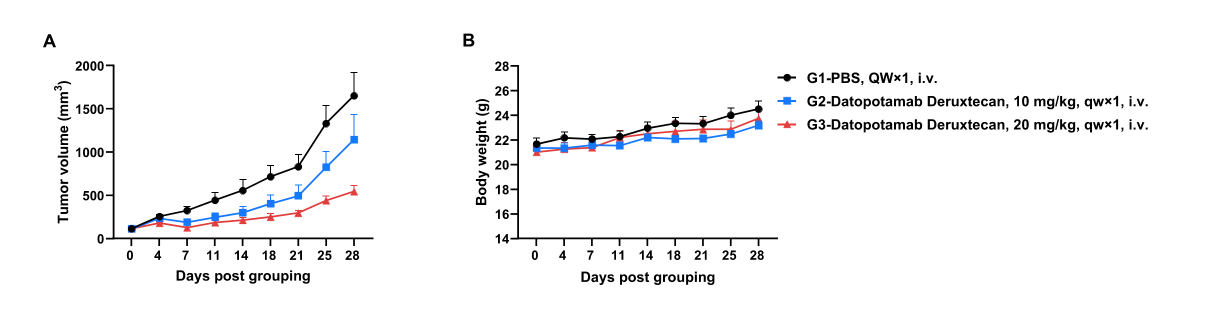
Establishment of a MC38 model in B-hTROP2 mice and in vivo efficacy study of anti-human TROP2 antibody-drug conjugate (Datopotamab Deruxtecan, in-house). Murine colon cancer B-hTROP2 mid MC38 cells (Cat# 311057) were subcutaneously implanted into homozygous B-hTROP2 mice (female, 7-8-week-old, n=6).
Mice were grouped when tumor volume reached approximately 100 mm3, at which time they were intravenously injected with anti-human TROP2 ADC Datopotamab Deruxtecan (in-house) as indicated in panel. Values are expressed as mean ± SEM.

In vivo efficacy of anti-human TROP2 ADC-individual tumor growth curves.
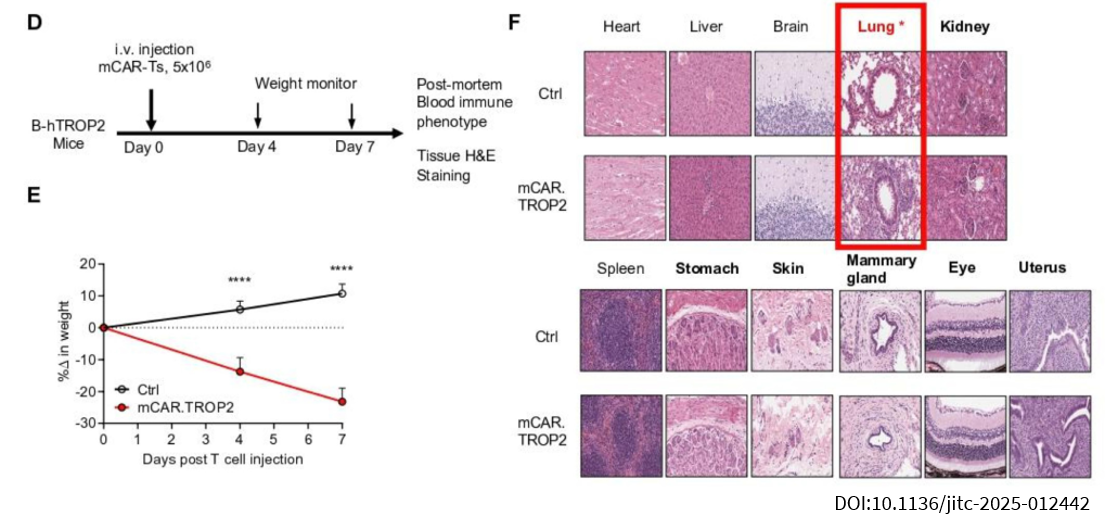
Preclinical safety evaluation of TROP2-specific CAR-Ts using TROP2-humanized mouse model (by the clients). (D) Schematics of safety evaluation of mCAR.TROP2 T cells in TROP2-humanized (B-hTROP2) mouse model. (E) Changes in body weight of the B-hTROP2 mice infused with mCAR.TROP2 or Ctrl T cells at day 4 and 7 compared with day 0. (F) Representative micrographs of H&E staining on various organs harvested from B-hTROP2 mice infused with mCAR.TROP2 or Ctrl T cells for 7days; data shown are representative of two mice from Ctrl group and four mice from mCAR.TROP2 group; scale bars, 50µm.
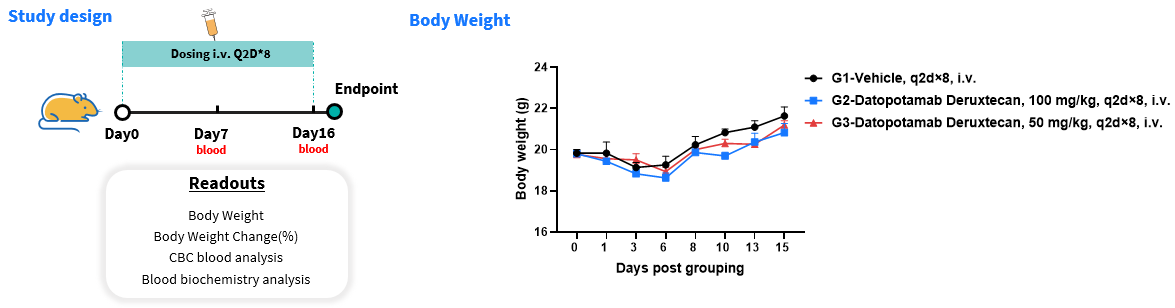
In vivo toxicity test of Datopotamab Deruxtecan (Dato-DXd). Anti-human TROP2 antibody Datopotamab Deruxtecan (In house) was intravenously injected into B-hTROP2 mice (Male, 8 weeks old, n=3). Mice were weighed every two days, and their condition was observed daily. At the end of the experiment, blood samples were collected for complete blood count test. Values are expressed as mean ± SEM.
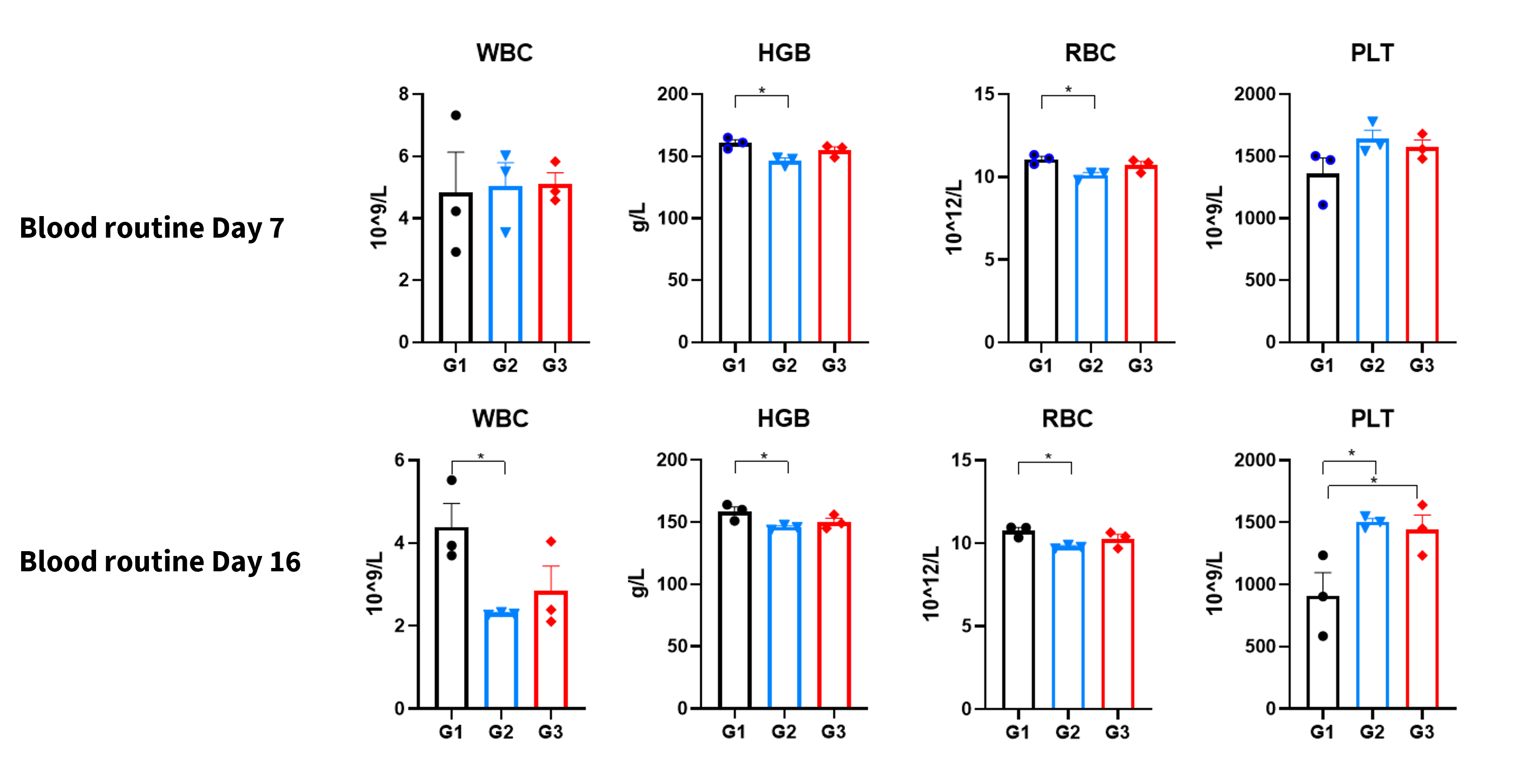
In vivo toxicity test of Datopotamab Deruxtecan (Dato-DXd). At the end of the experiment, blood samples were collected for complete blood count test.

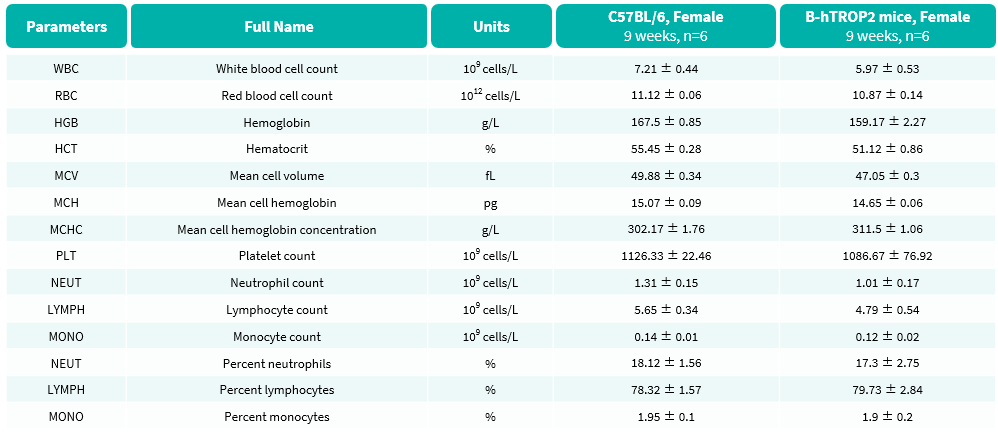
Complete blood count (CBC) of B-hTROP2 mice. Values are expressed as mean ± SD.
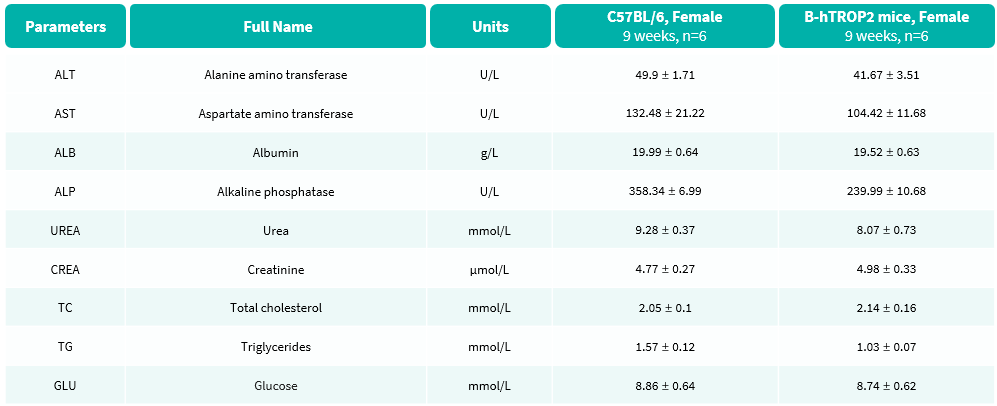
Blood biochemical parameters of B-hTROP2 mice are shown. Values are expressed as mean ± SD.