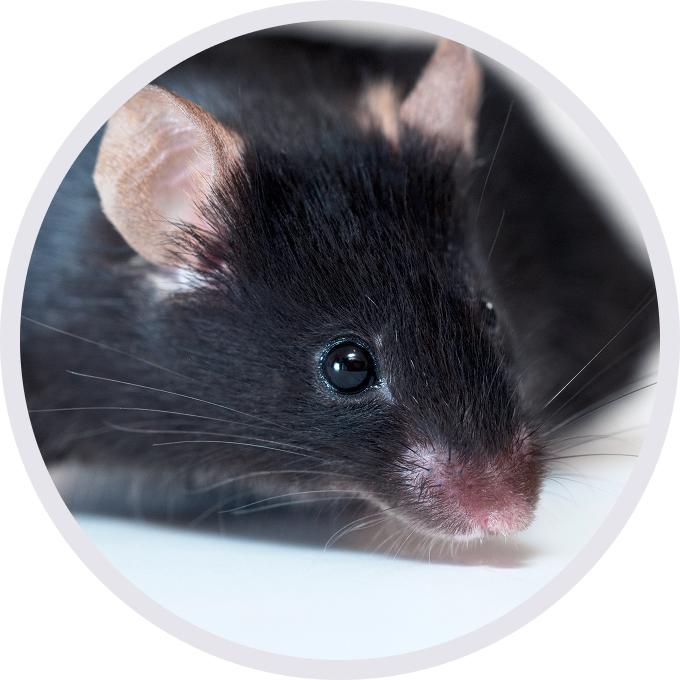
C57BL/6JNifdc-Tg(CH17-70O18)1Bcgen/Bcgen • 113146

Gene Information: PMP22 is expressed at low levels in thymic tissue and is primarily associated with peripheral nerve myelination rather than thymic development or immune function.
Protein Expression: PMP22 is an integral membrane protein predominantly expressed in Schwann cells of the peripheral nervous system, where it contributes to the formation and maintenance of myelin sheaths.
Signaling Pathway: Abnormal overexpression or mutations of PMP22 disrupt myelin stability and trigger endoplasmic reticulum stress, leading to peripheral nerve demyelination and neurodegenerative signaling.
Therapeutic Strategy: Therapeutic strategies targeting PMP22 mainly focus on reducing its overexpression via antisense oligonucleotides, gene silencing, or small molecules to alleviate demyelination in hereditary neuropathies.

Gene targeting strategy for B-Tg(hPMP22) mice. The BAC containing the whole human PMP22 genome sequence was randomly inserted into mouse genome in B-Tg(hPMP22) mice.

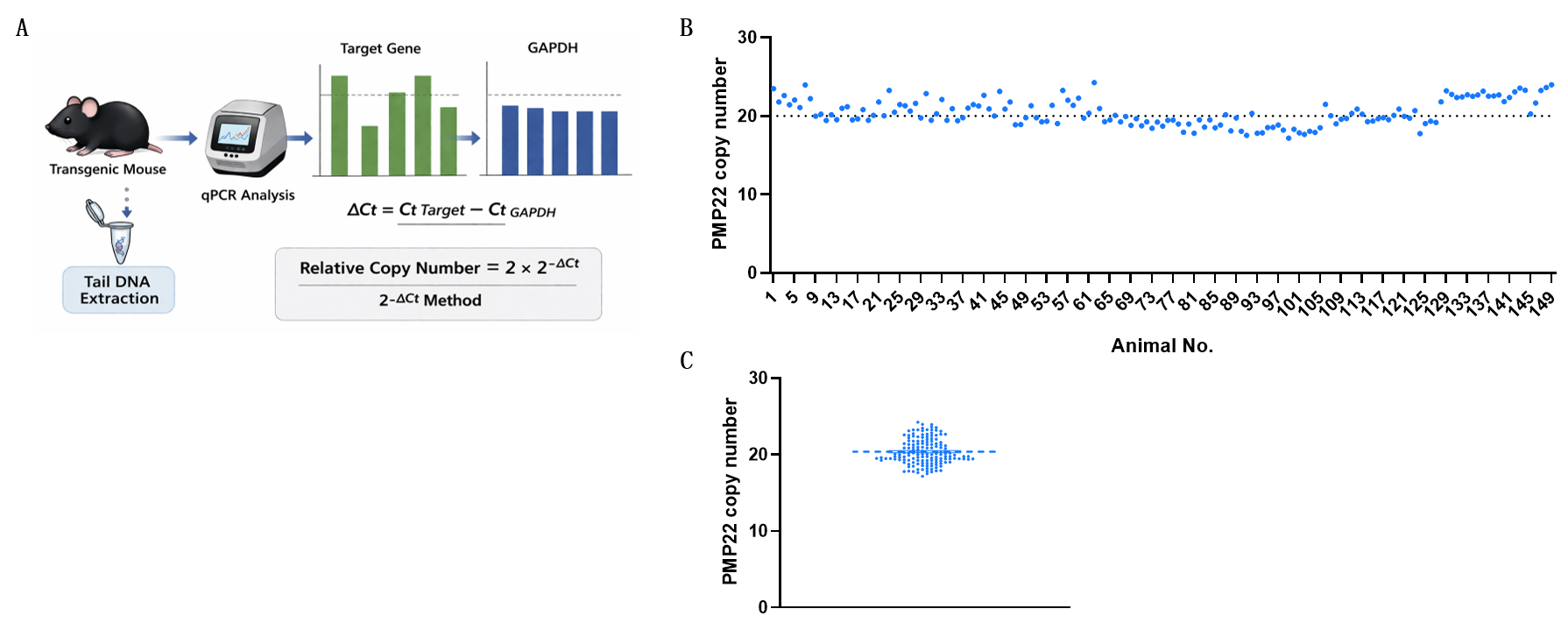
DNA copy number analysis of human PMP22 in B-Tg(hPMP22) mice. Relative copy number was quantified using real‑time quantitative PCR (qPCR) and calculated by the 2−ΔCt method with mouse GAPDH as the internal reference gene. (A) qPCR methods. (B, C) Copy number results.

Comparison of conduction velocity between C57BL/6 and B-Tg(hPMP22) mice. The bar graph illustrates the mean conduction velocity (in meters per second) for wild-type C57BL/6 (male, 8-week-old, n=5) and B-Tg(hPMP22) (male, 8-week-old, n=12). The B-Tg(hPMP22) mice exhibit significantly lower conduction velocities compared to the wild-type C57BL/6, suggesting that the B-Tg(hPMP22) mice have impaired nerve conduction, which is consistent with phenotypes of CMT1A.
Note: This experiment was performed by the client using B-Tg(hPMP22) mice. All the other materials were provided by the client.
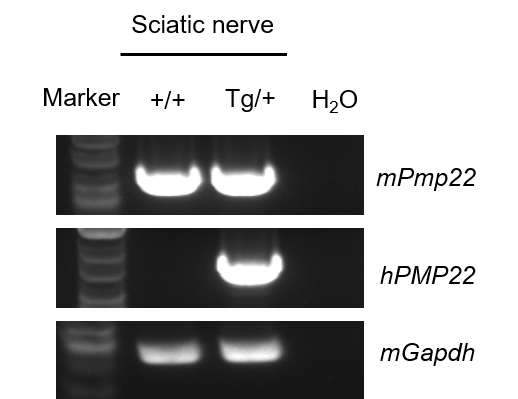
Strain specific analysis of PMP22 mRNA expression in wild-type C57BL/6 mice and B-Tg(hPMP22) mice by RT-PCR. Sciatic nerve RNA were isolated from wild-type C57BL/6 mice (+/+) and hemizygote B-Tg(hPMP22) (Tg/+), then cDNA libraries were synthesized by reverse transcription, followed by PCR with mouse or human PMP22 primers. Mouse Pmp22 mRNA was detectable in wild-type C57BL/6 mice and hemizygote B-Tg(hPMP22).

Strain specific analysis of PMP22 mRNA expression in B-Tg(hPMP22) mice by RT-qPCR. Brachial plexus and sciatic nerve RNA were isolated from hemizygote B-Tg(hPMP22) (Tg/+) (female and male, 7-week-old, n=3), then cDNA libraries were synthesized by reverse transcription, followed by qPCR with mouse or human PMP22 primers. (A) CT value of mouse and human PMP22. (B) Relative mRNA expression levels of PMP22. Gene expression was normalized to the reference gene GAPDH and calculated using the 2^(−ΔΔCt) method.
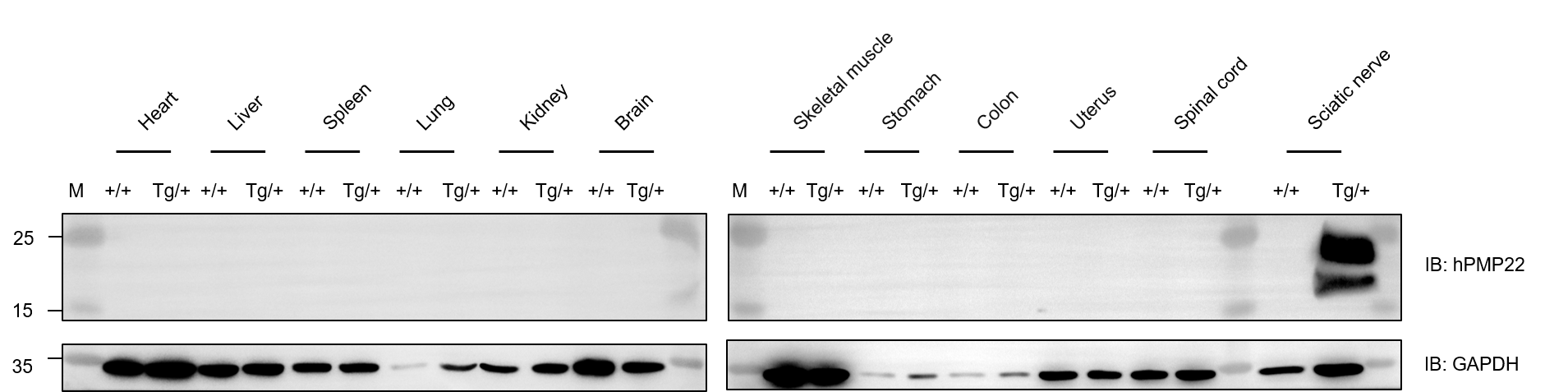
Western blot analysis of PMP22 protein expression in hemizygote B-Tg(hPMP22) mice. Various tissue lysates were collected from wild-type C57BL/6JNifdc mice (+/+) and hemizygote B-Tg(hPMP22) mice (Tg/+), and then analyzed by western blot with species-specific anti-human PMP22 antibody (abcam, ab270400). 20 μg total proteins were loaded for western blotting analysis. Human PMP22 can only be detected in sciatic nerve from B-Tg(hPMP22) mice but not in other tissues. M, marker.

Behavioral performance in wild-type C57BL/6JNifdc and transgenic B-Tg(hPMP22) mice. Clasping tests were conducted to assess the behavioral performance in 3-month-old (A) and 5-month-old (B) wild-type C57BL/6JNifdc and transgenic B-Tg(hPMP22) mice (female, n=15; male, n=10 or 15). Transgenic B-Tg(hPMP22) mice show significantly higher clinical scores, suggesting impaired neurological function. Values are expressed as mean ± SEM. Significance was determined by one-way ANOVA. ***P < 0.001.

Behavioral performance in wild-type C57BL/6JNifdc and transgenic B-Tg(hPMP22) mice. Grip strength tests were conducted to assess the foreleg muscular strength and grip ability of 3-month-old (A) and 5-month-old (B) wild-type C57BL/6JNifdc and transgenic B-Tg(hPMP22) mice (female, n=15; male, n=10 or 15). The grip strength of transgenic B-Tg(hPMP22) mice was decreased compared with wild-type mice, showing grip strength impairments of transgenic female B-Tg(hPMP22) mice. All grip strength measurements are normalized to the individual animal’s body weight. Values are expressed as mean ± SEM. Significance was determined by one-way ANOVA. *P < 0.05, **P < 0.01, ***P < 0.001.
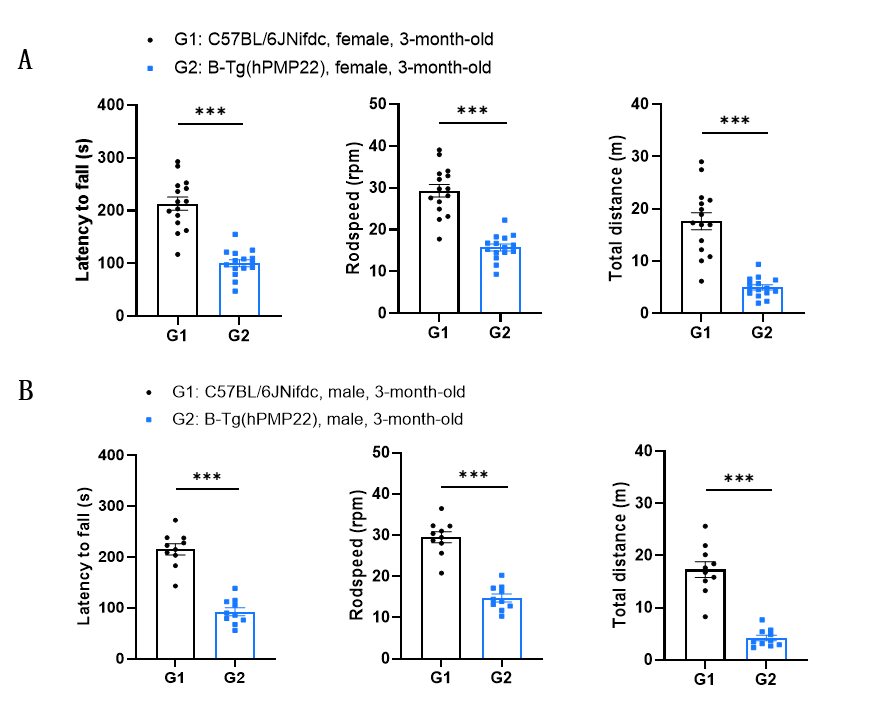
Behavioral performance in wild-type C57BL/6JNifdc and transgenic B-Tg(hPMP22) mice. Rotarod tests were conducted to assess the motor coordination, balance, and endurance of female (A) and male (B) wild-type C57BL/6JNifdc and transgenic B-Tg(hPMP22) mice (female, 3-month-old, n=15; male, 3-month-old, n=10). The latency to fall, rodspeed and total distance were decreased in transgenic B-Tg(hPMP22) mice, showing motor impairments of transgenic mice. Values are expressed as mean ± SEM. Significance was determined by one-way ANOVA. *P < 0.05, **P < 0.01, ***P < 0.001.
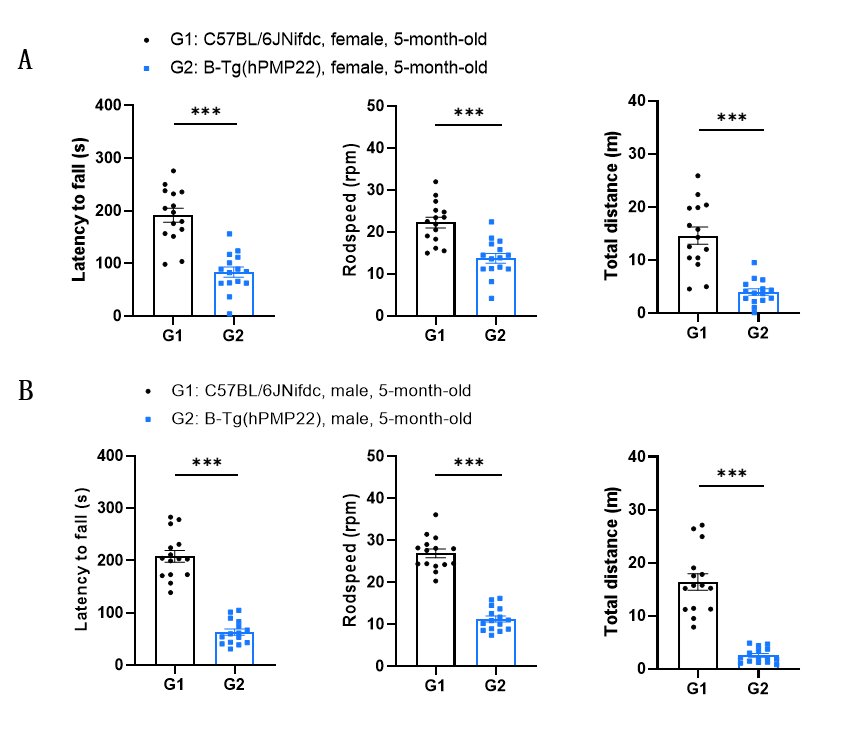
Behavioral performance in wild-type C57BL/6JNifdc and transgenic B-Tg(hPMP22) mice. Rotarod tests were conducted to assess the motor coordination, balance, and endurance of female (A) and male (B) wild-type C57BL/6JNifdc and transgenic B-Tg(hPMP22) mice (female, 5-month-old, n=15; male, 5-month-old, n=15). The latency to fall, rodspeed and total distance were decreased in transgenic B-Tg(hPMP22) mice, showing motor impairments of transgenic mice. Values are expressed as mean ± SEM. Significance was determined by one-way ANOVA. *P < 0.05, **P < 0.01, ***P < 0.001.
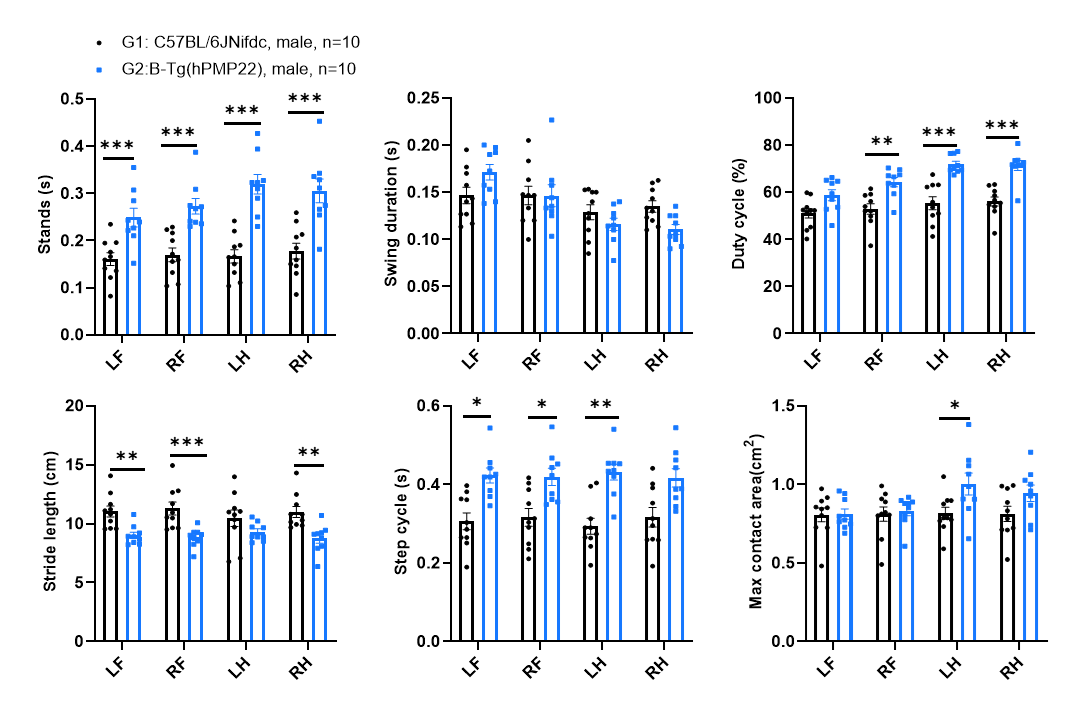
Gait analysis of wild-type C57BL/6JNifdc and transgenic B-Tg(hPMP22) mice. Gait analysis was conducted to assess the locomotor function and coordination of wild-type C57BL/6JNifdc and transgenic B-Tg(hPMP22) mice (male, 13-week-old, n=10). The transgenic B-Tg(hPMP22) mice exhibit significantly different gait characteristics across multiple gait parameters, indicating that the locomotor ability and coordination of the transgenic mice are abnormal. Data were represented as mean ± SEM. Statistical analysis was performed using unpaired two-way ANOVA. * p ≤ 0.05, ** p≤ 0.01, *** p ≤ 0.001. RF, right front paw. LF, left front paw. RH, right hind paw. LH, left hind paw.
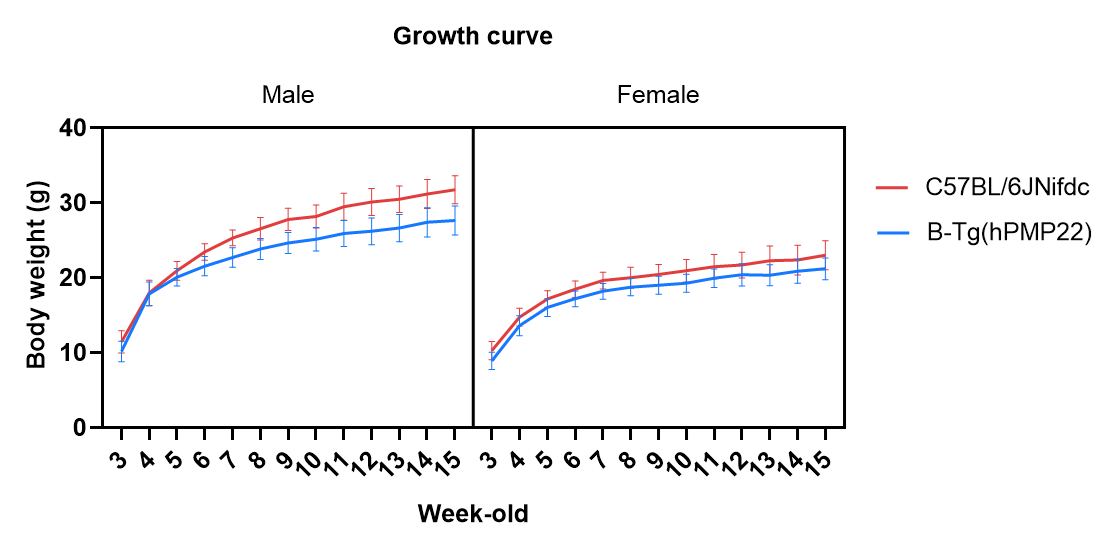
Growth curve of body weight in male and female C57BL/6JNifdc and B-Tg(hPMP22) mice from 3 to 15 weeks of age. Body weight was measured weekly from 3 to 15 weeks of age in male (left panel) and female (right panel) mice. Data are presented as mean ±SD.

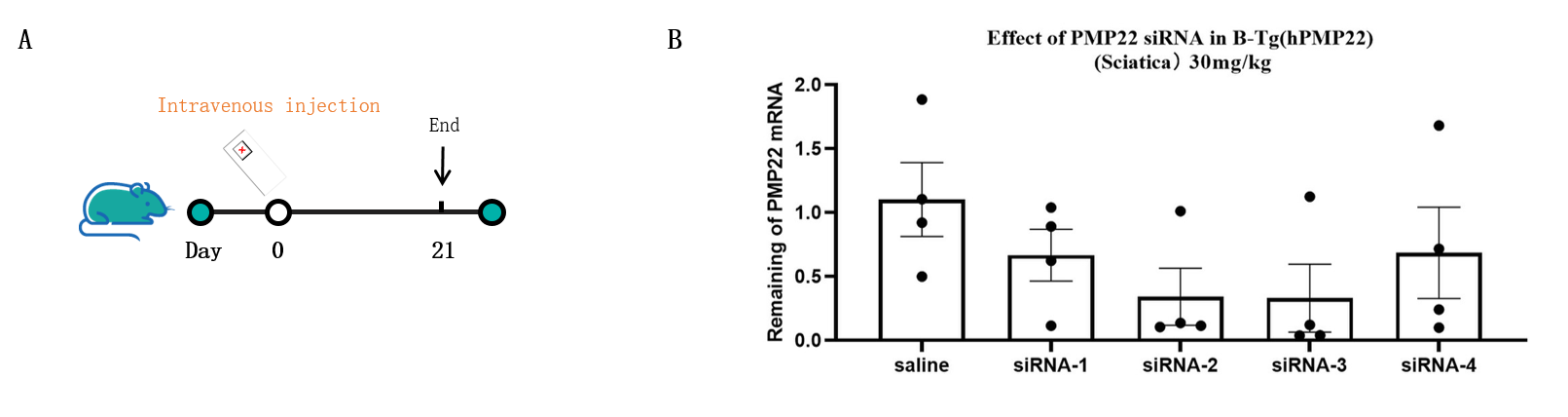
The inhibitory efficiency of the nucleic acid drugs against human PMP22 in hemizygote B-Tg(hPMP22) mice. The human PMP22 targeted nucleic acid drugs (provide by client) and saline were administered to the B-Tg(hPMP22) mice individually on day 0. The mice were sacrificed on day 21, and the sciatic nerve tissue was collected to detect the expression level of human PMP22 mRNA by qPCR. Values are expressed as mean ± SEM.
Note: This experiment was performed by the client using B-Tg(hPMP22) mice. All the other materials were provided by the client.