あなたもお好きかもしれません
Autoimmune diseases, where the immune system mistakenly attacks the body's own tissues, affect millions of people globally. Traditional treatments often involve broad immunosuppression, which can lead to unwanted side effects and increased susceptibility to infections (Handley et al. 2021). Recent advancements in immunotherapy have introduced more targeted approaches, notably the development of CD3×B cell bispecific antibodies. These innovative therapies aim to modulate the immune system with greater precision, offering hope for more effective and safer treatments.
Understanding CD3 and Its Role in T Cell Activation
CD3 is a protein complex expressed on the surface of T cells that plays a crucial role in initiating T cell responses. It comprises four distinct subunits: γ (gamma), δ (delta), ε (epsilon), and ζ (zeta), which associate with the T cell receptor (TCR) to form the TCR-CD3 complex. Among the subunits, CD3 epsilon (ε), encoded by the CD3E gene, undergoes conformational changes upon TCR engagement with antigen–MHC complexes, which are critical for initiating intracellular signaling cascades. Engaging CD3E can efficiently trigger T cell activation and cytotoxic responses, even in the absence of classical antigen presentation, making it a promising target in immunotherapy.
Understanding the structure and function of these components is vital for developing therapies that aim to engage or modulate T cell activity.
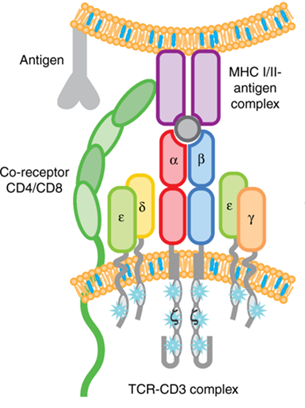
TCR (α and β) and CD3 (γ, δ, ε, and ζ) Complex (Helsen et al. 2018)
TCR signaling is a finely tuned process involving a cascade of biochemical events. Upon antigen recognition, T cells activate through a series of phosphorylation steps mediated by kinases like ZAP-70, leading to the activation of transcription factors such as NFAT, NF-κB, and AP-1. This orchestrated signaling ensures appropriate T cell responses, balancing activation and tolerance.
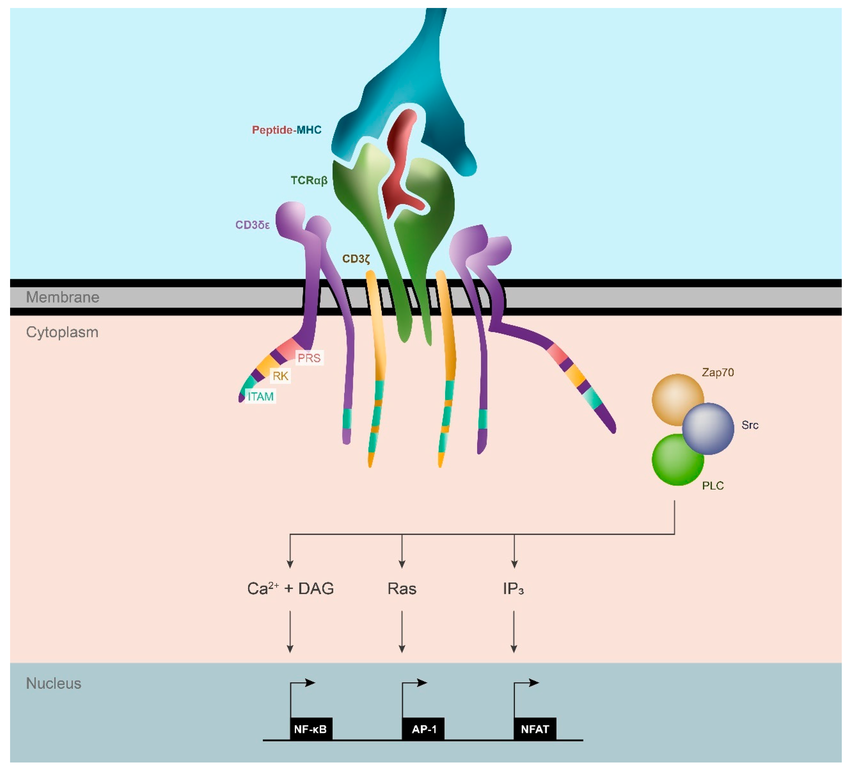
TCR structure and T cell activation pathway (Menon et al. 2023)
The Promise of CD3×B Cell Bispecific Antibodies
Bispecific antibodies are engineered molecules capable of simultaneously binding two different antigens. In the context of autoimmune diseases, CD3×B cell bispecific antibodies are designed to bind CD3 on T cells and specific markers on B cells, such as CD19 or CD20. This dual engagement brings T cells into close proximity with B cells, facilitating targeted elimination of autoreactive B cells responsible for disease pathology.
A notable example is blinatumomab, a CD19×CD3 bispecific antibody initially approved for treating certain leukemias. Recent studies have explored its application in autoimmune conditions. For instance, a 2024 study published in Nature Medicine demonstrated its efficacy in patients with refractory rheumatoid arthritis, highlighting the potential of bispecific antibodies in modulating immune responses beyond oncology (Bucci et al. 2024).
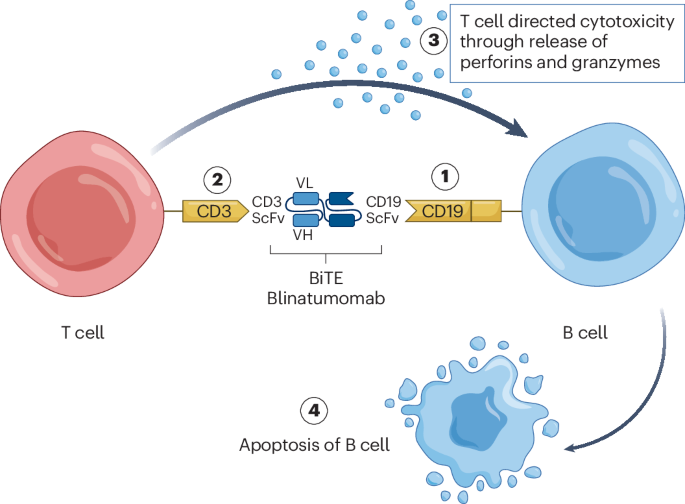
Mechanism of Action of CD19×CD3 Bispecific Antibody (Humby et al. 2024)
Biocytogen has developed a variety of multi-target humanized mouse models expressing human CD3E/CD3EDG and B cell markers, offering robust platforms for evaluating the efficacy and safety of CD3 bispecific antibodies for autoimmune diseases in vivo. These models exhibit normal immune cell development and function, ideal for translational research. For example, the B-hCD3E/hCD19/hCD20 mouse model expresses human CD3ε, CD19, and CD20, allowing for comprehensive studies on T cell-B cell interactions and therapeutic interventions.
Case Study1: B-hCD3E/hCD19/hCD20 mice
CD19 is a B cell co-receptor that enhances BCR signaling and is widely targeted in therapies for B cell malignancies and autoimmune disorders. CD20 is expressed from the pre-B to mature B cell stages, but is absent on hematopoietic stem cells and terminally differentiated plasma cells, making it a selective and safe target for B cell-directed therapies. |
|
Flow cytometry of splenocytes (top) and blood (bottom) from wild-type C57BL/6JNifdc and homozygous B-hCD3E/hCD19/hCD20 mice. (A) Leukocyte subpopulations. (B) T cell subsets. Frequencies of T cells, B cells, NK cells, dendritic cells, neutrophils, monocytes, and macrophages in B-hCD3E/hCD19/hCD20 mice were comparable to wild-type controls. Mean ± SEM. |
|
Flow cytometry of lymph node cells from wild-type C57BL/6JNifdc and homozygous B-hCD3E/hCD19/hCD20 mice. (A) Leukocyte subpopulations. (B) T cell subsets. Frequencies of T cells, B cells, and NK cells in B-hCD3E/hCD19/hCD20 mice were comparable to wild-type controls. Mean ± SEM. |
Case Study2: B-hCD3E/hCD20 mice
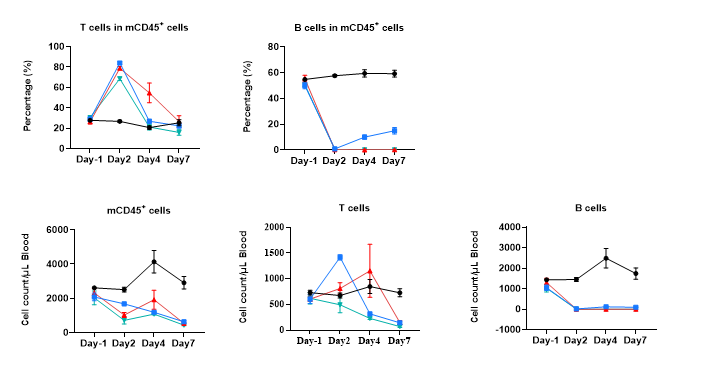
In vivo B cell depletion by anti-hCD3E/hCD20 bispecific antibodies in B-hCD3E/hCD20 mice. Mice were treated with a single i.v. dose of PBS or anti-hCD3E/hCD20 BsAb (provided by client) on Day 0. (Top) Flow cytometry analysis shows dose-dependent T cell enrichment and B cell depletion among mCD45⁺ cells. (Bottom) Peripheral blood analysis reveals sustained B cell clearance across all treatment groups. Mean ± SEM.
Case Study3: B-hCD3EDG/hBCMA mice
B-cell maturation antigen (BCMA), also known as tumor necrosis factor receptor superfamily member 17 (TNFRSF17). It is predominantly expressed on mature B lymphocytes and plasma cells (Shah et al. 2020). In multiple myeloma, a cancer of plasma cells, BCMA is highly expressed on malignant cells, making it an ideal target for immunotherapies, including antibody-drug conjugates (ADCs) such as Blenrep; chimeric antigen receptor (CAR) T-cell therapies such as Abecma, and bispecific T-cell engagers (BiTEs) such as Tecvayli.
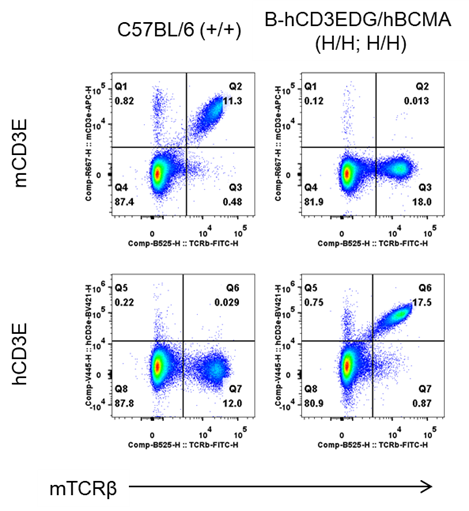
Strain specific CD3E protein expression analysis in homozygous B-hCD3EDG/hBCMA mice by flow cytometry. Splenocytes were collected from wild-type (WT) mice (+/+) and homozygous B-hCD3EDG/hBCMA mice (H/H; H/H), and analyzed by flow cytometry with species-specific anti-CD3E antibodies. Mouse CD3E was detectable in WT mice (+/+). Human CD3E was exclusively detectable in homozygous B-hCD3EDG/hBCMA mice (H/H; H/H) but not in WT mice (+/+).
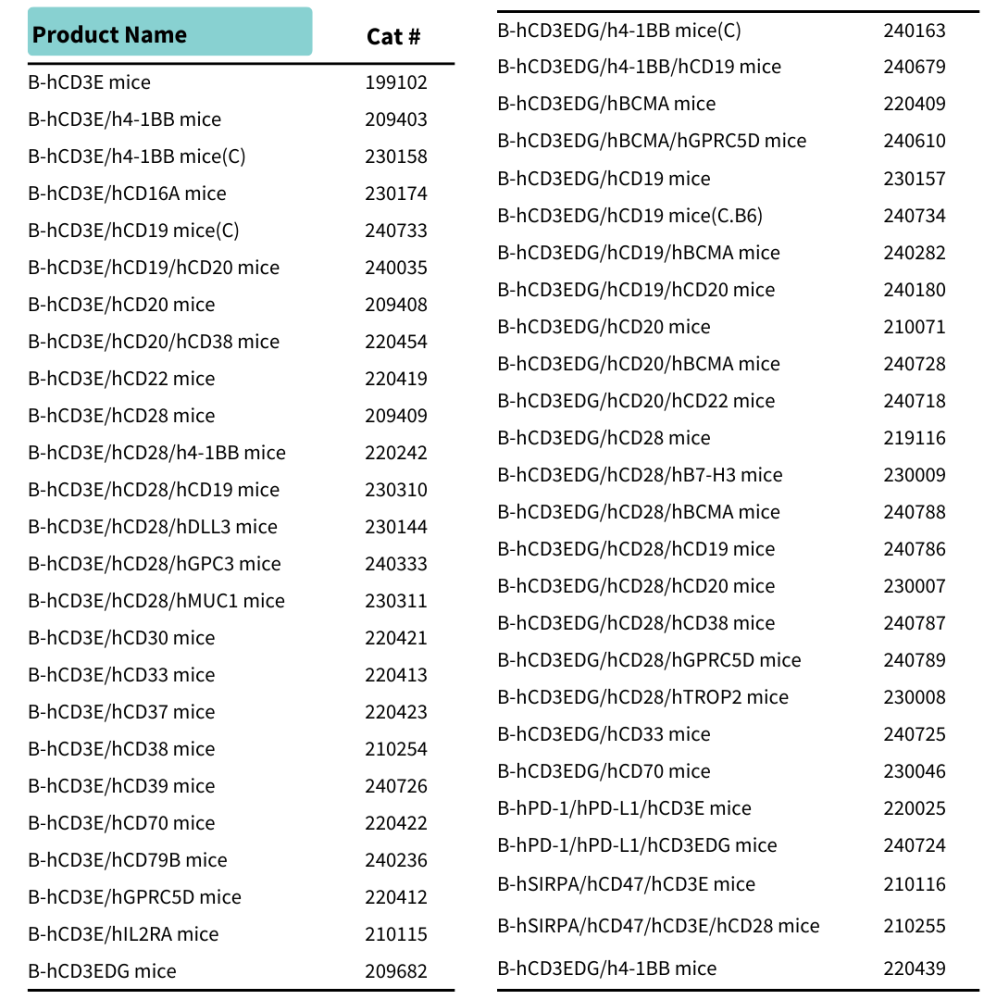
Featured Humanized Mouse Models for CD3 × B Cell Marker at Biocytogen
Conclusion
The emergence of CD3×B cell bispecific antibodies marks a major breakthrough in autoimmune disease therapy. By selectively targeting pathogenic immune cells, these next-generation treatments promise enhanced efficacy and a more favorable safety profile compared to conventional approaches. Contact us today to discover how our humanized mouse models can accelerate your development of innovative therapies!
Reference:
Handley, Guy, and Jonathan Hand. "Adverse effects of immunosuppression: infections." Pharmacology of Immunosuppression. Cham: Springer International Publishing, 2021. 287-314.
Helsen, Christopher W., et al. "The chimeric TAC receptor co-opts the T cell receptor yielding robust anti-tumor activity without toxicity." Nature communications 9.1 (2018): 3049.
Menon, Ashwathi Puravankara, et al. "Modulating T cell responses by targeting CD3." Cancers 15.4 (2023): 1189.
Bucci, Laura, et al. "Bispecific T cell engager therapy for refractory rheumatoid arthritis." Nature Medicine 30.6 (2024): 1593-1601.
Humby, Frances, Bruce Kirkham, and Leonie Taams. "BiTE therapy for rheumatoid arthritis." Nature Medicine 30.6 (2024): 1533-1534.
Shah, Nina, et al. "B-cell maturation antigen (BCMA) in multiple myeloma: rationale for targeting and current therapeutic approaches." Leukemia 34.4 (2020): 985-1005.
Markham, Anthony. "Belantamab mafodotin: first approval." Drugs 80.15 (2020): 1607-1613.
Munshi, Nikhil C., et al. "Idecabtagene vicleucel in relapsed and refractory multiple myeloma." New England Journal of Medicine 384.8 (2021): 705-716.
Kang, Connie. "Teclistamab: first approval." Drugs 82.16 (2022): 1613-1619.