


B-hEGFR/hMET MC38

NA • 322515

B-hEGFR/hMET MC38

Catalog Number
322515
Strain Name
NA
Strain Background
C57BL/6
NCBI gene ID
1956,4233 (Human)
Aliases
ERBB, ERBB1, ERRP, HER1, NISBD2, NNCIS, PIG61, mENA; AUTS9, DA11, DFNB97, HGFR, RCCP2, c-Met

このページで

  • Description
  • Phenotypic analysis
  • Tumorigenicity

ポスター

すべて表示

    出版物

      Description
      • Origin: The MC38 cell line is derived from C57BL6 murine colon adenocarcinoma cells. The cell line is a commonly used murine model for colorectal carcinoma.
      •  Background Information: Epidermal Growth Factor Receptor (EGFR) is a transmembrane glycoprotein belonging to the receptor tyrosine kinase family. It mainly participates in the processes of cell growth, proliferation, differentiation and survival. EGFR shows abnormal expression or mutation in various types of cancers, such as non-small cell lung cancer, breast cancer, ovarian cancer, colorectal cancer, etc., and thus becomes an important therapeutic target. MET (Met proto-oncogene, receptor tyrosine kinase) is a receptor tyrosine kinase and the product of the MET proto-oncogene, consisting of alpha and beta subunits linked by disulfide bonds. It mainly participates in the processes of cellular survival, embryogenesis, and cellular migration and invasion upon binding to its ligand, hepatocyte growth factor. MET shows mutations, amplification, or overexpression in various types of cancers, such as papillary renal cell carcinoma, hepatocellular carcinoma, head and neck cancers, etc., and thus becomes an important therapeutic target.
      • Gene targeting strategy: The expression cassette containing an exogenous promoter, the extracellular region of human EGFR, and the transmembrane and intracellular regions of mouse Egfr was randomly inserted into the genome. The human MET coding sequence was inserted to replace part of murine exon 3. The insertion disrupts the endogenous murine Met gene, resulting in a non-functional transcript.
      • Tumorigenicity: Confirmed in B-hEGFR/hMET/hHGF mice.
      • Application: The B-hEGFR/hMET MC38 tumor models can be used for preclinical evaluation of bispecific antibody drugs targeting human EGFR and MET.
      • Notes: B-hEGFR/hMET MC38 is not tumorigenic in wild-type C57BL/6 mice owing to immunogenicity to the human EGFR/MET transgenes, therefore, inoculation must be performed in EGFR/MET dual humanized mice.
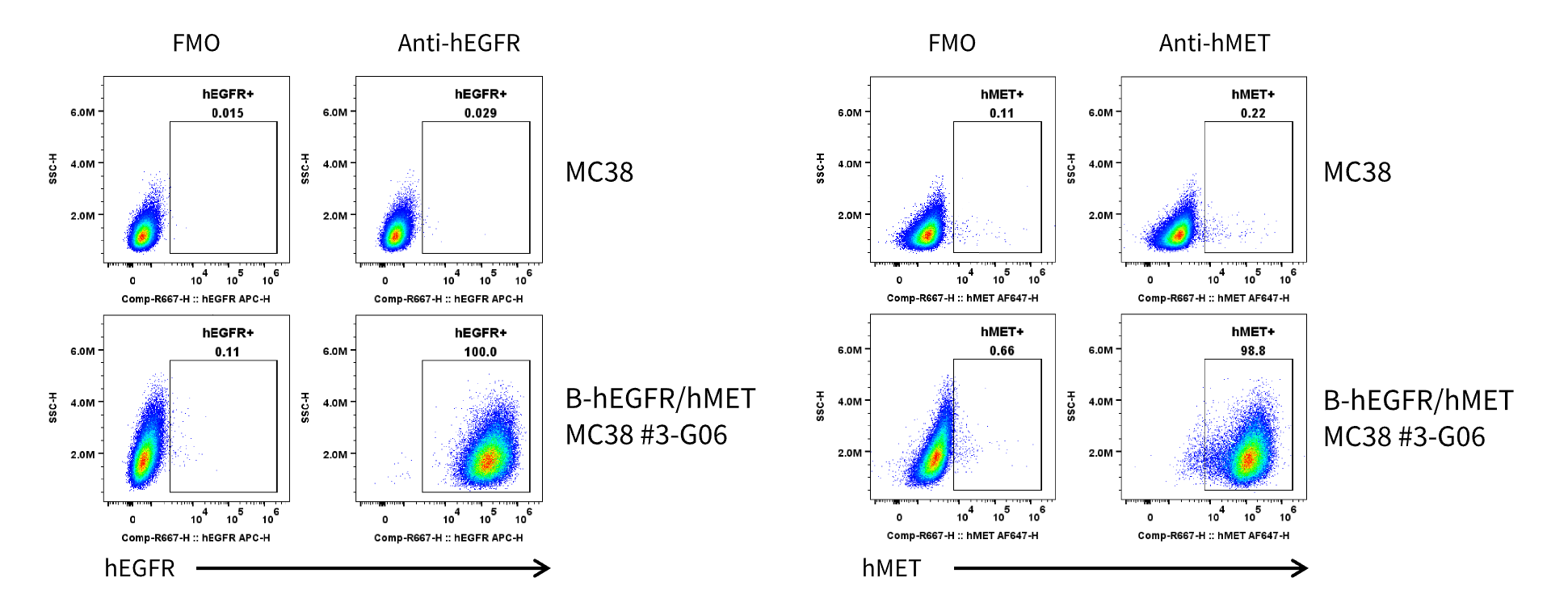
      EGFR and MET Protein Expression Analysis

      EGFR and MET expression analysis in B-hEGFR/hMET MC38 by flow cytometry. Single cell suspensions from wild-type MC38 and B-hEGFR/hMET MC38 #3-G06 cultures were stained with anti-human EGFR antibody (Biolegend, 352906) and anti-human MET antibody (in house).

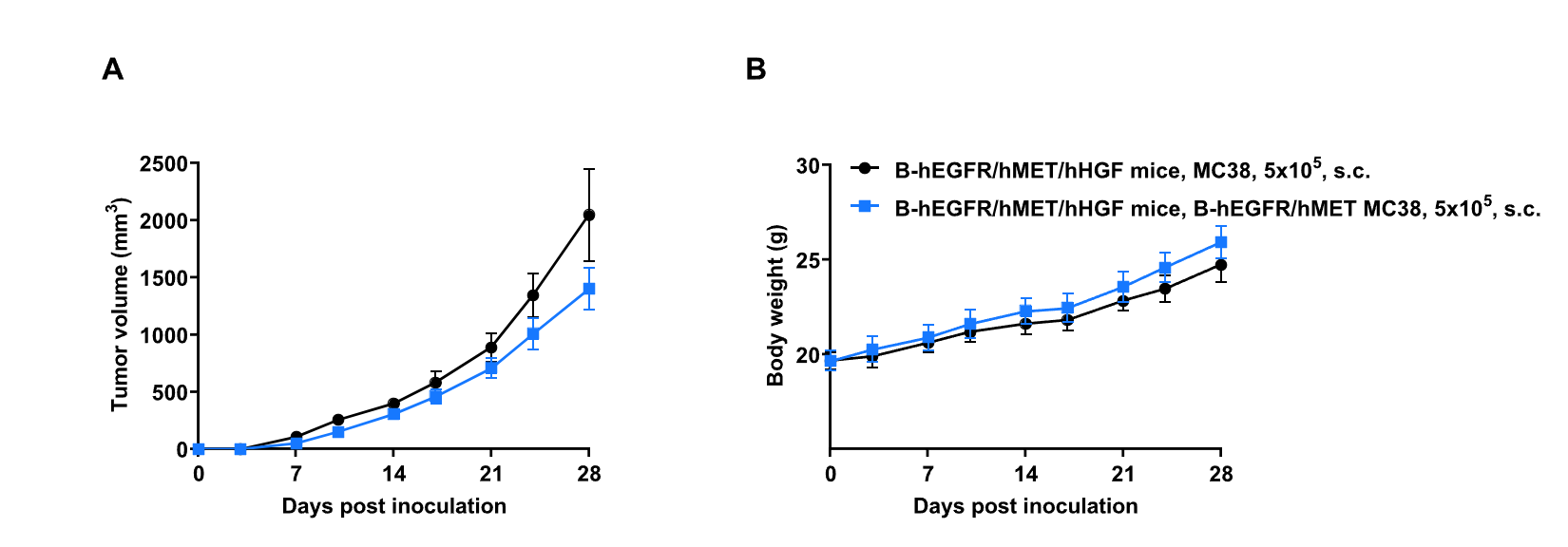
      Subcutaneous tumor growth of B-hEGFR/hMET MC38 cells

      B-hEGFR/hMET MC38 (5×10⁵) and wild-type MC38 cells (5×10⁵) were subcutaneously implanted into B-hEGFR/hMET/hHGF mice (male, 7-week-old, n=6). Tumor volume and body weight were measured twice a week. (A) Average tumor volume. (B) Body weight. Volume was expressed in mm3 using the formula: V=0.5 × long diameter × short diameter2. Results indicate that B-hEGFR/hMET MC38 cells were able to establish tumors in vivo and can be used for efficacy studies. Values are expressed as mean ± SEM.
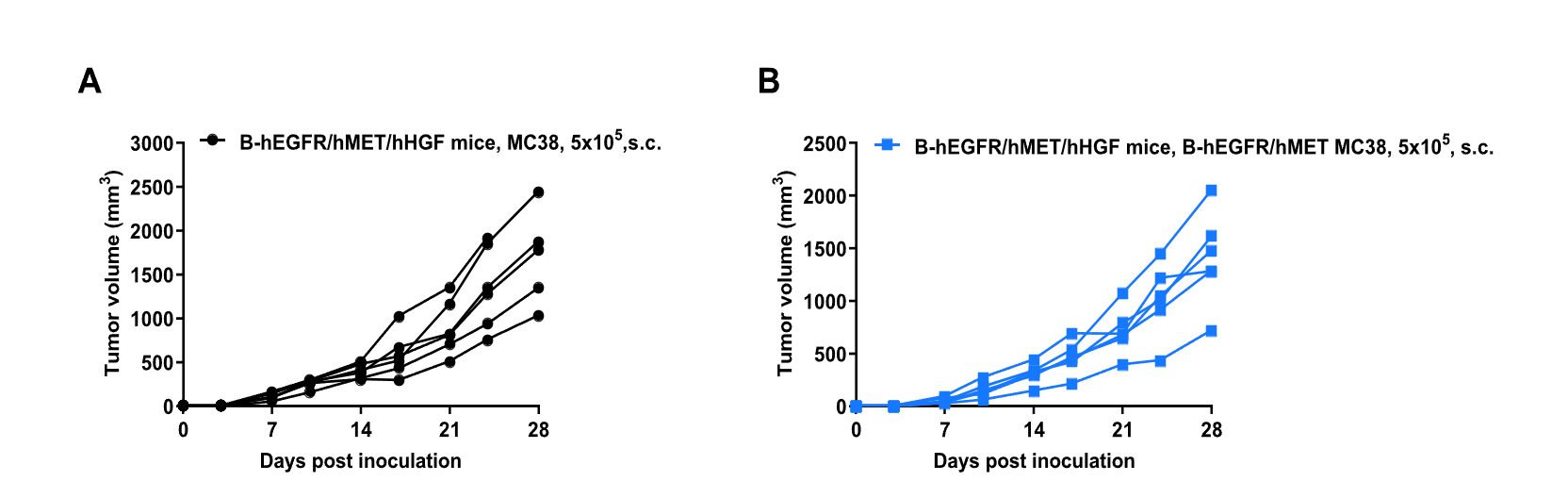
      B-hEGFR/hMET MC38 tumor growth curves from individual mouse

      B-hEGFR/hMET MC38 (5×10⁵) and wild-type MC38 cells (5×10⁵) were subcutaneously implanted into B-hEGFR/hMET/hHGF mice (male, 7-week-old, n=6). Results indicate that B-hEGFR/hMET MC38 cells were able to establish tumors in vivo and can be used for efficacy studies. Values are expressed as mean ± SEM.
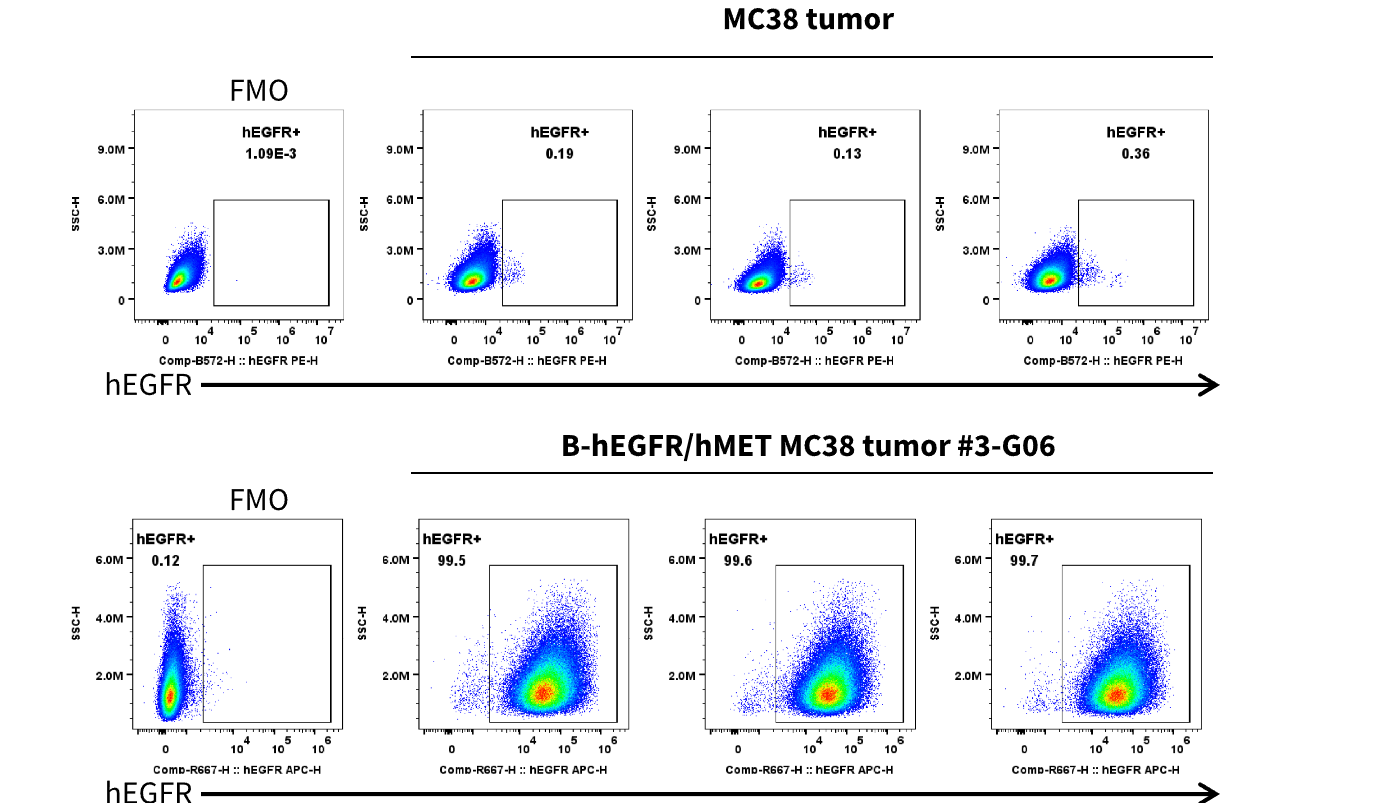
      EGFR Protein Expression Analysis of Tumor Tissue

      EGFR expression analysis in B-hEGFR/hMET MC38 by flow cytometry. B-hEGFR/hMET MC38 and wild-type MC38 cells were subcutaneously transplanted into B-hEGFR/hMET/hHGF mice (n=6). At the end of the experiment, tumor cells were harvested and analyzed for human EGFR expression by flow cytometry.
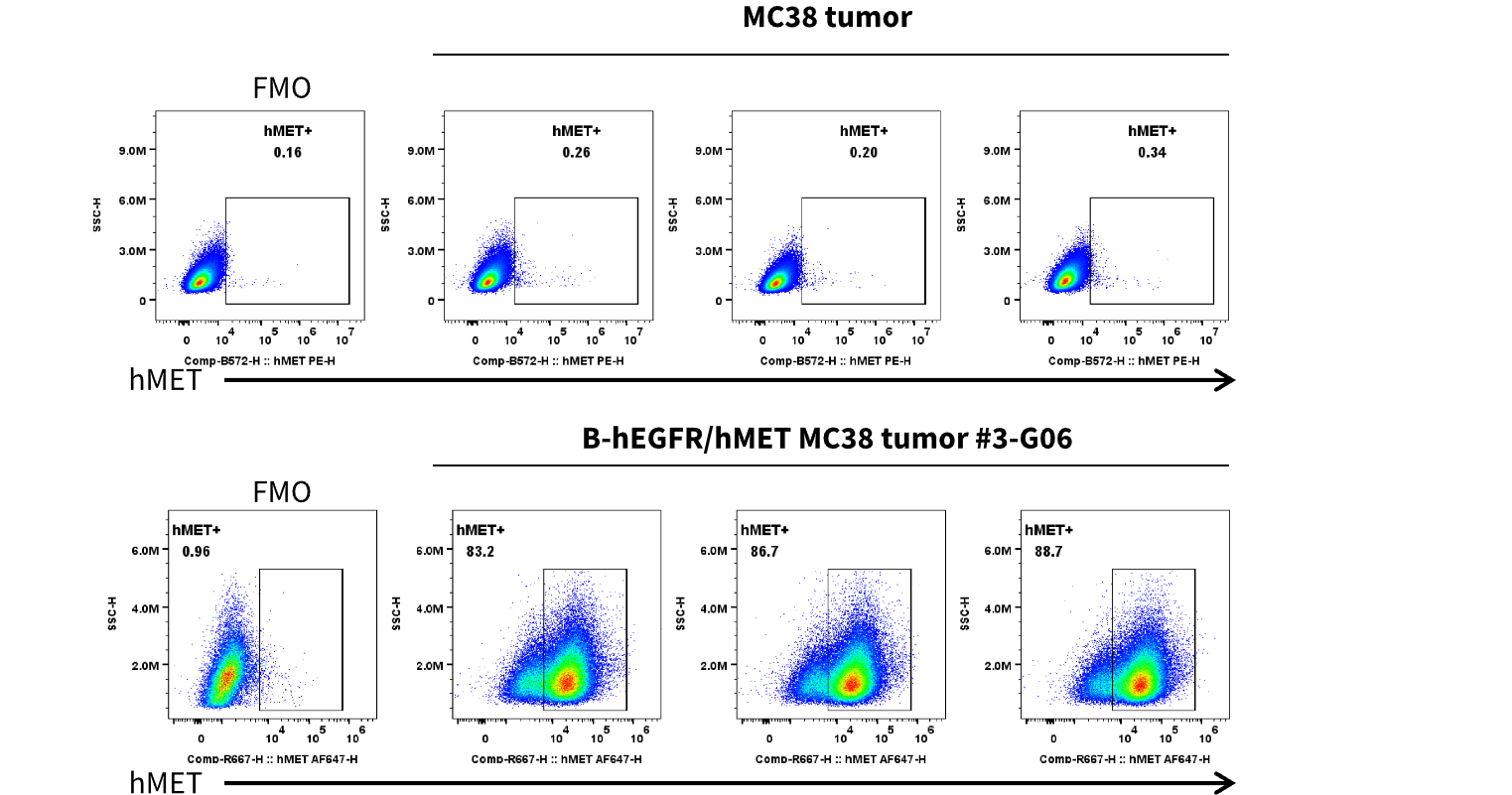
      MET Protein Expression Analysis of Tumor Tissue

      MET expression analysis in B-hEGFR/hMET MC38 by flow cytometry. B-hEGFR/hMET MC38 and wild-type MC38 cells were subcutaneously transplanted into B-hEGFR/hMET/hHGF mice (n=6). At the end of the experiment, tumor cells were harvested and analyzed for human MET expression by flow cytometry.