


B-HLA-A11.1/hKRAS*G12V B16-F10

NA • 322442

B-HLA-A11.1/hKRAS*G12V B16-F10

Product nameB-HLA-A11.1/hKRAS*G12V B16-F10
Catalog number322442
Strain nameNA
Strain backgroundC57BL/6
NCBI gene ID16653 (Human)
Chromosome2
Aliasesras; p21B; K-Ras; K-ras; Kras2; Ki-ras; Kras-2; K-Ras 2; c-K-ras; c-Ki-ras
TissueSkin
DiseaseMelanoma

このページで

  • Description
  • Phenotypic analysis
  • Tumorigenicity

ポスター

すべて表示

    出版物

      Description
      • Origin: The B16-F10 cell line is derived from C57BL/6J murine skin cells. The cell line is a commonly used murine model for melanoma.
      • Background Information: HLA-A belongs to the HLA class I heavy chain paralogues. This class I molecule is a heterodimer consisting of a heavy chain and a light chain (beta-2 microglobulin). The heavy chain is anchored in the membrane. Class I molecules play a central role in the immune system by presenting peptides derived from the endoplasmic reticulum lumen so that they can be recognized by cytotoxic T cells. This KRAS gene, a Kirsten ras oncogene homolog from the mammalian ras gene family, encodes a protein that is a member of the small GTPase superfamily. A single amino acid substitution is responsible for an activating mutation. The transforming protein that results is implicated in various malignancies, including lung adenocarcinoma, mucinous adenoma, ductal carcinoma of the pancreas and colorectal carcinoma. Alternative splicing leads to variants encoding two isoforms that differ in the C-terminal region. KRAS*G12V is a constitutively active, gain-of-function oncogenic mutation of the KRAS proto-oncogene.
      • Gene targeting strategy: The B2M gene (Exon 2 to Exon 3) of mouse were replaced by the sequence encompassing the human B2M CDS, HLA-A*1101 gene that included leader sequence, the KRAS*G12V peptide, the α1 and α2 domains ligated to a fragment of the murine H-2Db gene containing the α3, transmembrane and cytoplasmic domains. Human HLA-A11.1 is highly expressed on the surface of B-HLA-A11.1/hKRAS*G12V B16-F10.
      • Application: B-HLA-A11.1/hKRAS*G12V B16-F10 tumor models can be used for preclinical evaluation of cancer vaccines.
      Protein Expression Analysis

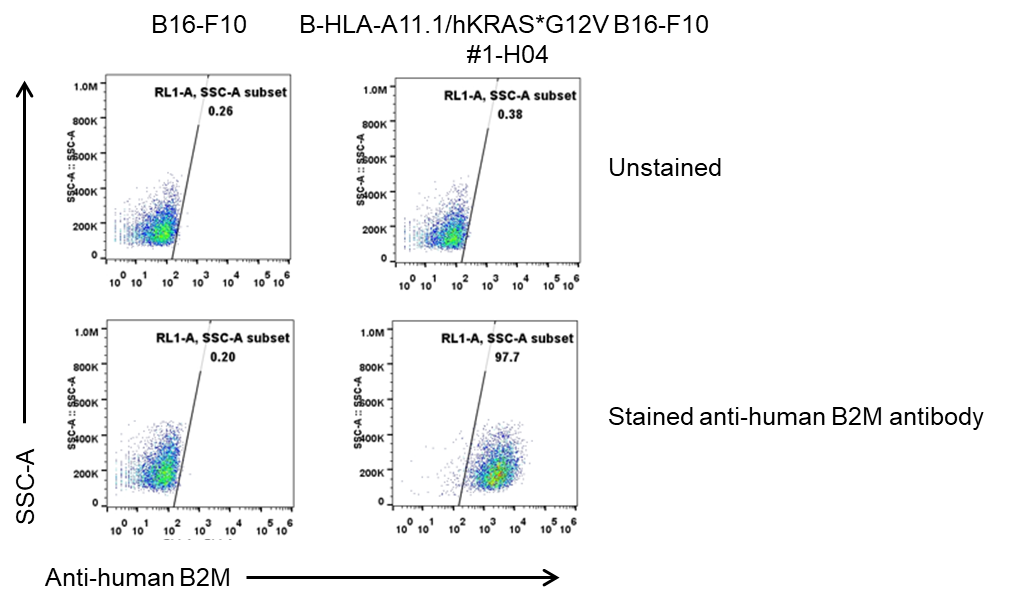
      Human B2M expression analysis in B-HLA-A11.1/hKRAS*G12V B16-F10 cells by flow cytometry. Single cell suspensions from wild-type B16-F10 cells and B-HLA-A11.1/hKRAS*G12V B16-F10 cells #1-H04 cultures were detected with species-specific anti-human B2M antibody (Biolegend, 395712). Human B2M was detected on the surface of B-HLA-A11.1/hKRAS*G12V B16-F10 cells but not on the wild-type B16-F10 cells.

      Tumor Growth Curve & Body Weight Changes

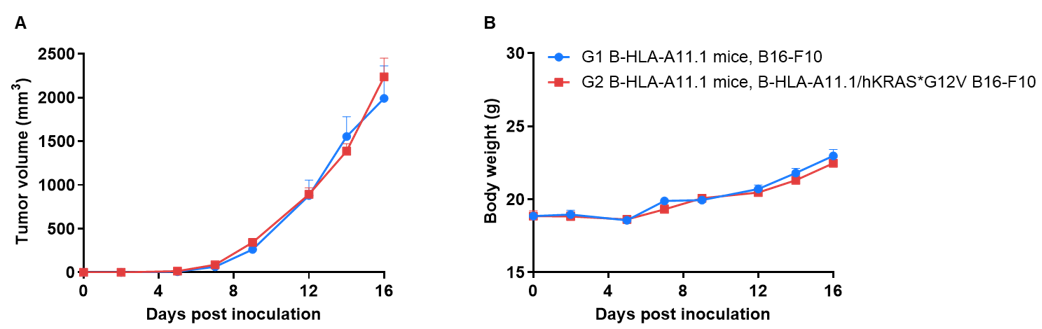
      Subcutaneous tumor growth of B-HLA-A11.1/hKRAS*G12V B16-F10. B-HLA-A11.1/hKRAS*G12V B16-F10 (2×10⁵) and wild-type B16-F10 cells (2×10⁵) were subcutaneously implanted into B-HLA-A11.1 mice (Female, 8-week-old, n=6). Tumor volume and body weight were measured twice a week. (A) Average tumor volume. (B) Body weight. Volume was expressed in mm3 using the formula: V=0.5 × long diameter × short diameter2. Results indicate that B-HLA-A11.1/hKRAS*G12V B16-F10 cells were able to establish tumors in vivo and can be used for efficacy studies. Values are expressed as mean ± SEM.
      Protein Expression Analysis of Tumor Tissue

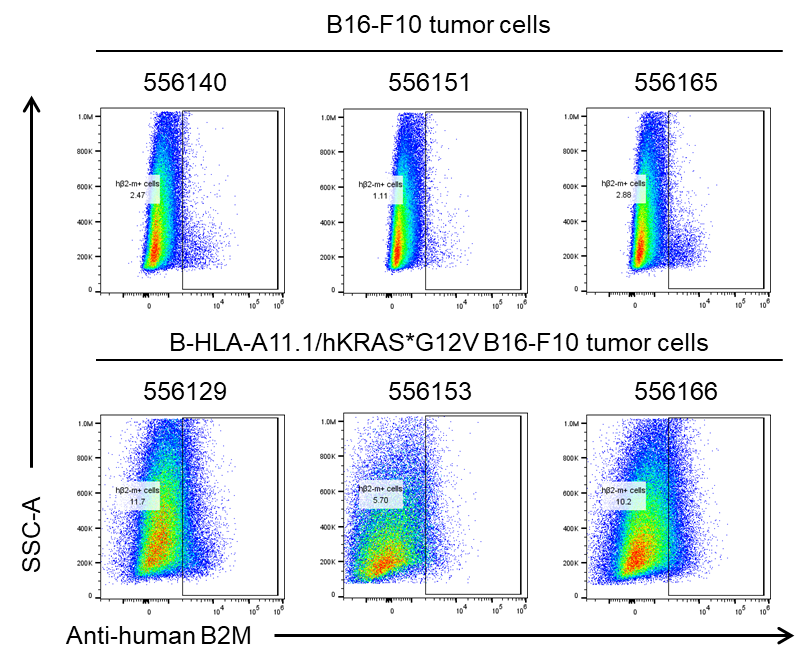
      Human B2M expression evaluated in B-HLA-A11.1/hKRAS*G12V B16-F10 tumor cells by flow cytometry. B-HLA-A11.1/hKRAS*G12V B16-F10 cells were subcutaneously transplanted into B-HLA-A11.1 mice (Female, 8-week-old, n=6). At the end of the experiment, tumor cells were harvested and assessed with species-specific anti-human B2M antibody (Biolegend, 395706). Human B2M was highly expressed on the surface of tumor cells. Therefore, B-HLA-A11.1/hKRAS*G12V B16-F10 cells can be used for in vivo efficacy studies evaluating cancer vaccines.