
C57BL/6-Il1btm1(ILIB)Bcgen/Bcgen • 110075

IL1B: A key regulatory factor in the body's immune-metabolic-neural network.

IL1B

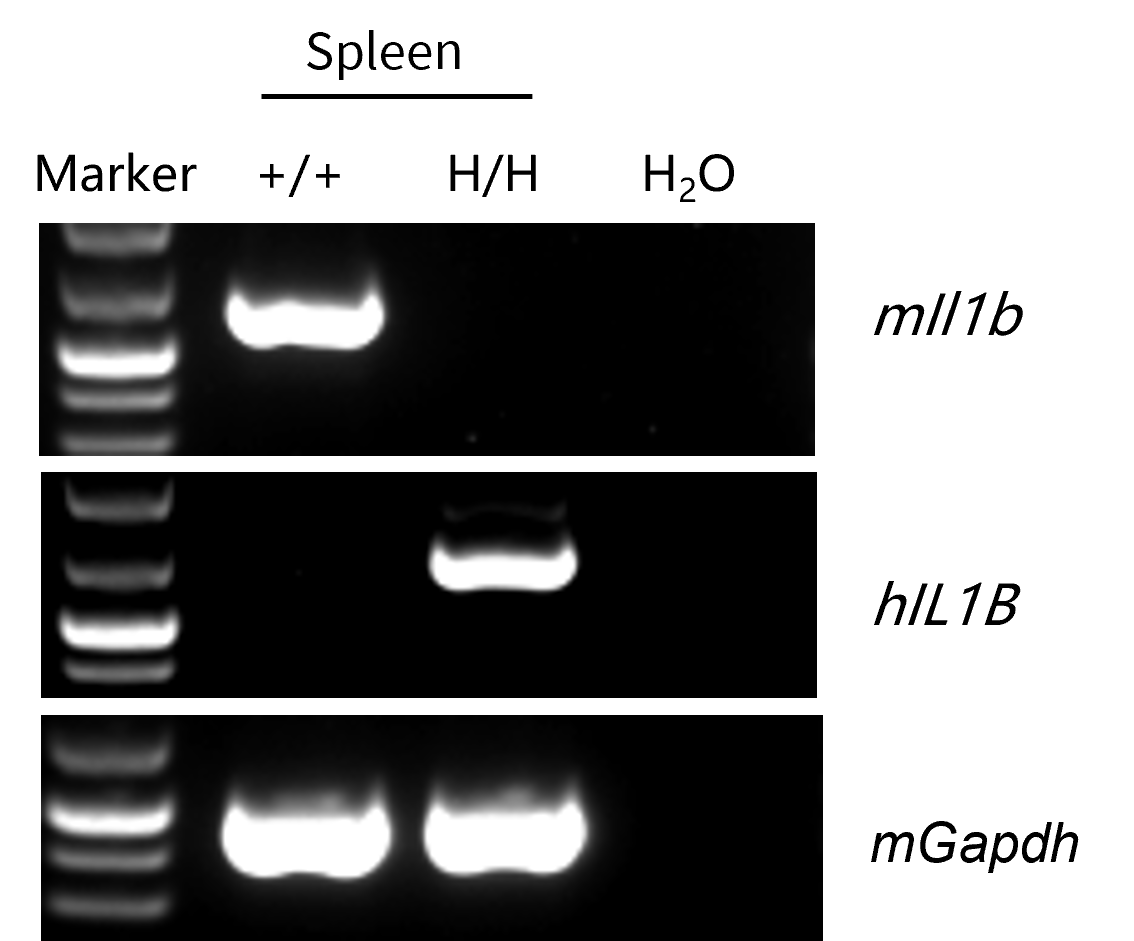
Strain specific analysis of IL1B mRNA expression in wild-type C57BL/6JNifdc mice and homozygous B-hIL1B mice by RT-PCR. Spleen RNA was isolated from wild-type C57BL/6JNifdc mice (+/+) and homozygous B-hIL1B mice (H/H), then cDNA libraries were synthesized by reverse transcription, followed by PCR with mouse or human IL1B primers. Mouse Il1b mRNA was only detectable in wild-type mice. Human IL1B mRNA was exclusively detectable in homozygous B-hIL1B mice but not in wild-type mice.
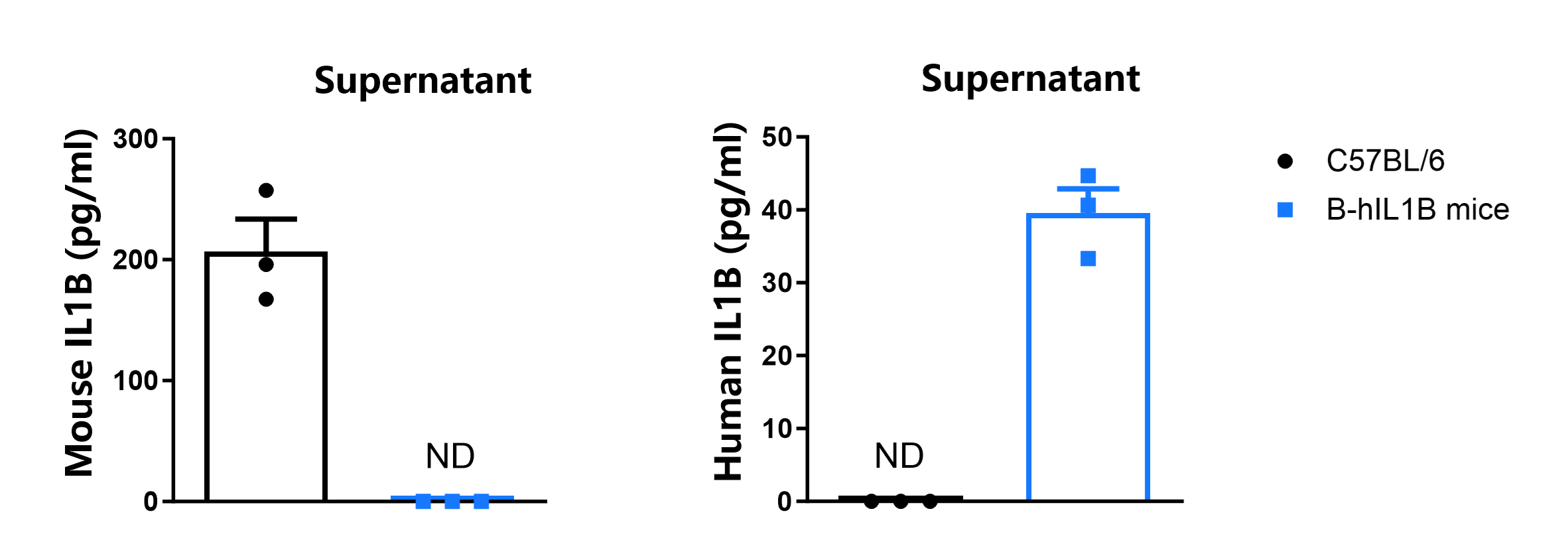
Strain specific IL1B expression analysis in homozygous B-hIL1B mice by ELISA. Bone marrow cell supernatant were collected from C57BL/6 (+/+) and homozygous B-hIL1B mice (H/H) stimulated with LPS in vivo, and analyzed by ELISA with species-specific IL1B ELISA kit. Mouse IL1B was detectable in C57BL/6 mice. Human IL1B was exclusively detectable in homozygous B-hIL1B mice but not C57BL/6 mice. ND, not detectable. Values are expressed as mean ± SEM.
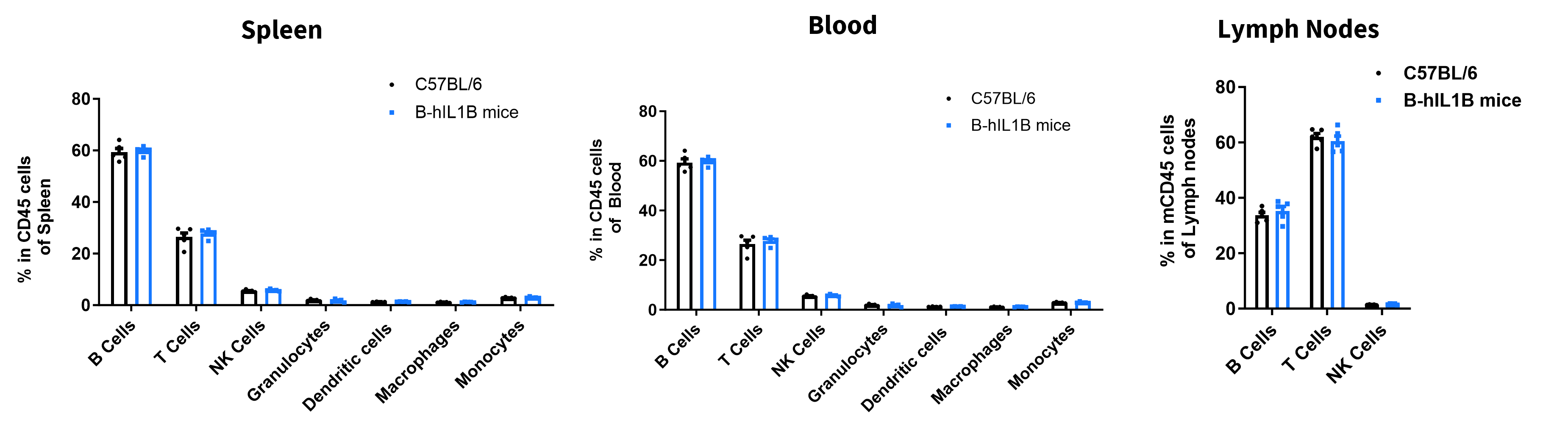
Analysis of leukocyte subpopulations by flow cytometry in immune organs and blood. Splenocytes, peripheral blood, and lymph nodes were isolated from female C57BL/6 and B-hIL1B mice (female, 6-week-old, n = 5). Single live cells were gated on the CD45⁺ population and analyzed by flow cytometry as indicated. Values are expressed as mean ± SEM.

Analysis of T-cell subpopulations by flow cytometry in immune organs and blood. Splenocytes, peripheral blood, and lymph nodes were isolated from female C57BL/6 and B-hIL1B mice (female, 6-week-old, n = 5). Single live cells were gated on the TCRβ⁺ T-cell population and analyzed by flow cytometry as indicated. Values are expressed as mean ± SEM.

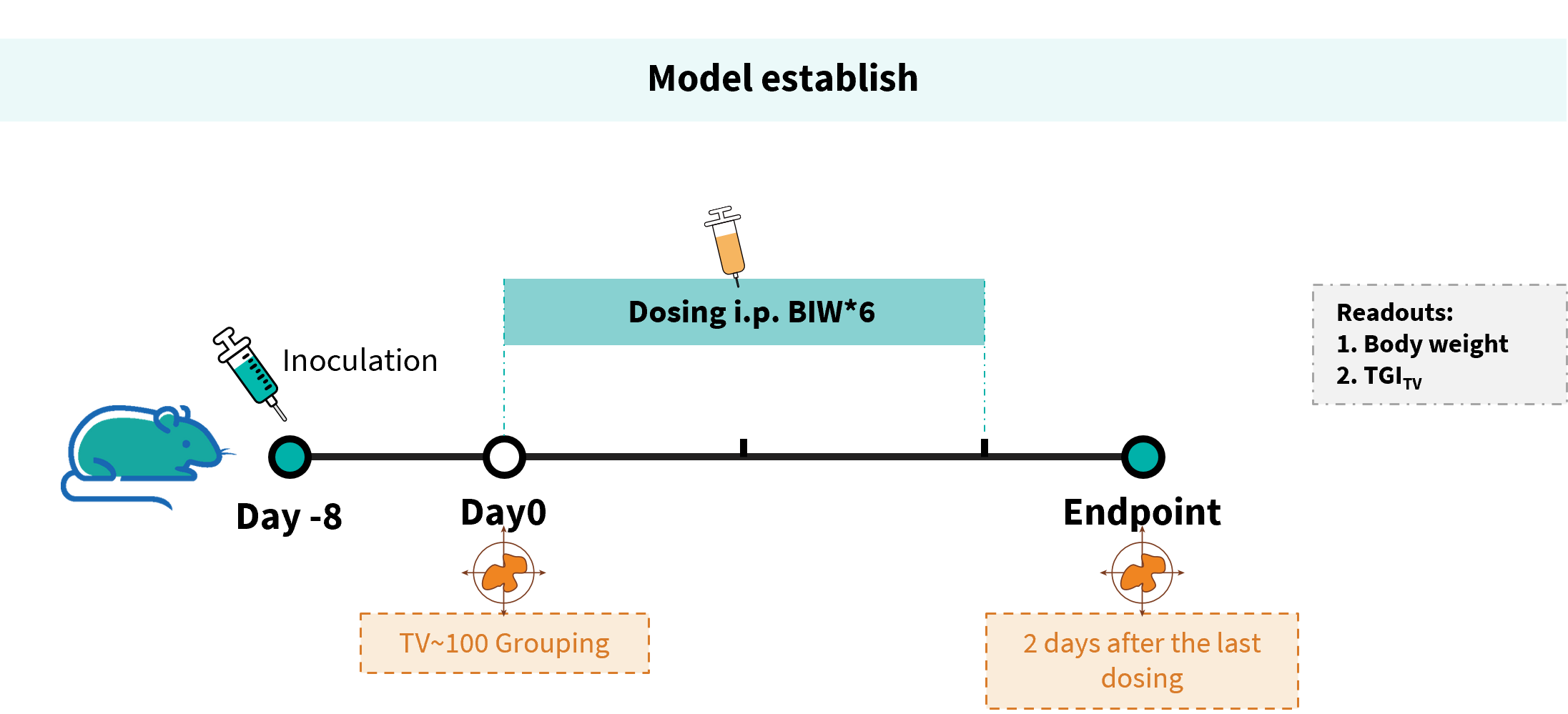
Establishment of a MC38 model and in vivo efficacy study of an anti-human IL1B antibody. MC38 cells were implanted subcutaneously into homozygous B-hIL1B mice (female, 6 week-old, n=5). When the average tumor volume reached approximately 100 mm³, mice were randomized and subsequently administered the canakinumab analog via intraperitoneal injection.
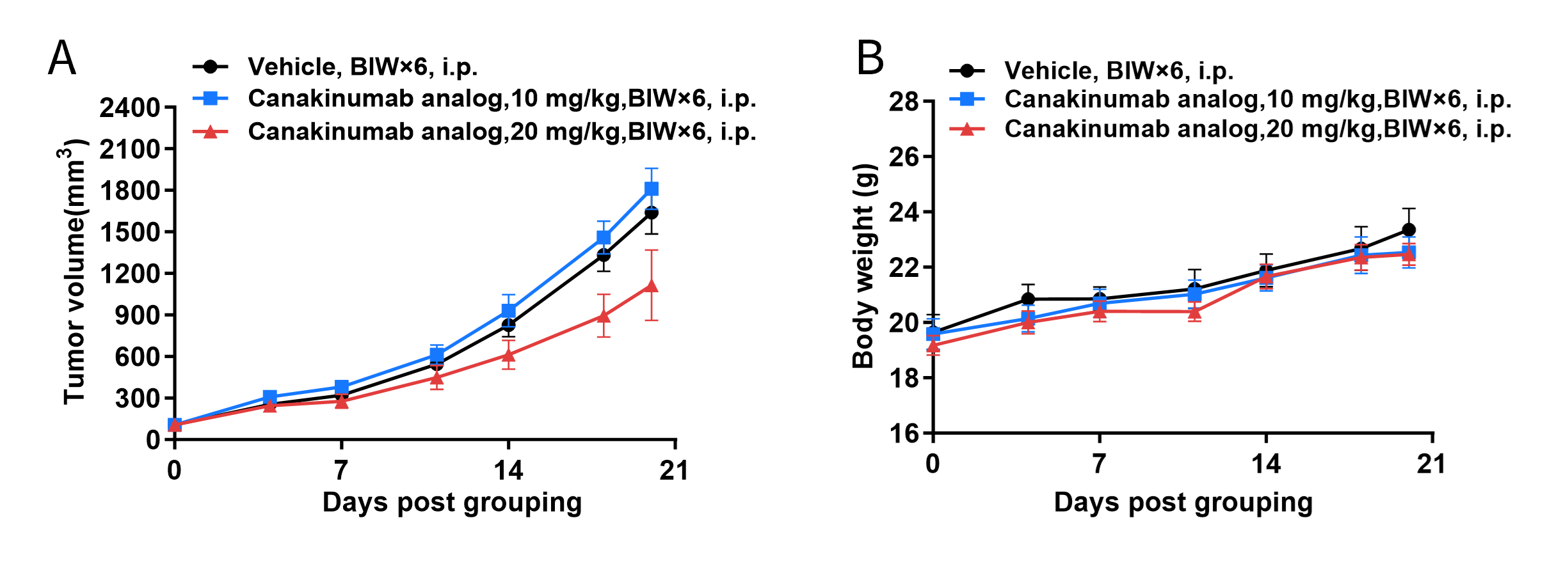
Antitumor activity of anti-human IL1B antibody in B-hIL1B mice. (A) Anti-human IL1B antibody canakinumab analog (in house) inhibited MC38 tumor growth in B-hIL1B mice. Murine colon cancer MC38 cells were subcutaneously implanted into homozygous B-hIL1B mice (female, 6 week-old, n=5). Mice were grouped when tumor volume reached approximately 100 mm3, at which time they were treated with anti-human IL1B antibody canakinumab analog with different doses and schedules indicated in panel. (B) Body weight changes during treatment. As shown in panel A, anti-human IL1B antibody canakinumab analog was efficacious in controlling tumor growth in B-hIL1B mice, demonstrating that the B-hIL1B mice provide a powerful preclinical model for in vivo evaluation of anti-human IL1B antibodies. Values are expressed as mean ± SEM

Antitumor activity of anti-human IL1B antibodies in B-hIL1B mice. (A) Anti-human IL1B antibody inhibited MC38 tumor growth in B-hIL1B mice. Murine colon cancer MC38 cells were subcutaneously implanted into homozygous B-hIL1B mice (female, n=6). Mice were grouped on the first day, at which time they were treated with anti-human IL1B antibody. (B) Body weight changes during treatment. As shown in panel A, anti-human IL1B antibody was efficacious in controlling tumor growth in B-hIL1B mice, demonstrating that the B-hIL1B mice provide a powerful preclinical model for in vivo evaluation of anti-human IL1B antibodies. Values are expressed as mean ± SEM