

B-hIGHA1/hCD89 mice plus

C57BL/6N-tm2(IGHA1)Bcgen tm2(CD11b-FCAR)BcgenGt(ROSA)26Sortm1(CD11b-FCAR)Bcgen/Bcgen • 113155

B-hIGHA1/hCD89 mice plus

Catalog Number: 113155
Strain Name: C57BL/6N-tm2(IGHA1)Bcgen tm2(CD11b-FCAR)BcgenGt(ROSA)26Sortm1(CD11b-FCAR)Bcgen/Bcgen
Strain Background: C57BL/6N
NCBI gene ID: 238447 (Human)
Aliases: IgA; Igh-2
---
ライセンスオプション提供可能
B-hIGHA1/hCD89 mice plus

このページで

  • Description
  • Targeting strategy
  • Phenotypic analysis
  • Efficacy

ポスター

すべて表示

    出版物

      Description

      IGHA1: A key immunoglobulin heavy chain in IgA nephropathy pathogenesis and its therapeutic targeting

      • Gene Information: Located on human chromosome 14q32.33; encodes the constant region of human IgA1 heavy chain, the primary subclass driving IgA nephropathy (IgAN).
      • Protein Expression: Secreted by plasma cells. In IgAN, abnormal O-glycosylation generates galactose-deficient IgA1 (Gd-IgA1), a critical autoantigen accumulating in circulation.
      • Signaling Pathway: Gd-IgA1 immune complexes deposit in the glomerular mesangium, stimulating mesangial cell proliferation and pro-inflammatory cytokine secretion (IL-6, TGF-β).
      • Therapeutic Inhibition: Targeting Gd-IgA1 or using IgA1-specific proteases clears pathogenic deposits, blocking mesangial activation to reduce proteinuria and preserve renal function.

      CD89: A key immunoglobulin heavy chain in IgA nephropathy pathogenesis and its therapeutic targeting


      • Gene Information: Located on human chromosome 19q13.42 (FCAR); encodes a transmembrane glycoprotein functioning as the specific Fc receptor for IgA.
      • Protein Expression: Highly expressed on myeloid cells (neutrophils, macrophages). Soluble CD89 (sCD89) sheds into circulation, binding Gd-IgA1 to form highly pathogenic complexes.
      • Signaling Pathway: IgA1 complexes bind surface CD89, inducing receptor cross-linking and activating ITAM/Syk pathways to hyperactivate myeloid cells and amplify progressive renal inflammation.
      • Therapeutic Inhibition: Antagonistic antibodies block the IgA1-CD89 interaction or prevent sCD89 shedding, suppressing the downstream inflammatory cascade and mitigating glomerular lesions.
      Targeting strategy
      • B-hIGHA1/hCD89 mice plus are generated through a breeding program involving two distinct mouse lines.
      • In one line, the region within the mouse IGH intron is replaced by a gene encoding both the secreted and membrane forms of the human IGHA1, along with the human CD89 coding sequence (CDS), under the control of the CD11b promoter.
      • In the other line, the human CD89 CDS is inserted into the Rosa26 locus and is likewise driven by the CD11b promoter.
      Mouse IgA and IgM Protein Expression Analysis
      • (A) Mouse IgA was detectable in wild-type mice and homozygous B-hIGHA1/hCD89 mice plus, but the expression level  in homozygous mice was lower than that in wild-type mice.
      • (B) Mouse IgM was detectable in in wild-type mice, but not in homozygous B-hIGHA1/hCD89 mice plus.

      Mouse immunoglobulin expression analysis in wild-type C57BL/6N mice and homozygous humanized B-hIGHA1/hCD89 mice plus by ELISA. Serum was collected from wild-type C57BL/6N mice (+/+) (male, n=3, 8-week-old) and homozygous humanized B-hIGHA1/hCD89 mice plus (H/H, H/H) (male, n=3, 8-week-old). Expression level of mouse immunoglobulin was analyzed by ELISA (SouthernBiotech SBA Clonotyping System-C57BL/6-HRP: SouthernBiotech, 5300-05B). Values are expressed as mean ± SEM.
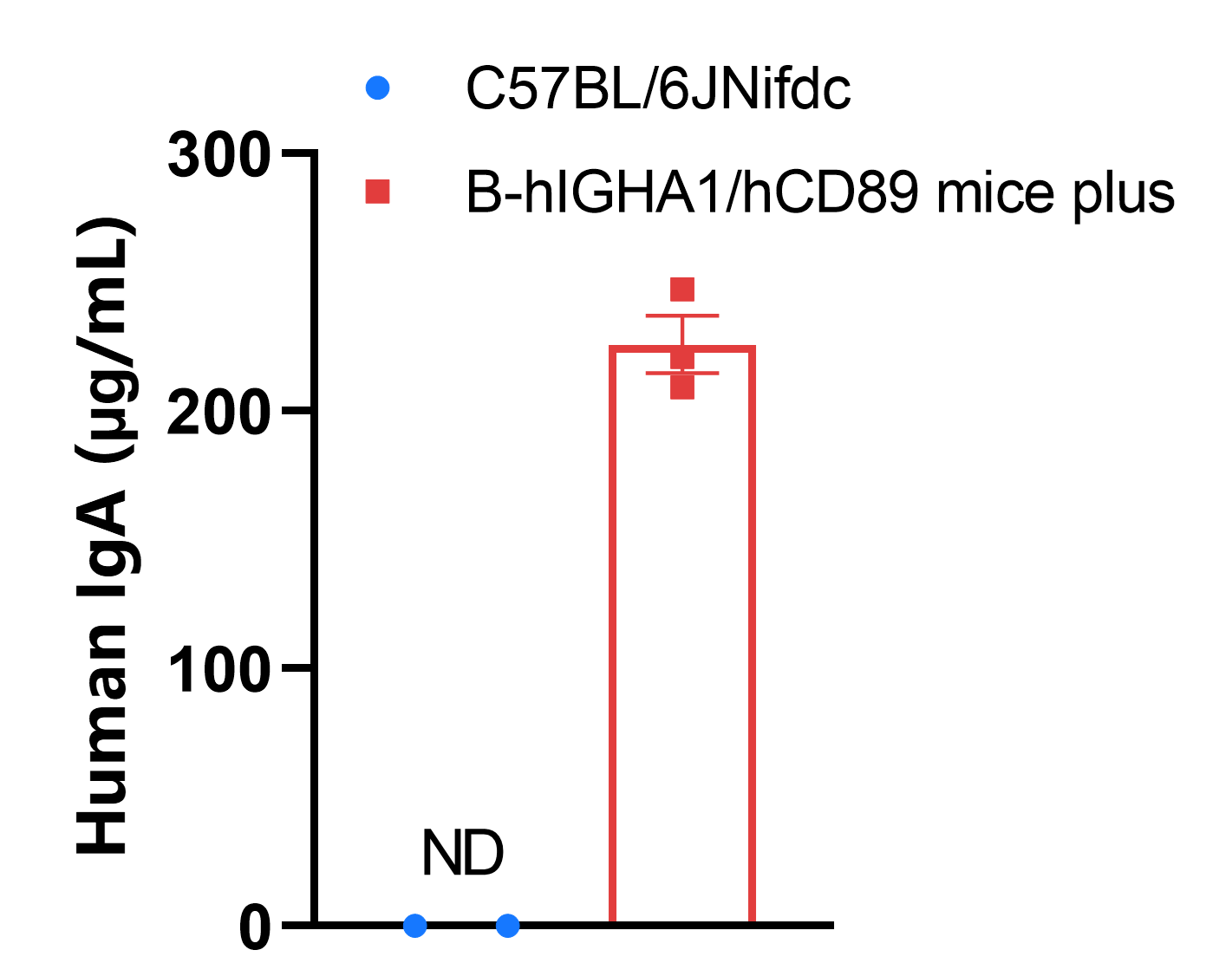
      Human IgA Protein Expression Analysis
      • Human IgA was exclusively detectable in homozygous B-hIGHA1/hCD89 mice plus but not in wild-type mice.

      Strain specific IgA expression analysis in homozygous B-hIGHA1/hCD89 mice plus by ELISA. Serum were collected from wild-type C57BL/6 mice (+/+) (male, n=3, 8-week old) and homozygous B-hIGHA1/hCD89 mice plus (H/H) (male, n=3, 8-week old), and analyzed by ELISA with species-specific anti-IgA ELISA kit (human IgA: abcam, ab196263).

      Human Gd-IgA1 Protein Expression Analysis
      • Human Gd-IgA1 was exclusively detectable in homozygous B-hIGHA1/hCD89 mice plus but not in wild-type C57BL/6N mice.

      Strain specific Gd-IgA1 expression analysis in wild-type mice C57BL/6N mice and homozygous B-hIGHA1/hCD89 mice plus by ELISA. Serum were collected from wild-type C57BL/6N mice (+/+) (n=3, 7w, male) and homozygous B-hIGHA1/hCD89 mice plus (H/H) (n=3, 7w, male). Expression level of human Gd-IgA1 was analyzed by ELISA (human Gd-IgA1 ELISA kit: ibl, 27600). Values are expressed as mean ± SEM.
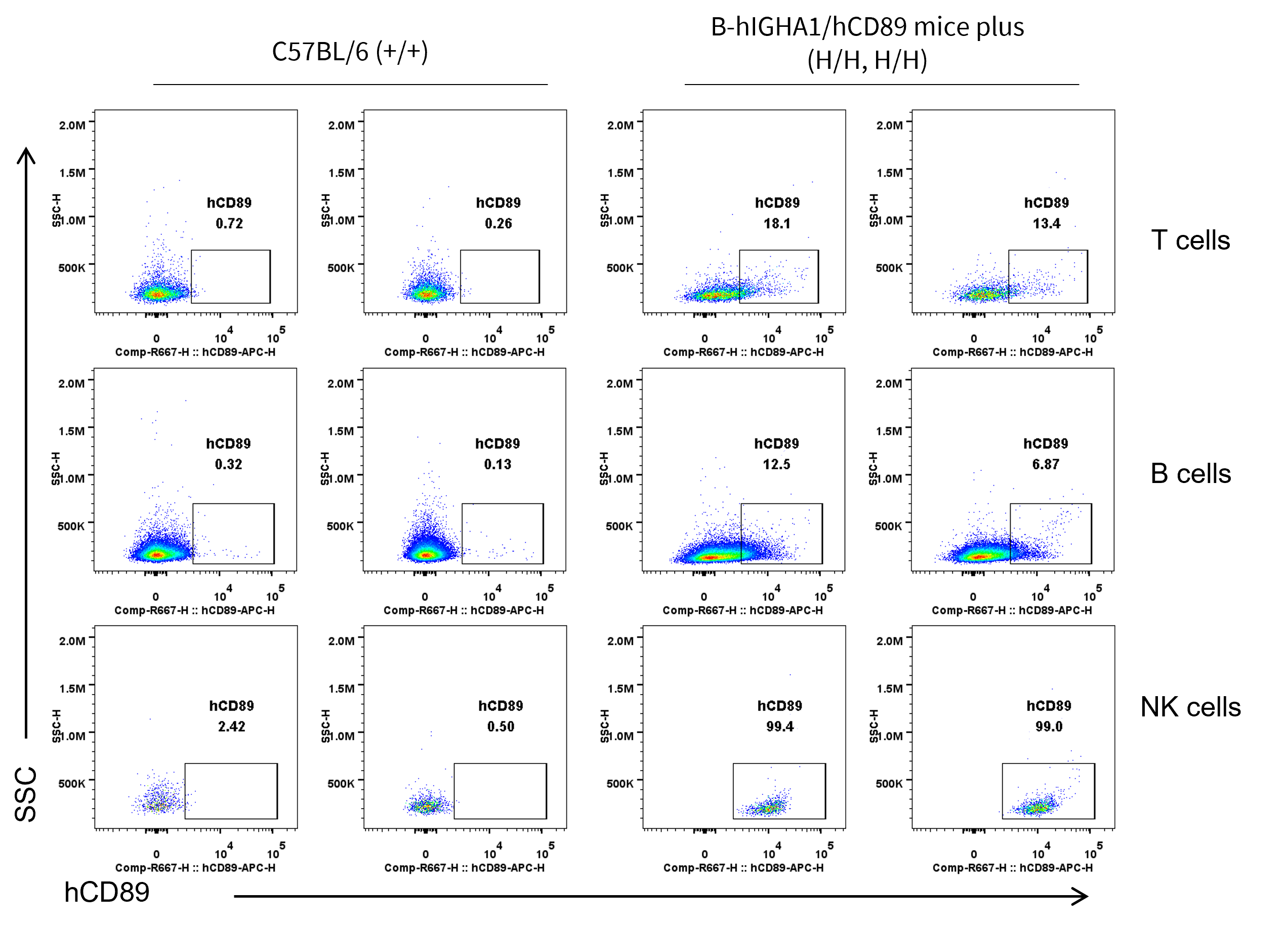
      CD89 Protein Expression in Blood
      • hCD89 was exclusively detectable in homozygous B-hIGHA1/hCD89 mice plus (H/H, H/H), but not in wild-type C57BL/6 mice.

      Strain specific CD89 expression analysis in homozygous B-hIGHA1/hCD89 mice plus by flow cytometry. Blood cells were collected from wild-type C57BL/6 mice (+/+) and homozygous B-hIGHA1/hCD89 mice plus (H/H, H/H), and analyzed by flow cytometry with anti-hCD89 antibody (Biolegend, 354105).
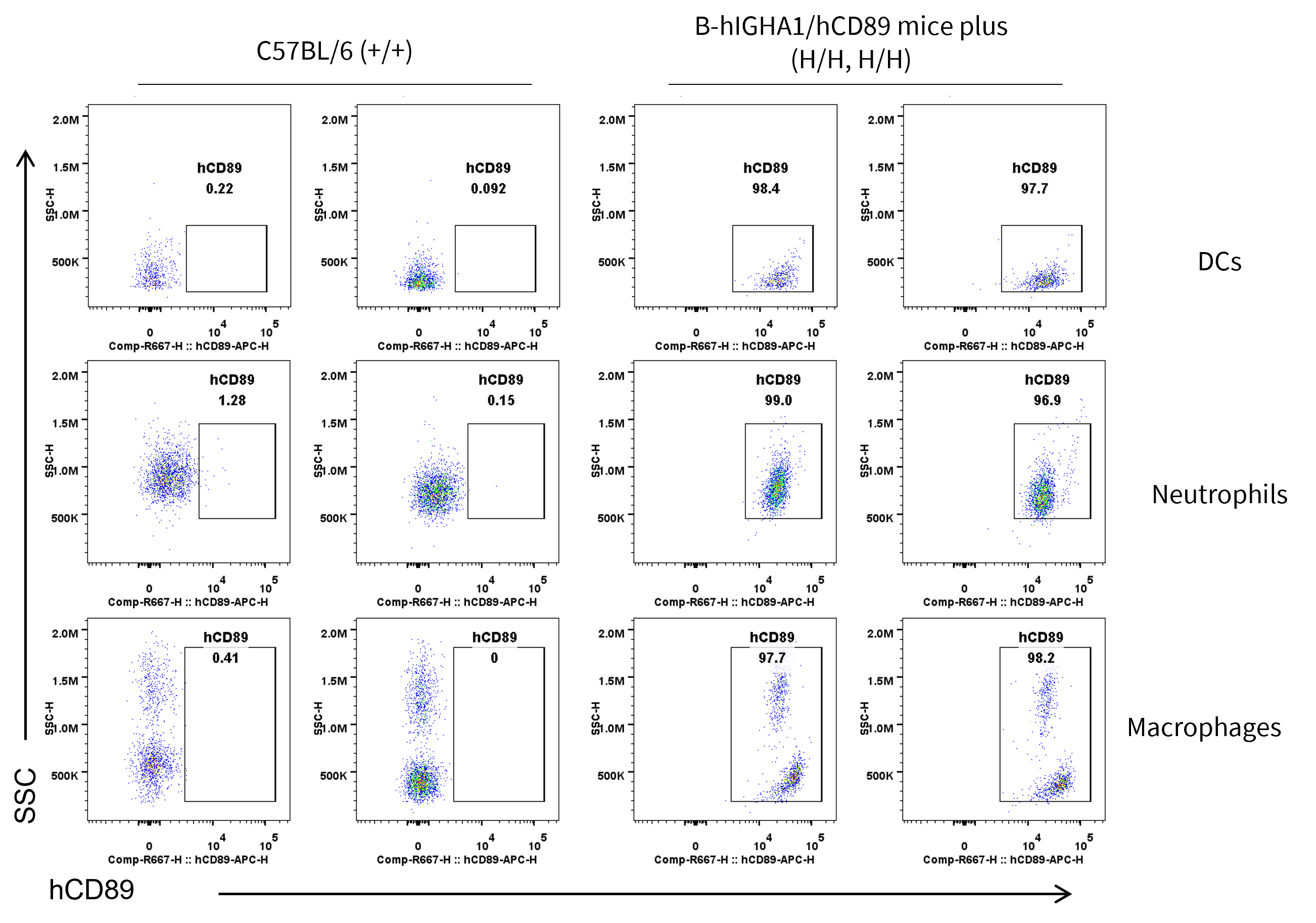
      • hCD89 was exclusively detectable in homozygous B-hIGHA1/hCD89 mice plus (H/H, H/H), but not in wild-type C57BL/6 mice.

      Strain specific CD89 expression analysis in homozygous B-hIGHA1/hCD89 mice plus by flow cytometry. Blood cells were collected from wild-type C57BL/6 mice (+/+) and homozygous B-hIGHA1/hCD89 mice plus (H/H, H/H), and analyzed by flow cytometry with anti-hCD89 antibody (Biolegend, 354105).
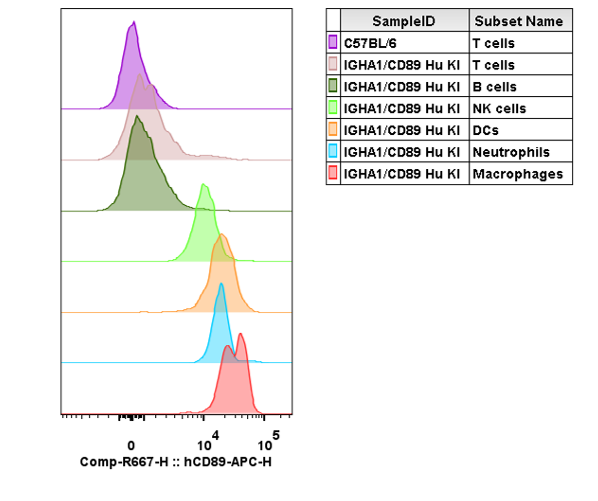
      • hCD89 was exclusively detectable in homozygous B-hIGHA1/hCD89 mice plus (H/H, H/H), but not in wild-type C57BL/6 mice.

      Strain specific CD89 expression analysis in homozygous B-hIGHA1/hCD89 mice plus by flow cytometry. Blood cells were collected from wild-type C57BL/6 mice (+/+) and homozygous B-hIGHA1/hCD89 mice plus (H/H, H/H), and analyzed by flow cytometry with anti-hCD89 antibody (Biolegend, 354105).
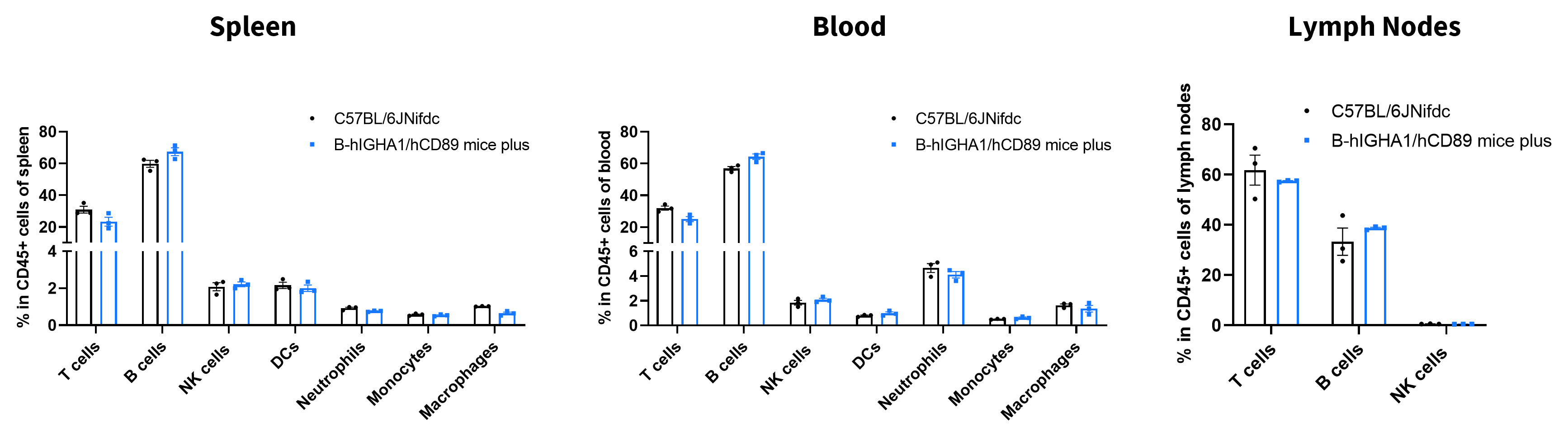
      Analysis of Leukocyte Subpopulations
      • The percentages of T cells, B cells, NK cells, DCs, neutrophils, monocytes, and macrophages in homozygous B-hIGHA1/hCD89 mice plus were similar to those in C57BL/6JNifdc mice.

      Analysis of leukocyte subpopulations by flow cytometry in immune organs and blood. Splenocytes, peripheral blood, and lymph nodes were isolated from C57BL/6JNifdc mice and B-hIGHA1/hCD89 mice plus (female, 9-week-old, n = 3). Single live cells were gated on the CD45⁺ population and analyzed by flow cytometry as indicated. Values are expressed as mean ± SEM.
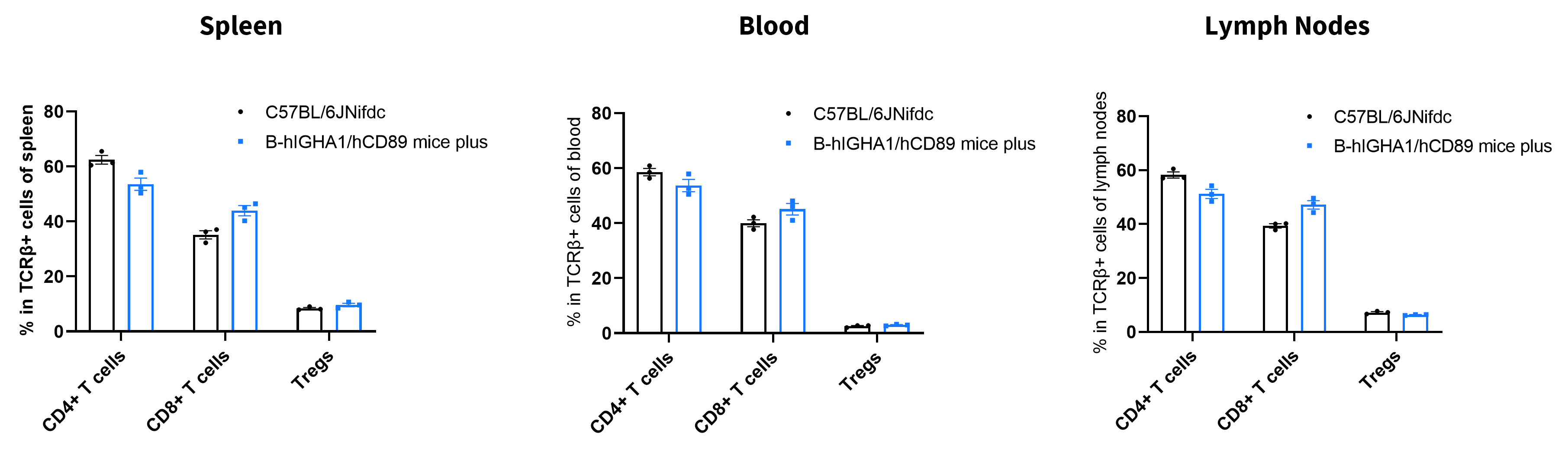
      Analysis of T Cell Subpopulations
      • The proportions of CD4⁺ T cells, CD8⁺ T cells, and Tregs in homozygous B-hIGHA1/hCD89 mice plus were comparable to those in C57BL/6JNifdc mice.

      Analysis of T-cell subpopulations by flow cytometry in immune organs and blood. Splenocytes, peripheral blood, and lymph nodes were isolated from C57BL/6JNifdc mice and B-hIGHA1/hCD89 mice plus (female, 9-week-old, n = 3). Single live cells were gated on the CD3⁺ T-cell population and analyzed by flow cytometry as indicated. Values are expressed as mean ± SEM.


      In Vivo Efficacy of Telitacicept

      The inhibitory efficiency of the Telitacicept against human IGHA1 in B-hIGHA1/hCD89 mice plus. B-hIGHA1/hCD89 mice plus were randomly divided into two groups (G1: n=3, 10 weeks old, female; G2: n=5, 10 weeks old, female). Telitacicept (commercial) and PBS were administered to the mice individually every other day, total of 14 injections.
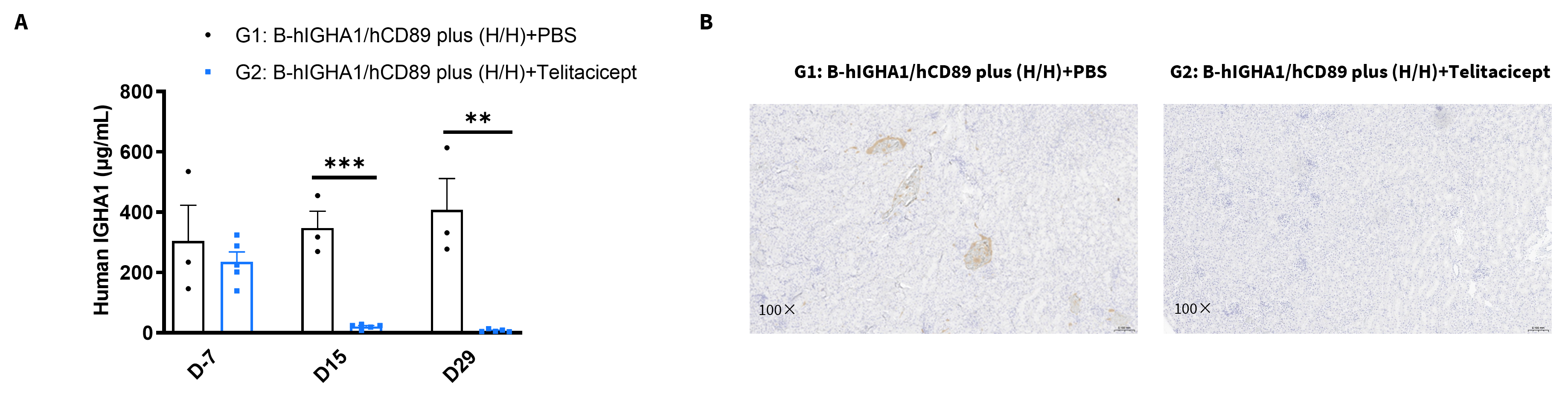
      • (A) The human IGHA1 protein expression levels were detected in serum on days -7, 15 and 29. The human IGHA1 levels in the treatment group (G2) were reduced compared to the control group (G1).
      • (B) IHC assay of kidney samples showed significant IgA deposition in the vessel walls of the control group (G1), while no IgA deposition was found in in the treatment group (G2).

      The inhibitory efficiency of the Telitacicept against human IGHA1 in B-hIGHA1/hCD89 mice plus. B-hIGHA1/hCD89 mice plus were randomly divided into two groups (G1: n=3, 10 weeks old, female; G2: n=5, 10 weeks old, female). Telitacicept (commercial) and PBS were administered to the mice individually every other day, total of 14 injections. Values are expressed as mean ± SEM, *P<0.05, **P<0.01, ***P<0.001.

      * When publishing results obtained using this animal model, please acknowledge the source as follows: The animal model [B-hIGHA1/hCD89 mice plus] (Cat# 113155) was purchased from Biocytogen.