Description
PVRIG: An inhibitory immune checkpoint receptor that binds CD112 to suppress T- and NK-cell-mediated anti-tumor responses.
- Gene Information: PVRIG, also known as CD112R, is an inhibitory receptor of the nectin family located on human chromosome 7. It is part of the DNAM-1/TIGIT/CD96 immune checkpoint network.
- Protein Expression: PVRIG is mainly expressed on activated T cells and NK cells, especially in tumor-infiltrating lymphocytes. Its ligand, NECTIN2 (CD112), is widely expressed on tumor and myeloid cells.
- Signaling Pathway: Binding of PVRIG to CD112 transmits inhibitory signals through an ITIM-like motif. This suppresses T and NK-cell activation, cytokine production, and cytotoxicity.
- Therapeutic Inhibition: Blocking the PVRIG–CD112 interaction restores T cells and NK cells function and enhances anti-tumor immunity. PVRIG-targeted antibodies are being developed alone and in combination with PD-1/PD-L1 or TIGIT inhibitors.
Targeting strategy
PVRIG
- The fusion CDS that encodes human exon 3-4 expression will be driven by endogenous mouse Pvrig promoter, while mouse Pvrig gene transcription and translation will be disrupted.
PVRIG Protein Expression in NK cells
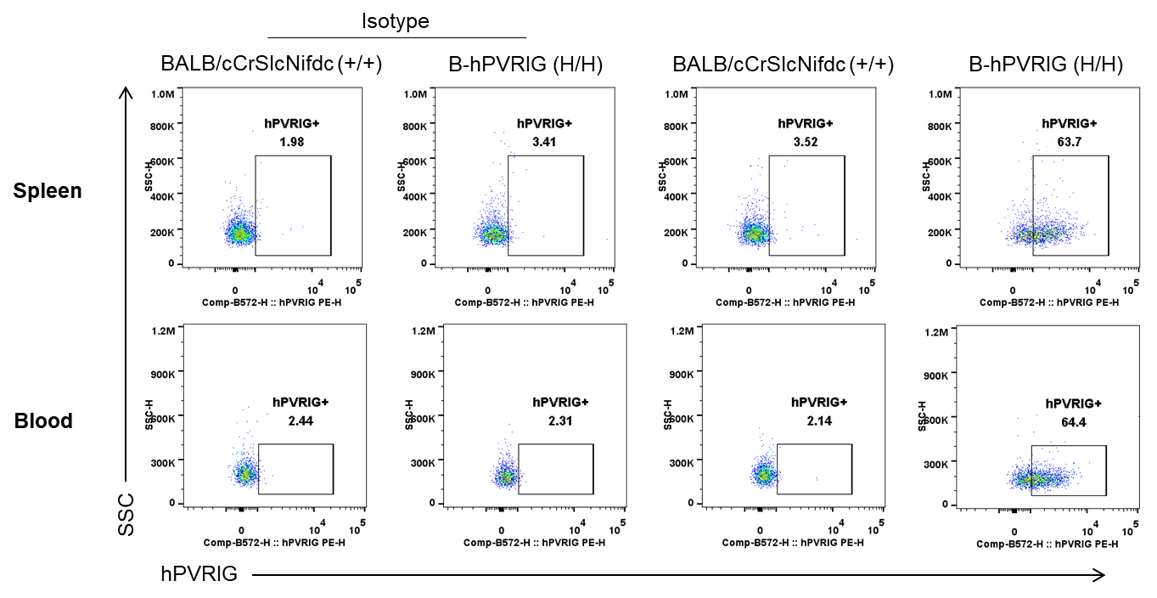
- Human PVRIG was detected on NK cells populations in B-hPVRIG mice(C), but not in wild-type BALB/cCrSlcNifdc mice.
PVRIG expression analysis in homozygous B-hPVRIG mice(C) by flow cytometry. Splenocytes and blood were collected from wild-type BALB/cCrSlcNifdc mice (+/+) and homozygous B-hPVRIG mice(C) (H/H) and analyzed by flow cytometry with anti-hPVRIG antibody (BioLegend, 301504). Human PVRIG was detected on NK cells of homozygous B-hPVRIG mice(C) but not in wild-type mice.
Analysis of Leukocyte Subpopulations
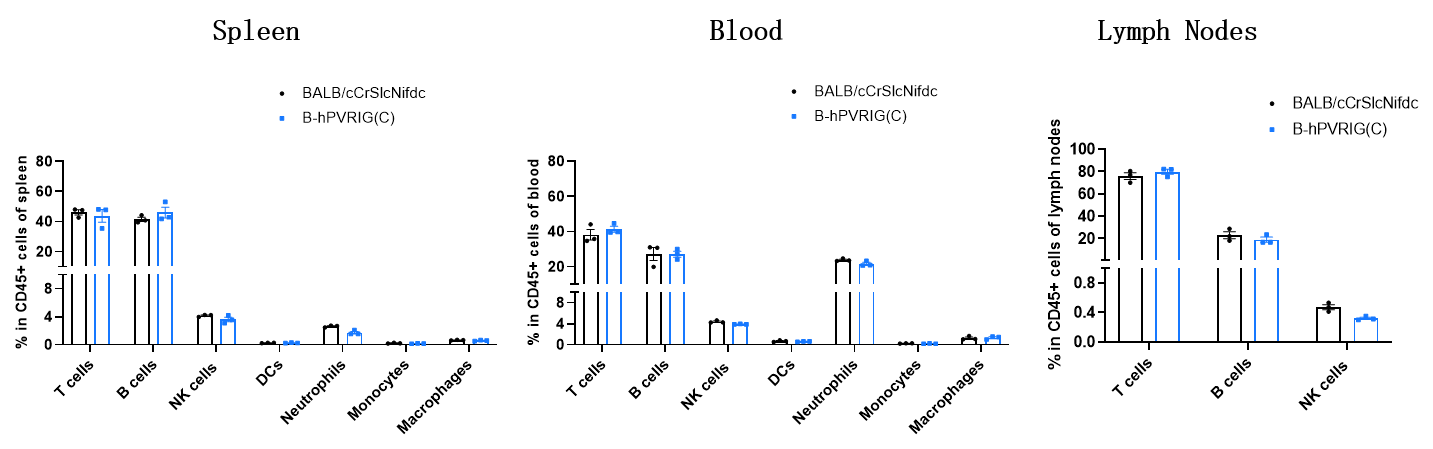
- The percentages of T cells, B cells, NK cells, DCs, neutrophils, monocytes, and macrophages in homozygous B-hPVRIG mice(C), were similar to those in BALB/cCrSlcNifdc mice.
- Humanization of PVRIG does not affect normal immune cell development or splenic distribution.
Analysis of leukocyte subpopulations by flow cytometry in immune organs and blood. Splenocytes, peripheral blood, and lymph nodes were isolated from BALB/cCrSlcNifdc and B-hPVRIG mice(C) (female, 8-week-old, n=3). Single live cells were gated on the CD45⁺ population and analyzed by flow cytometry as indicated. Values are expressed as mean ± SEM.
Analysis of T Cell Subpopulations
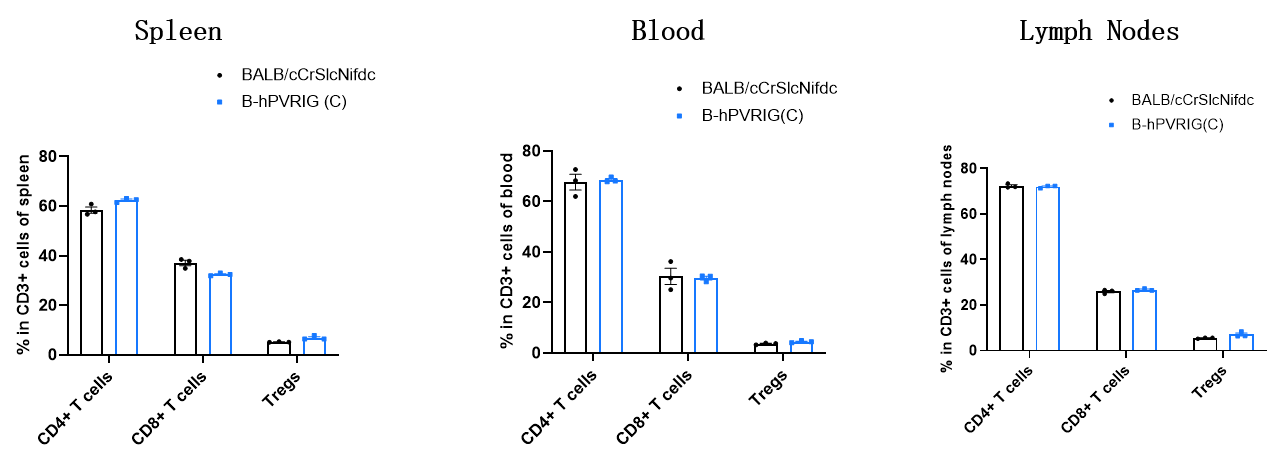
- The proportions of CD4⁺ T cells, CD8⁺ T cells, and Tregs in homozygous B-hPVRIG mice(C) were comparable to those in BALB/cCrSlcNifdc mice.
- Humanization of PVRIG does not affect normal T cell development, differentiation, or splenic distribution.
Analysis of T-cell subpopulations by flow cytometry in immune organs and blood. Splenocytes, peripheral blood, and lymph nodes were isolated from BALB/cCrSlcNifdc and B-hPVRIG mice(C) (female, 8-week-old, n=3). Single live cells were gated on the CD3⁺ T-cell population and analyzed by flow cytometry as indicated. Values are expressed as mean ± SEM.
* When publishing results obtained using this animal model, please acknowledge the source as follows: The animal model [B-hPVRIG mice(C)] (Cat# 114202) was purchased from Biocytogen.