B-hRAMP1 mice

C57BL/6-Ramp1tm1(RAMP1)Bcgen/Bcgen • 114555

B-hRAMP1 mice

Catalog Number: 114555
Strain Name: C57BL/6-Ramp1tm1(RAMP1)Bcgen/Bcgen
Strain Background: C57BL/6
Aliases: 9130218E19Rik
---
ライセンスオプション提供可能
B-hRAMP1 mice

このページで

  • Description
  • Targeting strategy
  • Phenotypic analysis
  • Efficacy

ポスター

すべて表示

    出版物

      Description

      Background: RAMP1 (Receptor Activity-Modifying Protein 1) is a key functional and regulatory target for G protein-coupled receptor signaling, which heterodimerizes with CALCRL to form the functional CGRP receptor complex, enabling CALCRL’s cell-surface localization and specific binding to CGRP to initiate downstream pro-inflammatory and vasoactive signaling cascades. It is closely associated with migraine pathogenesis: activated trigeminal ganglia release CGRP that acts on the trigeminovascular system via the RAMP1-CALCRL complex, inducing meningeal vasodilation, neuroinflammation, and nociceptive sensitization to drive migraine attacks. Therapeutically, targeting RAMP1 blocks CGRP-receptor interaction and subsequent signaling, thereby inhibiting the pro-pain molecular and physiological responses and effectively preventing or alleviating migraine episodes.

      Targeting strategy: The exons 1-3 of mouse Ramp1 gene that encode whole protein domains are replaced by human RAMP1 gene in B-hRAMP1 mice. The promoter, 5’UTR and 3’UTR regions of the mouse gene are also replaced by human counterparts.

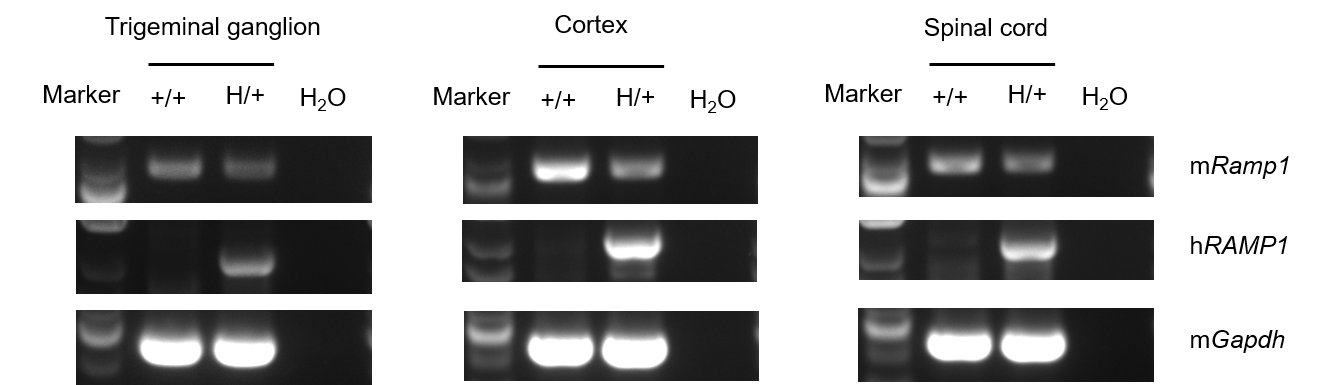
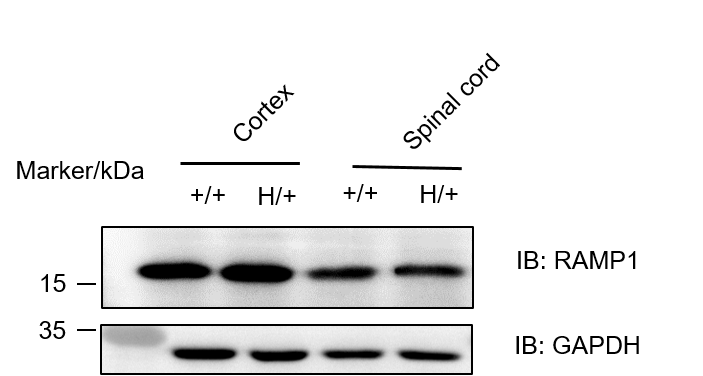
      Validation: Human RAMP1 mRNA was exclusively detectable in heterozygous B-hRAMP1 mice but not in wild-type mice, and human RAMP1 sequences were confirmed by Sanger Sequencing. RAMP1 protein was detectable in heterozygous B-hRAMP1 mice and wild-type C57BL/6JNifdc mice, as this antibody is cross-reactive between human and mouse.

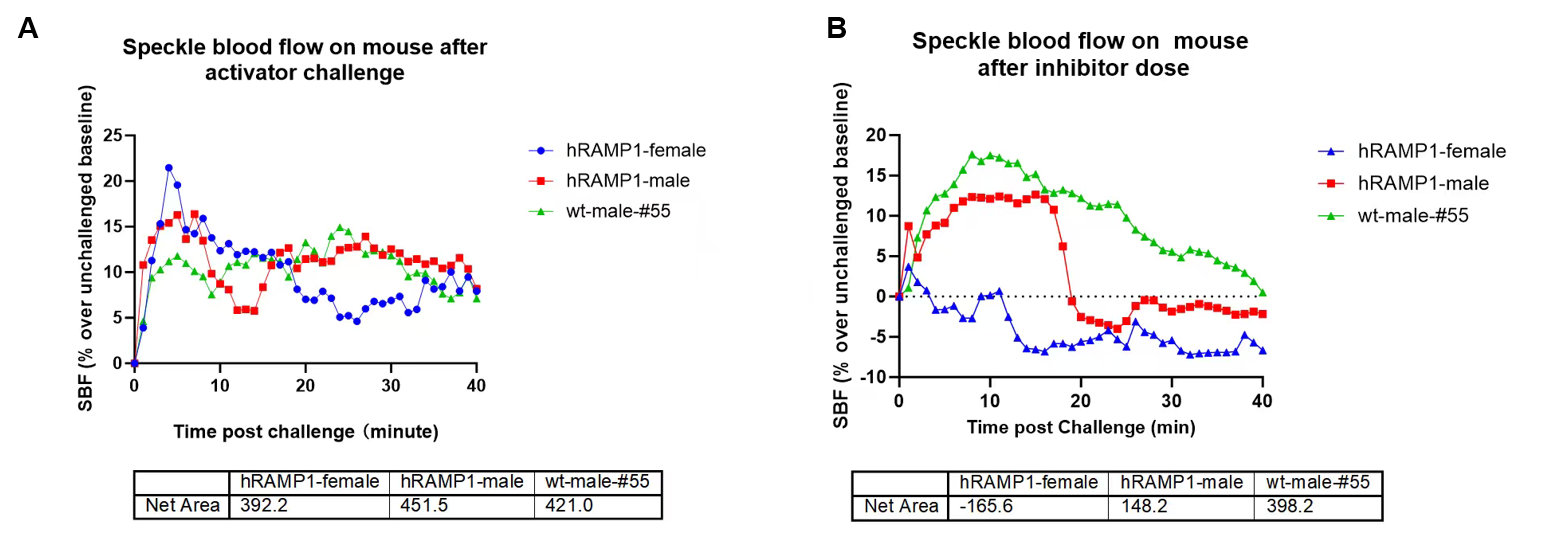
      In Vivo Drug Efficacy Assessment showed that, in B-hRAMP1 mice, the activator-induced hyperperfusion was significantly attenuated after administration of the anti-human RAMP1 inhibitor, resulting in reduced SBF values relative to baseline, but not in wild-type mice, indicating the effect of the inhibitor is specific to the humanized RAMP1.

      Application: B-hRAMP1 mice can serve as crucial preclinical models that recapitulate human CALCRL-RAMP1 receptor complex and its signaling, enabling accurate in vivo evaluation of the efficacy, specificity and safety of human RAMP1-targeted therapeutics (primarily for migraine), facilitating mechanistic research on human RAMP1-mediated biological processes and accelerating the clinical translation of novel drugs targeting the CGRP-RAMP1 axis.


      Targeting Strategy

      Gene targeting strategy for B-hRAMP1 mice. The exons 1-3 of mouse Ramp1 gene that encode whole protein domains are replaced by human RAMP1 gene in B-hRAMP1 mice. The promoter, 5’UTR and 3’UTR regions of the mouse gene are also replaced by human counterparts. The human RAMP1 expression is driven by human RAMP1 promoter, while mouse Ramp1 gene transcription and translation will be disrupted.

      mRNA Expression Analysis

      Strain specific analysis of RAMP1 mRNA expression in wild-type C57BL/6JNifdc mice and B-hRAMP1 mice by RT-PCR. Trigeminal ganglion, cortex and spinal cord RNA were isolated from wild-type C57BL/6JNifdc mice (+/+) and heterozygous B-hRAMP1 mice (H/+), then cDNA libraries were synthesized by reverse transcription, followed by PCR with human RAMP1 primers. Mouse Ramp1 mRNA was detectable in wild-type C57BL/6JNifdc mice and heterozygous B-hRAMP1 mice. Human RAMP1 mRNA was exclusively detectable in heterozygous B-hRAMP1 mice but not in wild-type mice, and human RAMP1 sequences were confirmed by Sanger Sequencing.

      Protein Expression Analysis

      Western blot analysis of RAMP1 protein expression in heterozygous B-hRAMP1 mice. Cortex and spinal cord lysates were collected from wild-type C57BL/6JNifdc mice (+/+) and heterozygous B-hRAMP1 mice (H/+), and then analyzed by western blot with anti-RAMP1 antibody (Abcam, ab156575). 40 μg total protein was loaded for western blotting analysis. RAMP1 protein was detectable in heterozygous B-hRAMP1 mice and wild-type C57BL/6JNifdc mice, as this antibody is cross-reactive between human and mouse.

      In Vivo Drug Efficacy Assessment of anti-RAMP1 antibody in B-hRAMP1 Mice

      Anti-human RAMP1 antibody selectively reverses activator-induced cutaneous hyperperfusion in humanized B-hRAMP1 mice. (A) Time course of speckle blood flow (SBF, expressed as percentage over unchallenged baseline) in heterozygous B-hRAMP1 mice (hRAMP1-male, hRAMP1-female, n=2) and wild-type mice (wt-male, n=1) following cutaneous activator challenge. All groups exhibited a rapid increase in SBF, peaking within the first 10 minutes and remaining elevated throughout the 40-minute recording period. The net area under the curve (AUC) of SBF change is summarized in the table below. (B) SBF responses after administration of the anti-human RAMP1 inhibitor (provided by a client). In B-hRAMP1 mice, the activator-induced hyperperfusion was significantly attenuated, resulting in reduced SBF values relative to baseline. In contrast, wild-type mice maintained sustained SBF elevation, indicating the effect of the inhibitor is specific to the humanized RAMP1. All data are presented as raw time-course traces.

      Note: this is a collaborative validation data from our client partnership. All the experiments are performed by our client.

      * When publishing results obtained using this animal model, please acknowledge the source as follows: The animal model [B-hRAMP1 mice] (Cat# 114555) was purchased from Biocytogen.