TSLP MOA: Initiation and Amplification of Type 2 Airway Inflammation
TSLP: A key cytokine in inflammation and its therapeutic intervention
- Gene Information: Thymic stromal lymphopoietin (TSLP) is a protein-coding gene located on chromosome 5q22.1. It encodes a hemopoietic cytokine that is a member of the interleukin 7-like cytokine family.
- Protein Expression: TSLP is primarily expressed by activated epithelial cells (lung, gut), skin keratinocytes, and fibroblasts. Two main isoforms exist: the short form (sfTSLP) is constitutively expressed and plays a homeostatic role, while the long form (lfTSLP) is induced during inflammation.
- Signaling Pathway: TSLP exerts its effects by binding to a high-affinity heterodimeric receptor complex composed of the TSLP receptor chain (TSLPR) and the IL-7 receptor alpha chain (IL-7Rα).
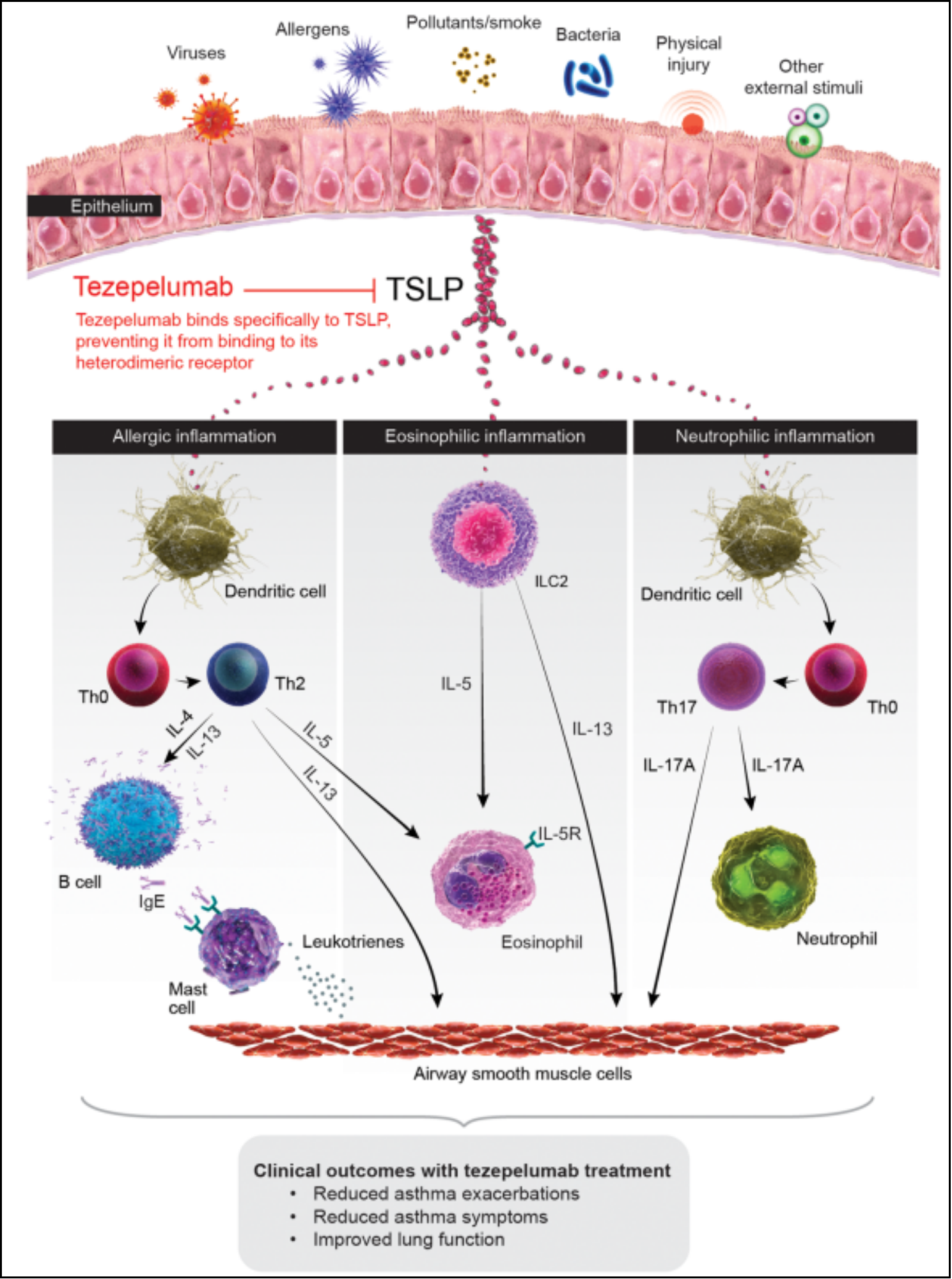
- Therapeutic Inhibition: By blocking TSLP binding to its receptor, tezepelumab inhibits downstream inflammation and improves clinical outcomes, including reduced serum IgE levels, decreased airway eosinophils, reduced mucus production, and lowered cytokine secretion.
Description
TSLP: A key cytokine in inflammation and its therapeutic intervention
- Gene Information: Thymic stromal lymphopoietin (TSLP) is a protein-coding gene located on chromosome 5q22.1. It encodes a hemopoieticcytokine that is a member of the interleukin 7-like cytokine family.
- Protein Expression: TSLP is primarily expressed by activated epithelialcells (lung, gut), skin keratinocytes, and fibroblasts. Two main isoformsexist: the short form (sfTSLP) is constitutively expressed and plays ahomeostatic role, while the long form (lfTSLP) is induced duringinflammation.
- Signaling Pathway: TSLP exerts its effects by binding to a high-affinityheterodimeric receptor complex composed of the TSLP receptor chain(TSLPR) and the IL-7 receptor alpha chain (IL-7Rα).
- Therapeutic Inhibition: By blocking TSLP binding to its receptor,tezepelumab inhibits downstream inflammation and improves clinicaloutcomes, including reduced serum IgE levels, decreased airwayeosinophils, reduced mucus production, and lowered cytokine secretion.
Targeting Strategy
TSLP
• Do not disclose
TSLPR
- A chimeric CDS encoding the human TSLPR extracellular and transmembrane domains fused to the mouse TSLPR cytoplasmic domain, followed by the mouse 3′ UTR and stop codon, is inserted immediately downstream of the mouse Tslpr signal peptide to replace part of exon 2 of the endogenous Tslpr gene.
- Expression of the chimeric TSLPR protein is driven by the native mouse Tslpr promoter, while endogenous mouse Tslpr transcription and translation are disrupted.
IL7R
- Exons 1 6 of the mouse Il7r gene encoding the extracellular domain are replaced with the corresponding human IL7R exons 1 6.
TSLP Protein Expression Analysis
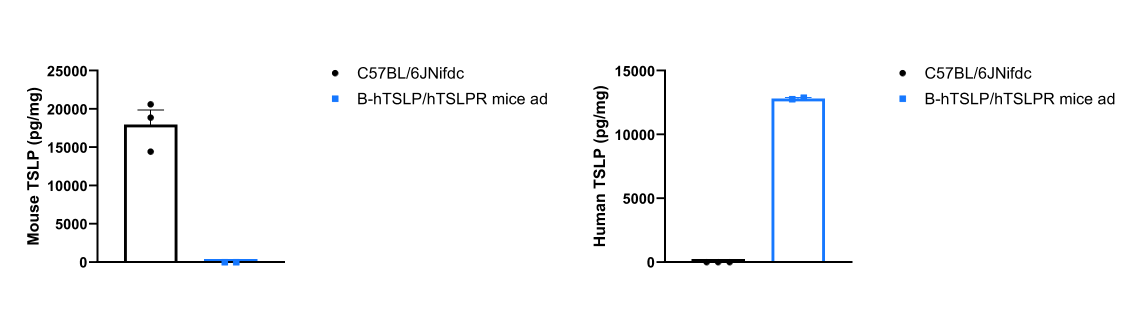
Strain-specific TSLP expression evaluated by ELISA in wild-type C57BL/6 mice, homozygous B-hTSLP/hTSLPR mice ad. Calcipotriol (MC903), dissolved in ethanol, was topically applied to the ears of wild-type C57BL/6 mice, homozygous B-hTSLP/hTSLPR mice ad for 7 days (Female, 7-week-old, n = 2). Mouse and human TSLP levels in ear tissue homogenates were quantified by ELISA (mouse TSLP, BioLegend 434107; human TSLP, BioLegend 434207).
Functional Validation
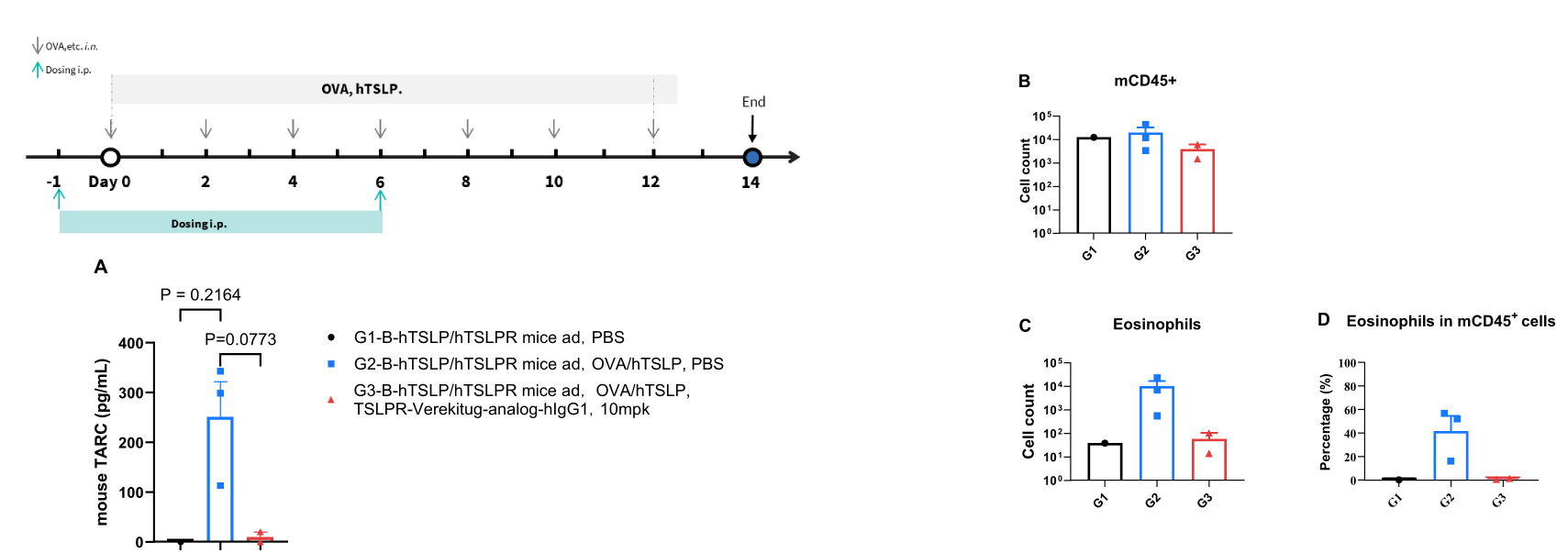
Mouse TARC and eosinophils were induced with OVA/hTSLP in homozygous B-hTSLP/hTSLPR mice ad. BALF supernatant was collected from B-hTSLP/hTSLPR mice ad immunized with OVA/hTSLP inducer to induce asthma at the study endpoint. Mouse TARC levels were analyzed by ELISA (Mouse CCL17/TARC Quantikine ELISA Kit: R&D Systems, MCC170). The results showed that the levels of mTARC in BALF supernatant in mice treated with TSLPR-Verekitug-analog-hIgG1(in house) tended to be lower than that in untreated mice. Values are expressed as mean ± SEM. TARC: thymic and activating regulatory chemokine, also known as CCL17 (C-C motif chemokine ligand 17). Broncheoalveolar fluid (BALF) was collected at the end of the experiment to detect inflammatory cell infiltration in lung tissue. The results showed that eosinophils were reduced in the TSLPR-Verekitug-analog-hIgG1–treated group (G3) compared with the treated group (G2).
* When publishing results obtained using this animal model, please acknowledge the source as follows: The animal model [B-hTSLP/hTSLPR mice ad] (Cat# 115607) was purchased from Biocytogen.