
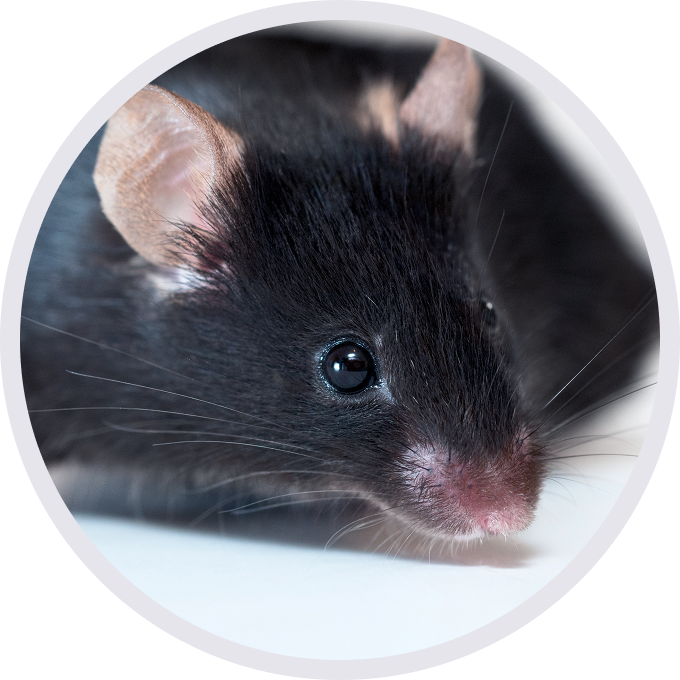


B-hUNC13A mice

C57BL/6-Unc13atm1(UNC13A)Bcgen/Bcgen • 113783

B-hUNC13A mice

Catalog Number: 113783
Strain Name: C57BL/6-Unc13atm1(UNC13A)Bcgen/Bcgen
Strain Background: C57BL/6
NCBI gene ID: 382018 (Human)
Aliases: Munc13-1; 2410078G03Rik
---
ライセンスオプション提供可能
B-hUNC13A mice

このページで

  • Description
  • Targeting strategy
  • Phenotypic analysis

ポスター

すべて表示

    出版物

      Description
      • Background: UNC13A is a promising therapeutic target for ALS and FTD due to its central role in synaptic transmission and strong disease genetic linkage. It encodes a presynaptic protein priming neurotransmitter vesicles for fusion. In patients, TDP-43 dysfunction triggers abnormal UNC13A splicing with a cryptic exon, causing mRNA degradation and insufficient functional UNC13A, which disrupts neuronal signal release and drives neurodegeneration. Therapeutic logic centers on antisense oligonucleotides correcting faulty splicing to restore intact UNC13A protein, rescue impaired synaptic communication, stabilize neural circuits, and slow disease progression in preclinical neuron and mouse models.
      • Targeting strategy: The exons 1-44 of mouse Unc13a gene that encode whole protein domains are replaced by human UNC13A gene in B-hUNC13A mice. The promoter and 5’UTR of the mouse gene are retained, and the 3’UTR region of the mouse gene is replaced by human counterparts.
      • Validation: Human UNC13A mRNA was exclusively detectable in homozygous B-hUNC13A mice. Human UNC13A sequences were confirmed via Sanger sequencing. No significant differences in UNC13A transcript levels were observed between male and female mice. UNC13A protein was detectable in homozygous B-hUNC13A mice and wild-type C57BL/6JNifdc mice, as the antibody was cross-reactive between human and mouse.
      • Application: This humanized B-hUNC13A mice model can be used to test splicing-targeted therapies for ALS/FTD, reproduce human-specific pathological splicing absent in ordinary mice to uncover neurodegeneration mechanisms, and conduct preclinical safety and dosage evaluation for clinical translation.
      Targeting Strategy

      Gene targeting strategy for B-hUNC13A mice.

      The exons 1-44 of mouse Unc13a gene that encode whole protein domains are replaced by human UNC13A gene in B-hUNC13A mice.

      The promoter and 5’UTR of the mouse gene are retained, and the 3’UTR region of the mouse gene is replaced by human counterparts.

      The human UNC13A expression is driven by endogenous mouse Unc13a promoter, while mouse Unc13a gene transcription and translation will be disrupted.

      mRNA expression analysis

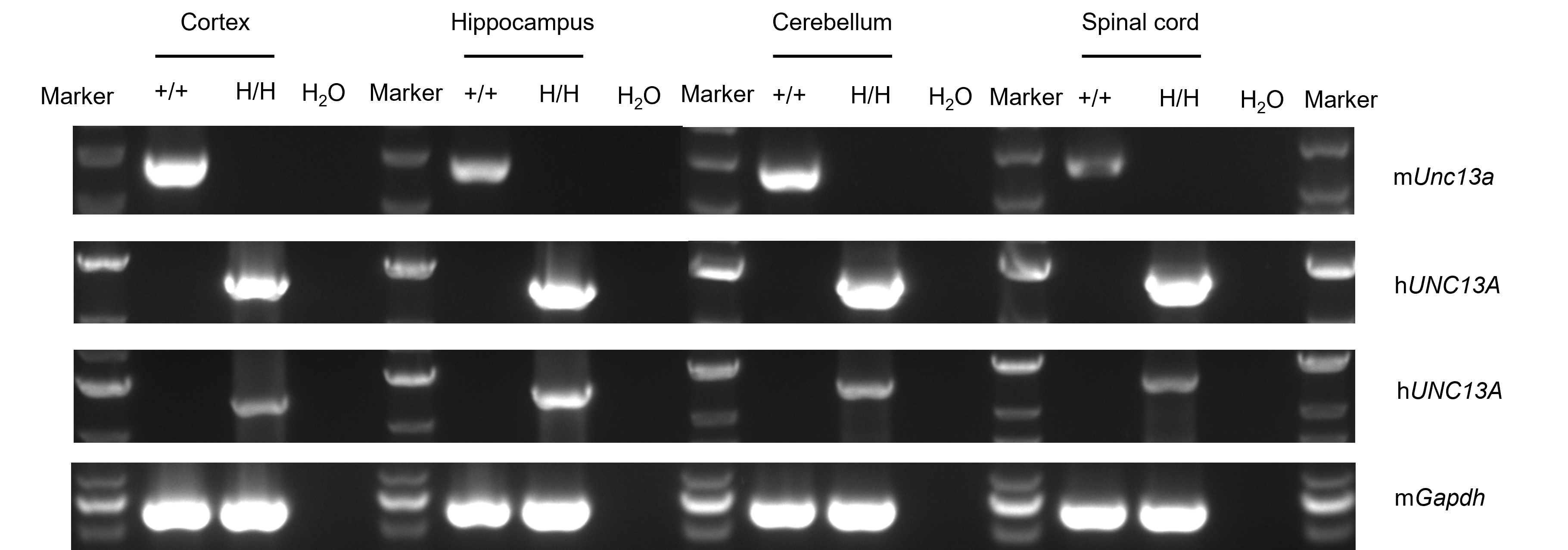
      Strain specific analysis of UNC13A mRNA expression in wild-type C57BL/6JNifdc mice and B-hUNC13A mice by RT-PCR. Various tissues RNA were isolated from wild-type C57BL/6JNifdc mice (+/+) and homozygous B-hUNC13A mice (H/H), then cDNA libraries were synthesized by reverse transcription, followed by PCR with  mouse or human UNC13A primers. Mouse Unc13a mRNA was only detectable in wild-type mice. Human UNC13A mRNA was exclusively detectable in homozygous B-hUNC13A mice. Human UNC13A sequences were confirmed via Sanger sequencing.
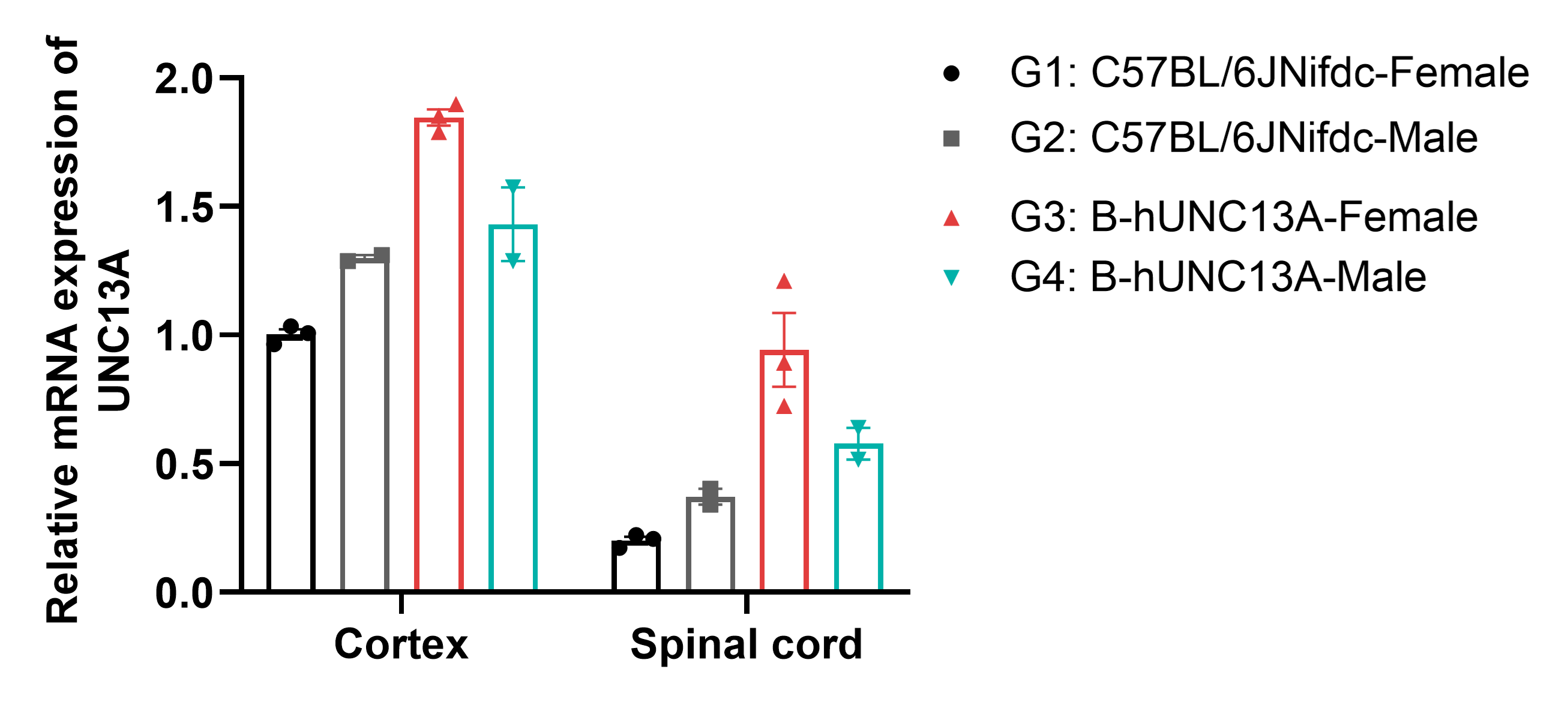
      Relative mRNA expression levels of UNC13A in wild-type C57BL/6JNifdc mice and humanized B-hUNC13A mice detected by quantitative real-time PCR (qPCR). Cortex and spinal cord RNA were isolated from wild-type C57BL/6JNifdc mice (+/+) and homozygous B-hUNC13A mice (H/H), then cDNA libraries were synthesized by reverse transcription, followed by qPCR with UNC13A primers. Transcript abundance was normalized to endogenous reference gene GAPDH, and relative expression values were normalized with UNC13A expression in cortex of female wild-type C57BL/6JNifdc mice. No significant differences in UNC13A transcript levels were observed between male and female mice. Values are expressed as mean ± SEM. Significance was determined by 2-way ANOVA.  *P < 0.05, **P < 0.01, ***P < 0.001.
      Protein expression analysis

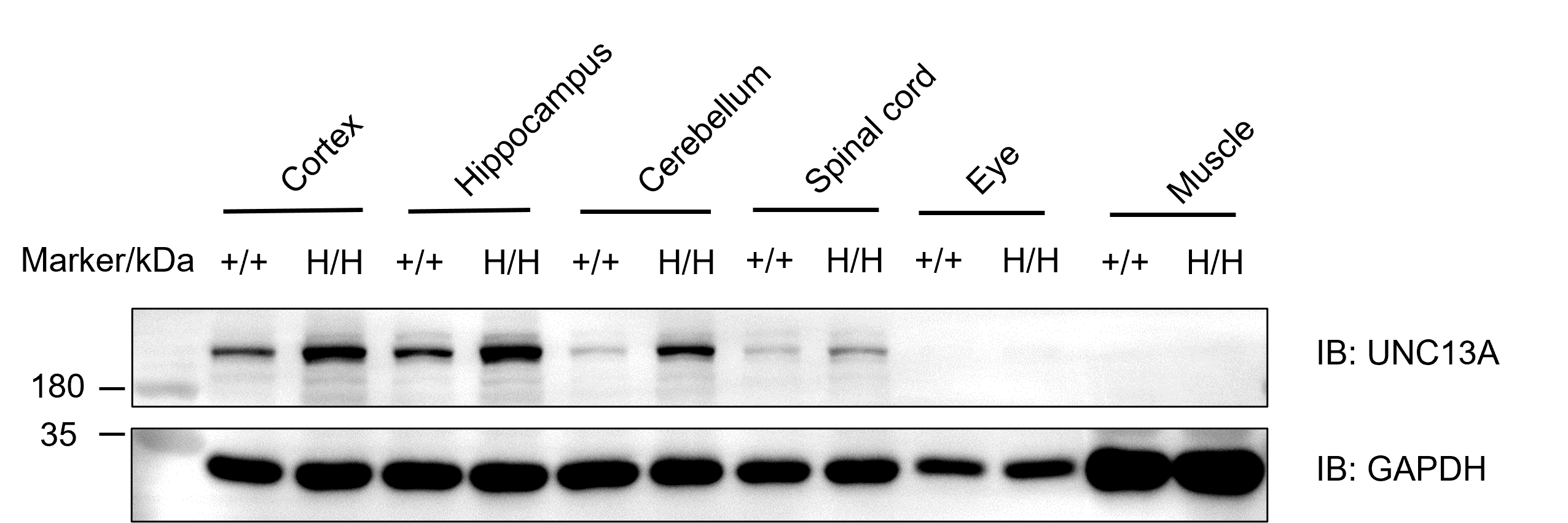
      Western blot analysis of UNC13A protein expression in homozygous B-hUNC13A mice. Various tissue lysates were collected from wild-type C57BL/6JNifdc mice (+/+) and homozygous B-hUNC13A mice (H/H), and then analyzed by western blot with anti-UNC13A antibody (Proteintech, 55053-1-AP). 40 μg total protein was loaded for western blotting analysis. UNC13A protein was detectable in homozygous B-hUNC13A mice and wild-type C57BL/6JNifdc mice, as the antibody was cross-reactive between human and mouse.

      * When publishing results obtained using this animal model, please acknowledge the source as follows: The animal model [B-hUNC13A mice] (Cat# 113783) was purchased from Biocytogen.