

B-Tg(hSERPINA1*E342K) mice

C57BL/6JNifdc-Tg(CH17-66F5)Bcgen/Bcgen • 114199


B-Tg(hSERPINA1*E342K) mice

Product nameB-Tg(hSERPINA1*E342K) mice
Catalog number114199
Strain nameC57BL/6JNifdc-Tg(CH17-66F5)Bcgen/Bcgen
Strain backgroundC57BL/6JNifdc
AliasesA1A, A1AT, AAT, PI, PI1, PRO2275, alpha1AT, nNIF

このページで

  • Description
  • Targeting strategy
  • Phenotypic analysis

ポスター

すべて表示

    出版物

      Description
      • Background: Alpha-1 antitrypsin (AAT), encoded by SERPINA1, is a crucial serine proteinase inhibitor produced by hepatocytes and secreted into the bloodstream. It primarily functions in the lungs, protecting elastic tissue from neutrophil elastase and inhibiting other enzymes like trypsin, plasmin, and thrombin. This activity helps safeguard normal cells and organs from proteolytic harm, suppresses infections and inflammation, and maintains internal balance.
      • Targeting strategy: A BAC containing the whole human SERPINA1 gene, including promoter, 5’UTR, coding sequence and 3’UTR was randomly inserted into mouse genome in B-Tg(hSERPINA1*E342K) mice.

      • Validation: Human SERPINA1 protein was exclusively detectable in hemizygous B-Tg(hSERPINA1*E342K) mice. Z-AAT aggregates can be found in liver of B-Tg(hSERPINA1*E342K) mice.
      • Application: Over 100 mutations in the SERPINA1 gene have been identified, with Pi*Z (E342K) and Pi*S being the most common. The ZZ homozygous mutation is particularly associated with alpha-1 antitrypsin deficiency (AATD) and chronic obstructive pulmonary disease (COPD). Additionally, abnormal, insoluble polymeric aggregates of AAT (Z-AAT) accumulate in hepatocytes, leading to cell damage and potentially resulting in severe liver disease and failure.
      Targeting strategy

      Gene targeting strategy for B-Tg(hSERPINA1*E342K) mice. A BAC containing the whole human SERPINA1 gene, including promoter, 5’UTR, coding sequence and 3’UTR was randomly inserted into mouse genome in B-Tg(hSERPINA1*E342K) mice.


      Protein expression analysis in plasma

      Strain specific SERPINA1 expression analysis in hemizygous humanized B-Tg(hSERPINA1*E342K) mice by ELISA. Plasma was collected from wild-type C57BL/6JNifdc mice (WT) and hemizygous B-Tg(hSERPINA1*E342K) mice (Tg/+) (12-week-old). Expression level of human SERPINA1 was analyzed by ELISA (anti-human alpha 1 Antitrypsin ELISA kit: Abcam, ab108799). Human SERPINA1 was exclusively detectable in B-Tg(hSERPINA1*E342K) mice.
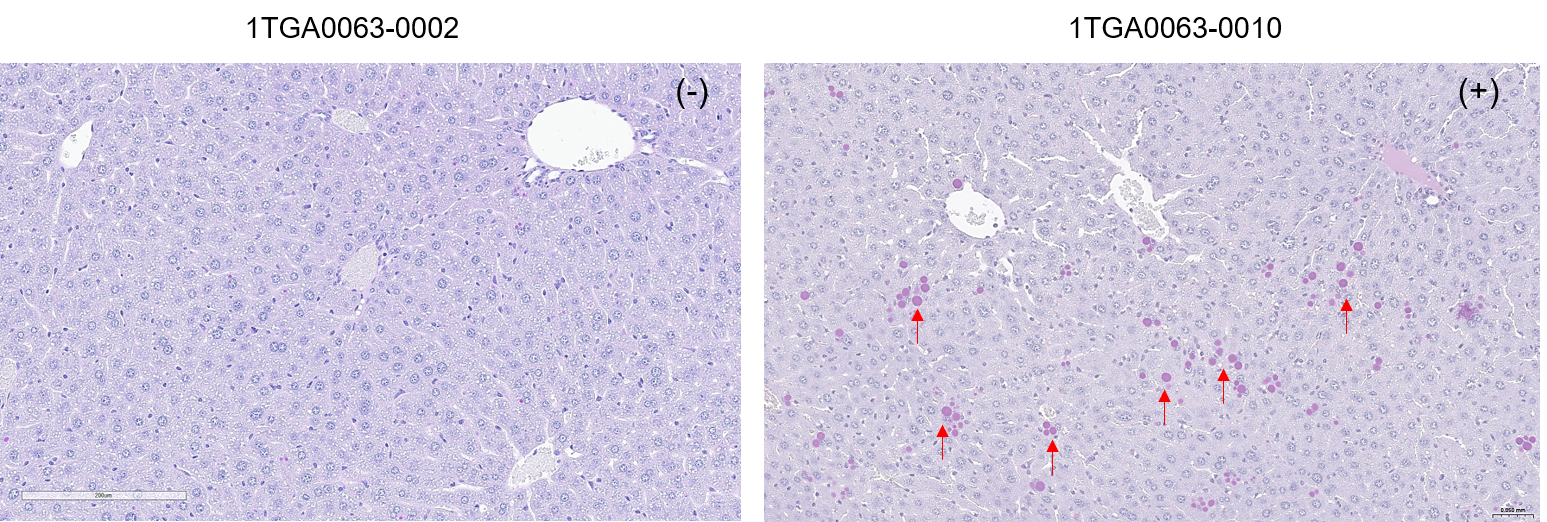
      Histopathological analysis of AAT aggregates

      PAS-D staining reveals the distribution of AAT aggregates in liver from B-Tg(hSERPINA1*E342K) mice. Liver tissue was collected from hemizygous B-Tg(hSERPINA1*E342K) mice (Tg/+) (male, 11-week-old) after fasting for 8 hours and amylase pretreatment was performed to eliminate non-specific glycogen signals, and the remaining magenta staining indicates the presence of amylase-resistant mucopolysaccharides or glycoproteins. Z-AAT aggregates can be found in liver B-Tg(hSERPINA1*E342K) mice. Scale bar, 200x magnification.
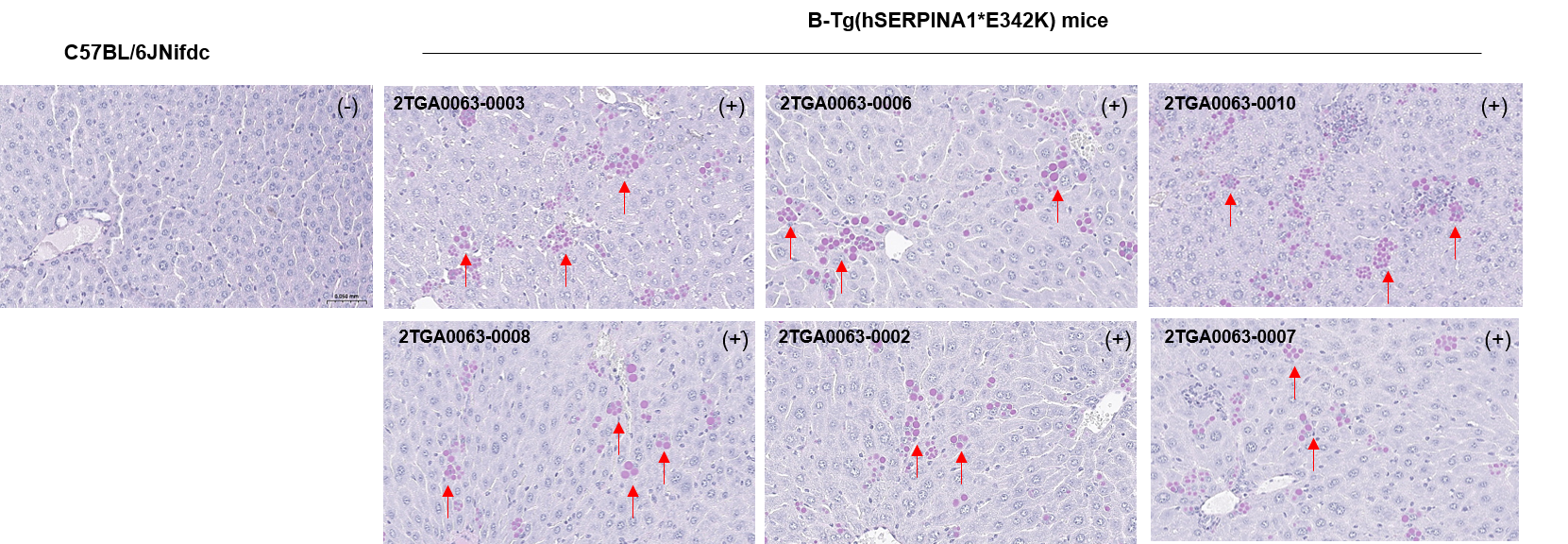
      PAS-D staining reveals the distribution of AAT aggregates in liver from B-Tg(hSERPINA1*E342K) mice. Liver tissue was collected from hemizygous B-Tg(hSERPINA1*E342K) mice (Tg/+) (13-week-old) after fasting for 8 hours and amylase pretreatment was performed to eliminate non-specific glycogen signals, and the remaining magenta staining indicates the presence of amylase-resistant mucopolysaccharides or glycoproteins. Z-AAT aggregates can be found in liver of B-Tg(hSERPINA1*E342K) mice. Scale bar, 400x magnification.

      * When publishing results obtained using this animal model, please acknowledge the source as follows: The animal model [B-Tg(hSERPINA1*E342K) mice] (Cat# 114199) was purchased from Biocytogen.