
B-hCD3EDG/hCD19/hBCMA mice

C57BL/6-Cd3etm1(CD3E)Bcgen Cd3dtm1(CD3D)Bcgen Cd3gtm1(CD3G)Bcgen Cd19tm4(CD19)Bcgen Tnfrsf17tm2(TNFRSF17)Bcgen/Bcgen • 113343

B-hCD3EDG/hCD19/hBCMA mice

Catalog Number: 113343
Strain Name: C57BL/6-Cd3etm1(CD3E)Bcgen Cd3dtm1(CD3D)Bcgen Cd3gtm1(CD3G)Bcgen Cd19tm4(CD19)Bcgen Tnfrsf17tm2(TNFRSF17)Bcgen/Bcgen
Strain Background: C57BL/6
NCBI gene ID: 916,915,917,930,608 (Human)
Aliases: T3E; TCRE; IMD18; CD3epsilon; T3D; IMD19; CD3DELTA; CD3-DELTA; T3G; IMD17; CD3GAMMA; CD3-GAMMA; B4; CVID3; BCM; BCMA; CD269; TNFRSF13A
---
ライセンスオプション提供可能

B-hCD3EDG/hCD19/hBCMA mice

このページで

  • Description
  • Targeting strategy
  • Phenotypic analysis
  • Physiological data
  • FAQ section

ポスター

すべて表示

    出版物

      Description
      • CD3EDG consists of the CD3ε, CD3δ, and CD3γ chains of the TCR/CD3 complex, which transduces antigen-recognition signals and mediates T cell activation.
      • CD19 is a B cell lineage marker and co-receptor widely used in B cell malignancy, autoimmune disease, CAR-T, and T cell engager therapeutic research.
      • BCMA (TNFRSF17, CD269) is expressed in plasma cells and multiple myeloma cells, making BCMA a major target for antibody, CAR-T, and bispecific antibody development.
      • B-hCD3EDG/hCD19/hBCMA mice are triple-target humanized mice carrying humanized CD3E/CD3D/CD3G, human CD19, and human BCMA targets in a C57BL/6 background.
      • This model supports preclinical evaluation of CD3-based T cell engagers, CD19-targeted therapeutics, BCMA-targeted therapeutics, and multi-target B cell or plasma cell immunotherapies.

      Key Advantages

      • Human CD3E, CD19, and BCMA target expression supports multi-target immunotherapy evaluation
      • Characterized immune-cell profiles and target expression enable CD3-, CD19-, and BCMA-directed therapeutic studies
      • Useful for CD3 T cell engager, CD19 bispecific, BCMA bispecific, and B cell/plasma cell immunotherapy research

      Validation

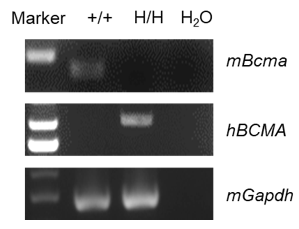
      • Molecular Validation: Human BCMA mRNA was detected in spleen from B-hCD3EDG/hCD19/hBCMA mice by RT-PCR, while mouse Bcma mRNA was detected in wild-type C57BL/6 mice.
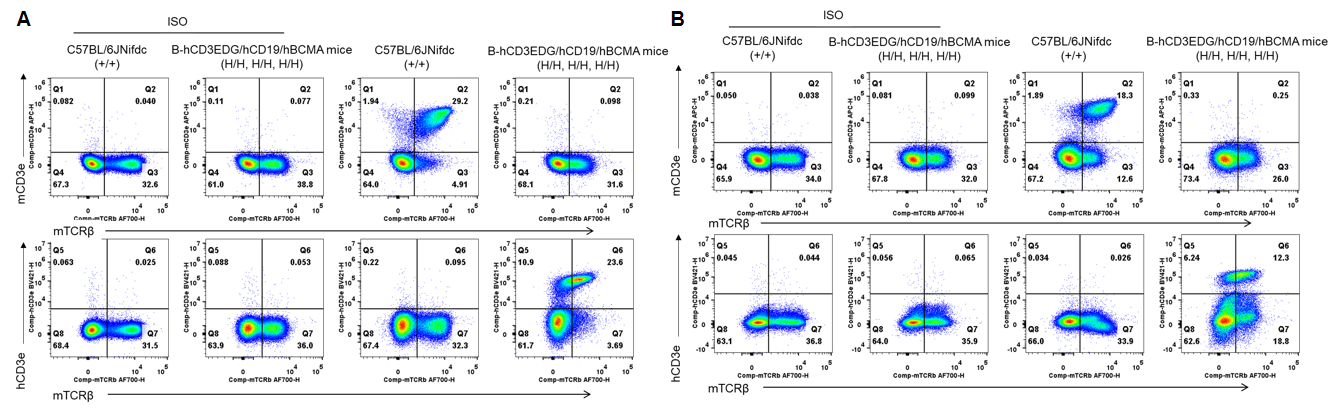
      • CD3E Protein Validation: Human CD3E was detected on T cells from spleen and blood of B-hCD3EDG/hCD19/hBCMA mice by flow cytometry.
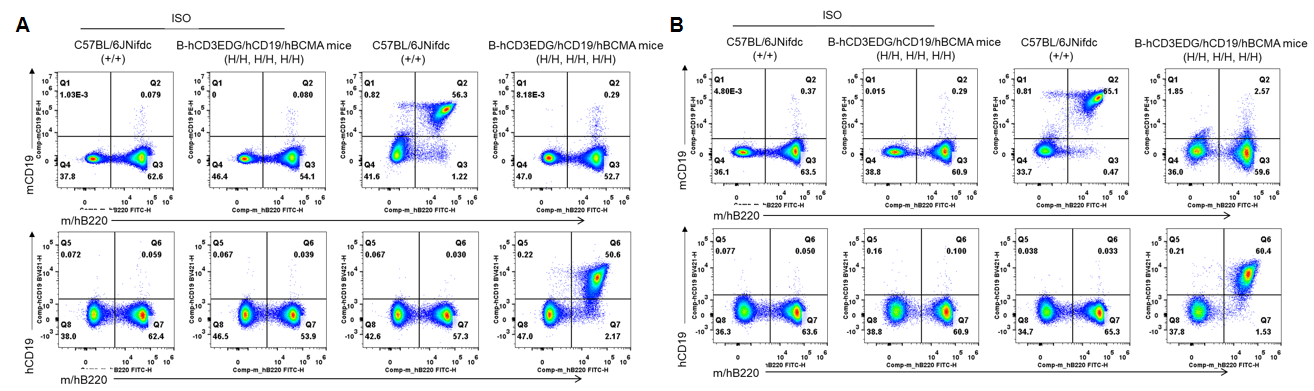
      • CD19 Protein Validation: Human CD19 was detected on B cells from spleen and blood of B-hCD3EDG/hCD19/hBCMA mice by flow cytometry.
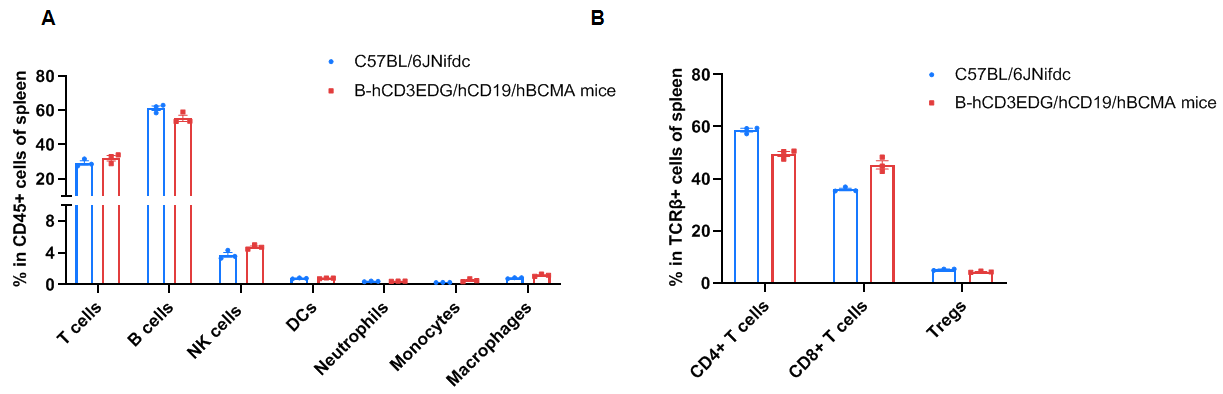
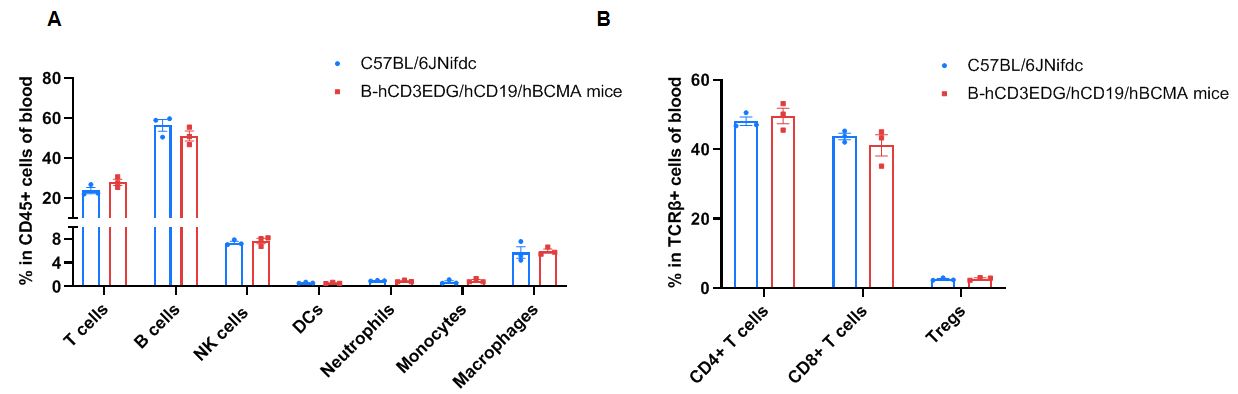
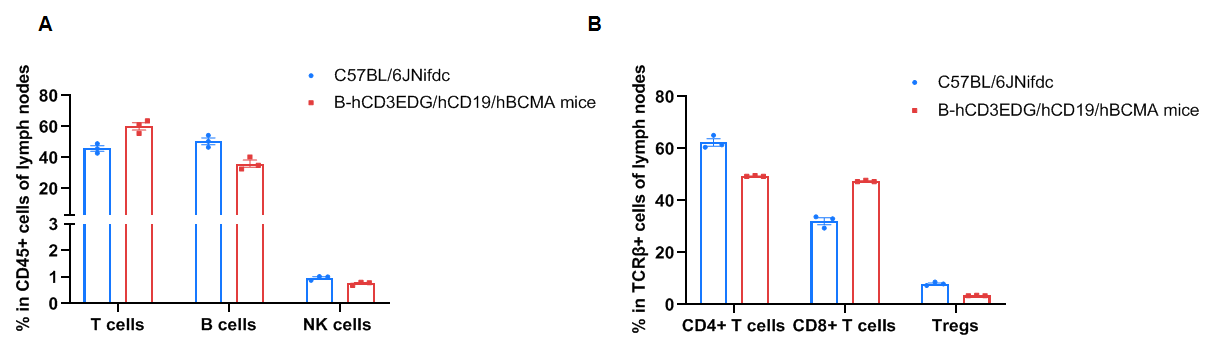
      • Phenotypic Validation: Leukocyte and T cell subpopulation frequencies in spleen, blood, and lymph nodes were comparable between B-hCD3EDG/hCD19/hBCMA mice and wild-type C57BL/6 mice.

      Application

      • CD3 T cell engager efficacy and pharmacology studies
      • CD19-targeted bispecific antibody and B cell therapy studies
      • BCMA-targeted antibody, CAR-T, and bispecific antibody research
      • Multi-target CD3/CD19/BCMA immunotherapy evaluation
      • B cell, plasma cell, and multiple myeloma therapeutic development
      • Immune-cell profiling and translational immuno-oncology research
      Targeting strategy

      B-hCD3EDG/hCD19/hBCMA mice combine humanized CD3EDG, CD19, and BCMA targets in a C57BL/6 background. The model was generated by introducing human CD3E/CD3D/CD3G sequences, human CD19 sequence, and human TNFRSF17/BCMA sequence into the corresponding mouse loci.
      This targeting design enables species-specific detection of human CD3E on T cells, human CD19 on B cells, and human BCMA in spleen while preserving an immunocompetent mouse background for in vivo pharmacology. B-hCD3EDG/hCD19/hBCMA mice provide a translational platform for evaluating CD3-engaging CD19- or BCMA-targeted immunotherapies.

      Mouse and Human BCMA mRNA Expression Analysis

      Strain-specific analysis of BCMA mRNA expression was performed in wild-type C57BL/6 mice and homozygous B-hCD3EDG/hCD19/hBCMA mice by RT-PCR.
      Spleen RNA were isolated from wild-type C57BL/6 mice (+/+) and homozygous B-hCD3EDG/hCD19/hBCMA mice (H/H), then cDNA libraries were synthesized by reverse transcription, followed by PCR with mouse and human primers. Mouse Bcma mRNA were detectable in wild-type mice. Human BCMA mRNA were detectable in B-hCD3EDG/hCD19/hBCMA mice but not in wild-type mice.

      Mouse and Human CD3E Protein Expression Analysis

      CD3E protein expression was analyzed in wild-type C57BL/6 mice and homozygous B-hCD3EDG/hCD19/hBCMA mice by flow cytometry.
      Splenocytes (A) and blood cells (B) were collected from wild-type C57BL/6 mice and homozygous B-hCD3EDG/hCD19/hBCMA mice (female, 8-week-old, n=1). Protein expression was analyzed with anti-mouse CD3E antibody (Biolegend, 100312) and anti-human CD3E antibody (BD Horizon™, 562426) by flow cytometry. Mouse CD3E was only detectable in wild-type C57BL/6 mice. Human CD3E was exclusively detectable in homozygous B-hCD3EDG/hCD19/hBCMA mice, but not in wild-type C57BL/6 mice.

      Mouse and Human CD19 Protein Expression Analysis

      CD19 protein expression was analyzed in wild-type C57BL/6 mice and homozygous B-hCD3EDG/hCD19/hBCMA mice by flow cytometry.
      Splenocytes (A) and blood cells (B) were collected from wild-type C57BL/6 mice and homozygous B-hCD3EDG/hCD19/hBCMA mice (female, 8-week-old, n=1). Protein expression was analyzed with anti-mouse CD19 antibody (Biolegend, 115507) and anti-human CD19 antibody (Biolegend, 392503) by flow cytometry. Mouse CD19 was only detectable in wild-type C57BL/6 mice. Human CD19 was exclusively detectable in homozygous B-hCD3EDG/hCD19/hBCMA mice, but not in wild-type C57BL/6 mice.

      Frequency of leukocyte subpopulations in spleen

      Frequency of leukocyte subpopulations in spleen was analyzed by flow cytometry.
      Splenocytes were isolated from wild-type C57BL/6 mice (female, n=3, 8-week-old) and homozygous B-hCD3EDG/hCD19/hBCMA mice (female, n=3, 8-week-old). A. Flow cytometry analysis of the splenocytes was performed to assess the frequency of leukocyte subpopulations. B. Frequency of T cell subpopulations. Percentages of T cells, B cells, NK cells, dendritic cells, monocytes, macrophages, CD4+ T cells, CD8+ T cells and Tregs in B-hCD3EDG/hCD19/hBCMA mice were similar to those in wild-type C57BL/6 mice. Values are expressed as mean ± SEM.

      Frequency of leukocyte subpopulations in blood

      Frequency of leukocyte subpopulations in blood was analyzed by flow cytometry.
      Blood cells were isolated from wild-type C57BL/6 mice (female, n=3, 8-week-old) and homozygous B-hCD3EDG/hCD19/hBCMA mice (female, n=3, 8-week-old). A. Flow cytometry analysis of the blood was performed to assess the frequency of leukocyte subpopulations. B. Frequency of T cell subpopulations. Percentages of T cells, B cells, NK cells, dendritic cells, monocytes, macrophages, CD4+ T cells, CD8+ T cells and Tregs in B-hCD3EDG/hCD19/hBCMA mice were similar to those in wild-type C57BL/6 mice. Values are expressed as mean ± SEM.

      Frequency of leukocyte subpopulations in lymph nodes

      Frequency of leukocyte subpopulations in lymph nodes was analyzed by flow cytometry.
      Lymph nodes cells were isolated from wild-type C57BL/6 mice (female, n=3, 8-week-old) and homozygous B-hCD3EDG/hCD19/hBCMA mice (female, n=3, 8-week-old). A. Flow cytometry analysis of the Lymph nodes cells was performed to assess the frequency of leukocyte subpopulations. B. Frequency of T cell subpopulations. Percentages of T cells, B cells, NK cells, CD4+ T cells, CD8+ T cells and Tregs in B-hCD3EDG/hCD19/hBCMA mice were similar to those in wild-type C57BL/6 mice. Values are expressed as mean ± SEM.

      FAQ section

      Q1: What are B-hCD3EDG/hCD19/hBCMA mice?

      B-hCD3EDG/hCD19/hBCMA mice are triple gene-humanized mice carrying humanized CD3EDG, human CD19, and human BCMA targets in a C57BL/6 background.

      Q2: Why are CD3EDG, CD19, and BCMA important therapeutic targets?

      CD3EDG enables T cell engagement through the TCR/CD3 complex, CD19 is a B cell target, and BCMA is a plasma cell and multiple myeloma target used in antibody, CAR-T, and bispecific drug development.

      Q3: How was target expression validated in this model?

      Human BCMA mRNA was validated in spleen by RT-PCR, while human CD3E and human CD19 protein expression were validated in spleen and blood by flow cytometry.

      Q4: Can B-hCD3EDG/hCD19/hBCMA mice be used for immune profiling?

      Yes. Spleen, blood, and lymph node leukocyte and T cell subpopulations were characterized by flow cytometry and compared with wild-type C57BL/6 mice.

      Q5: What are the main applications of this model?

      Applications include CD3 T cell engager studies, CD19-targeted B cell therapy research, BCMA-targeted multiple myeloma therapy studies, bispecific antibody evaluation, and translational immuno-oncology research.

      * When publishing results obtained using this animal model, please acknowledge the source as follows: The animal model [B-hCD3EDG/hCD19/hBCMA mice] (Cat# 113343) was purchased from Biocytogen.