Description
SYNGAP1: A major genetic risk factor for intellectual disability
- Gene Information: SYNGAP1 (Synaptic Ras GTPase activating protein 1) is located on human chromosome 6, and it encodes a brain-enriched Ras GAP protein. Heterozygous loss-of-function variants in SYNGAP1 gene causes SYNGAP1-related intellectual disability, a neurodevelopmental disorder diseases.
- Protein Expression: SYNGAP1 protein is predominantly expressed in excitatory neurons of the central neurons system and enriched at postsynaptic densities.
- Signaling Pathway: SYNGAP1 acts as a Ras GTPase-activating protein to negatively regulate Ras. It suppresses postsynaptic Ras–ERK signaling, thereby restraining growth-associated processes including protein translation and postsynaptic AMPA receptor insertion under basal resting conditions. Loss of SYNGAP1 elevates Ras activity and increases neuronal excitability.
- Therapeutic Application: SYNGAP1 serves as a promising therapeutic target for intellectual disability. Potential strategies include gene replacement therapy, antisense oligonucleotide-mediated rescue, and small-molecule agents to restore synaptic function.
Targeting Strategy
SYNGAP1
- The genome sequences between exon 1 to exon 19 of mouse Syngap1 gene were depleted in B-Syngap1 KO mice, leading to the disruption of mouse Syngap1 gene.
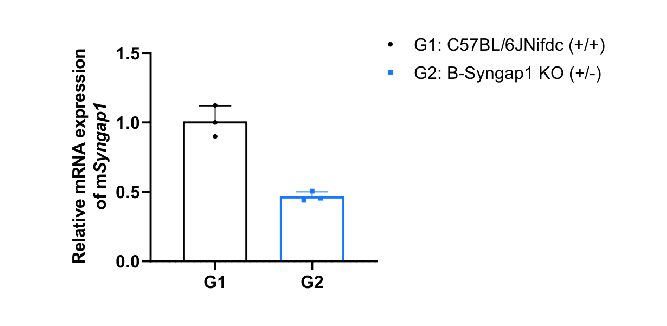
mRNA Expression by RT-qPCR of B-Syngap1 KO Mice
Mouse Syngap1 mRNA expression in wild-type mice and heterozygous B-Syngap1 KO mice by RT-qPCR. Brains were collected from wild-type C57BL/6JNifdc mice (+/+) (female, 13-week-old, n=3) and heterozygous B-Syngap1 KO mice (+/-) (female, 13-week-old, n=3). mRNA expression analysis was analyzed using qPCR. Each sample was assayed in triplicate replicates, with 40 ng total RNA loaded per well and relative expression in heterozygous mice was calculated by the 2^–ΔΔCt method. The data showed that mRNA expression level in heterozygous mice was approximately half of that in wild-type control, confirming the deletion of the mouse Syngap1 in heterozygous B-Syngap1 KO mice. Values are expressed as mean ± SEM
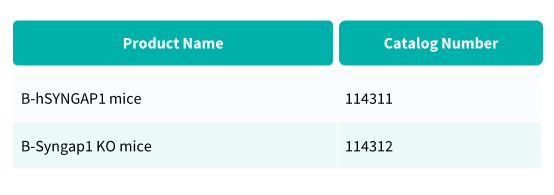
* When publishing results obtained using this animal model, please acknowledge the source as follows: The animal model [B-Syngap1 KO mice] (Cat# 114312) was purchased from Biocytogen.