

Gene targeting strategy for B-hIL2RB/hIL2RG/hIL15/hIL15RA/hNKG2D plus mice.
The exons 2-8 of mouse Il2rb gene that encode extracellular domain were replaced by human counterparts in B-hIL2RB/hIL2RG/hIL15/hIL15RA/hNKG2D plus mice. The genomic region of mouse Il2rb gene that encodes cytoplasmic portion is retained. The promoter, 5’UTR and 3’UTR region of the mouse gene are also retained. The chimeric IL2RB expression is driven by endogenous mouse Il2rb promoter, while mouse Il2rb gene transcription and translation will be disrupted.
The exons 1-7 of mouse Il2rg gene that encode signal peptide, extracellular domain, transmembrane domain, cytoplasmic region were replaced by human counterparts in B-hIL2RB/hIL2RG/hIL15/hIL15RA/hNKG2D plus mice. The promoter and 5’UTR region of the mouse gene are retained. The human IL2RG expression is driven by endogenous mouse Il2rg promoter, while mouse Il2rg gene transcription and translation will be disrupted.
The exons 3-8 of mouse Il15 gene that encode the whole molecule (ATG to STOP codon) were replaced by human counterparts in B-hIL2RB/hIL2RG/hIL15/hIL15RA/hNKG2D plus mice. The promoter, 5’UTR and 3’UTR region of the mouse gene are retained. The human IL15 expression is driven by endogenous mouse Il15 promoter, while mouse Il15 gene transcription and translation will be disrupted.
The exons 2-6 of mouse Il15ra gene that encode extracellular domain were replaced by human counterparts in B-hIL2RB/hIL2RG/hIL15/hIL15RA/hNKG2D plus mice. The genomic region of mouse Il15ra gene that encodes cytoplasmic portion is retained. The promoter, 5’UTR and 3’UTR region of the mouse gene are also retained. The chimeric IL15RA expression is driven by endogenous mouse Il15ra promoter, while mouse Il15ra gene transcription and translation will be disrupted.
The 5’UTR and exons 2-8 of mouse Nkg2d gene encoding the full-length were replaced by 5’UTR and exons 2-8 of human NKG2D in B-hIL2RB/hIL2RG/hIL15/hIL15RA/hNKG2D plus mice.

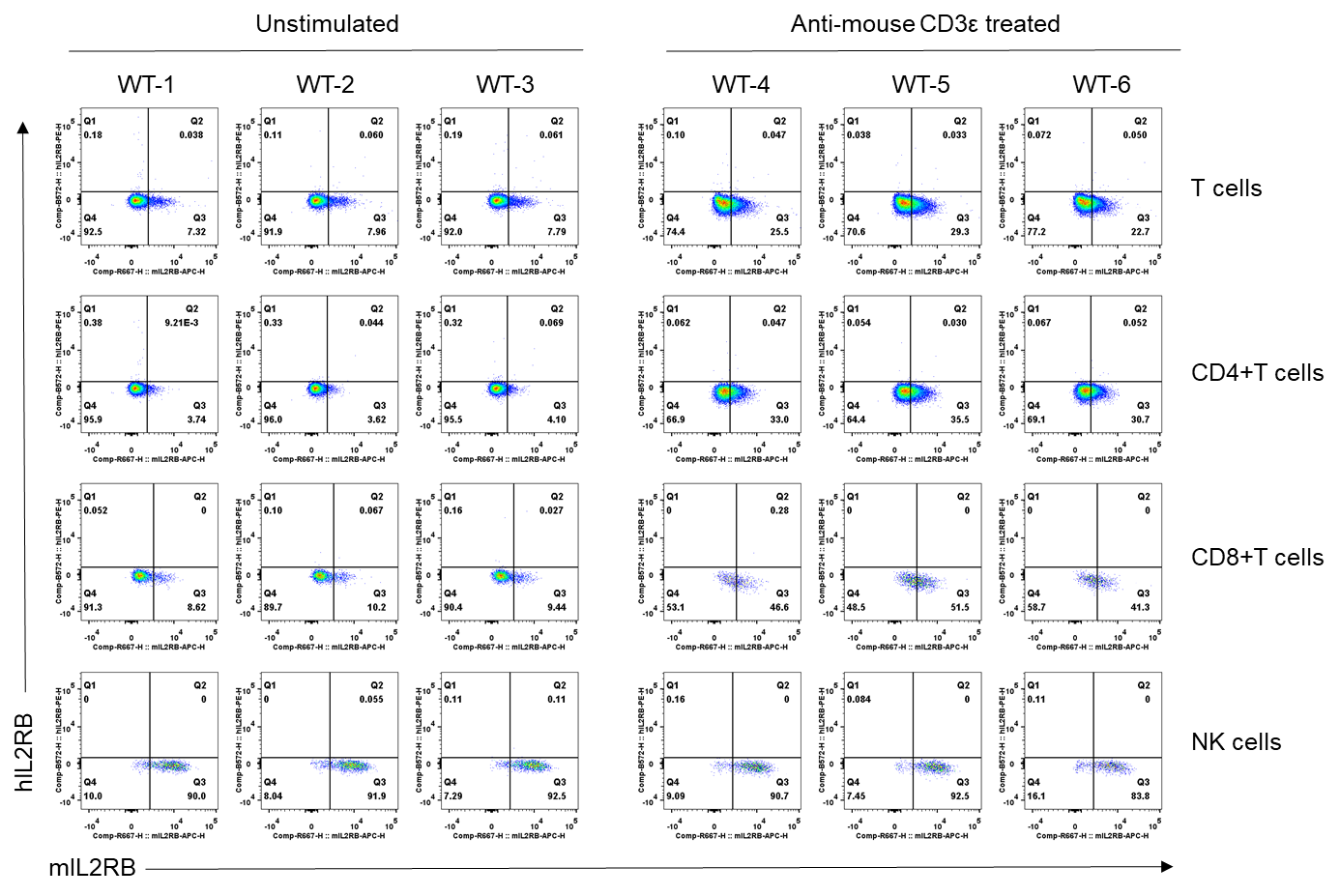
Strain specific IL2RB expression analysis in wild-type (WT) C57BL/6JNifdc mice by flow cytometry. Splenocytes were collected from wild-type C57BL/6JNifdc mice (female, 7-week-old, n=3/group) stimulated with or without anti-mouse CD3ε antibody (7.5 μg/mice, i.p.) in vivo for 24 h, and analyzed by flow cytometry with species-specific anti-mouse IL2RB antibody (Biolegend, 105912) and anti-human IL2RB antibody (Biolegend, 339005). Mouse IL2RB was only detectable in wild-type mice.
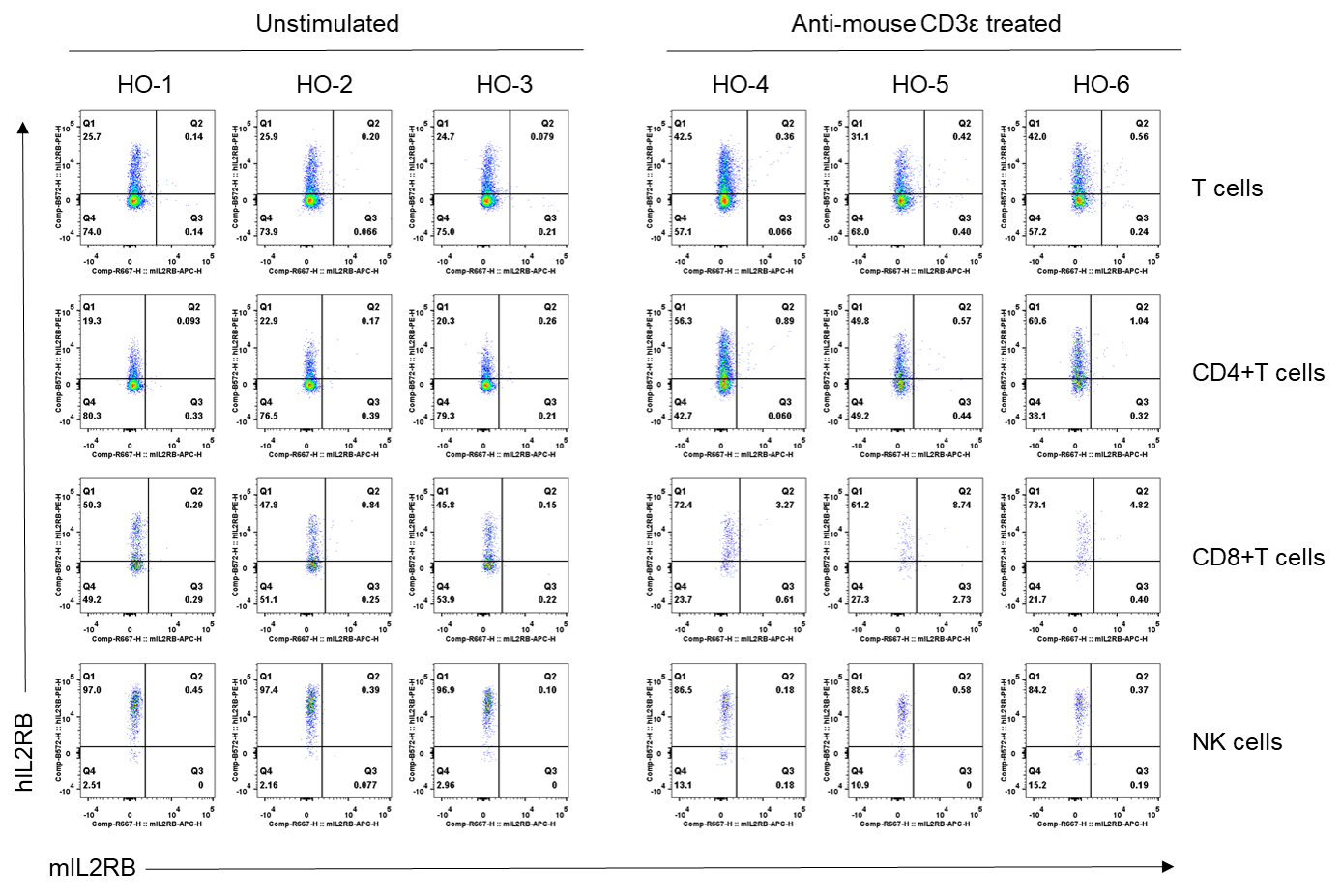
Strain specific IL2RB expression analysis in homozygous (HO) B-hIL2RB/hIL2RG/hIL15/hIL15RA/hNKG2D plus mice by flow cytometry. Splenocytes were collected from homozygous B-hIL2RB/hIL2RG/hIL15/hIL15RA/hNKG2D plus mice (female, 7-week-old, n=3/group) stimulated with or without anti-mouseCD3ε antibody (7.5 μg/mice, i.p.) in vivo for 24 h, and analyzed by flow cytometry with species-specific anti-mouse IL2RB antibody (Biolegend, 105912) and anti-human IL2RB antibody (Biolegend, 339005). Human IL2RB was only detectable in homozygous B-hIL2RB/hIL2RG/hIL15/hIL15RA/hNKG2D plus mice.
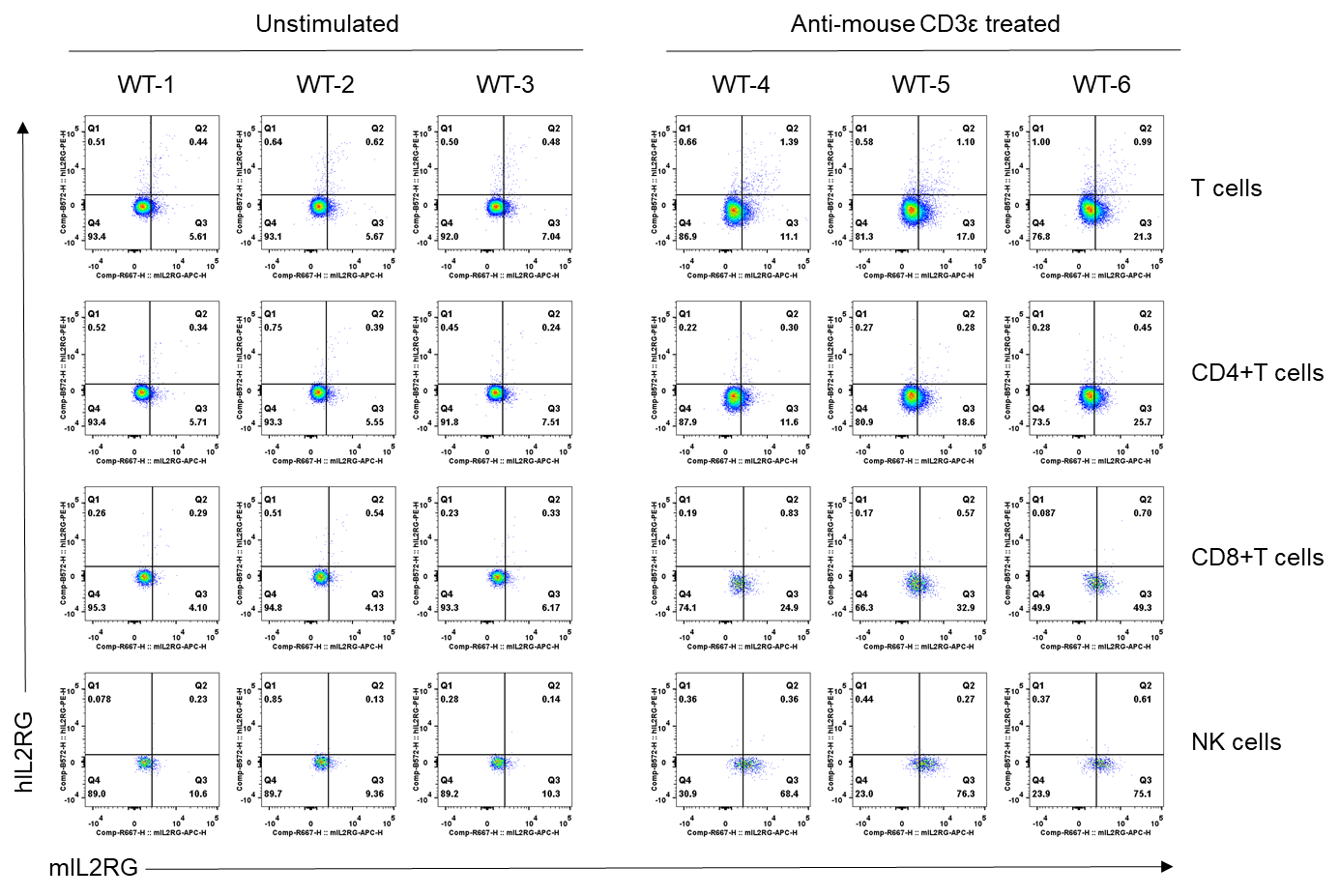
Strain specific IL2RG expression analysis in wild-type (WT) C57BL/6JNifdc mice by flow cytometry. Splenocytes were collected from wild-type C57BL/6JNifdc mice (female, 7-week-old, n=3/group) stimulated with or without anti-mouse CD3ε antibody (7.5 μg/mice, i.p.) in vivo for 24 h, and analyzed by flow cytometry with species-specific anti-mouse IL2RG antibody (Biolegend, 132307) and anti-human IL2RB antibody (Biolegend, 338605). Mouse IL2RG was only detectable in wild-type mice.
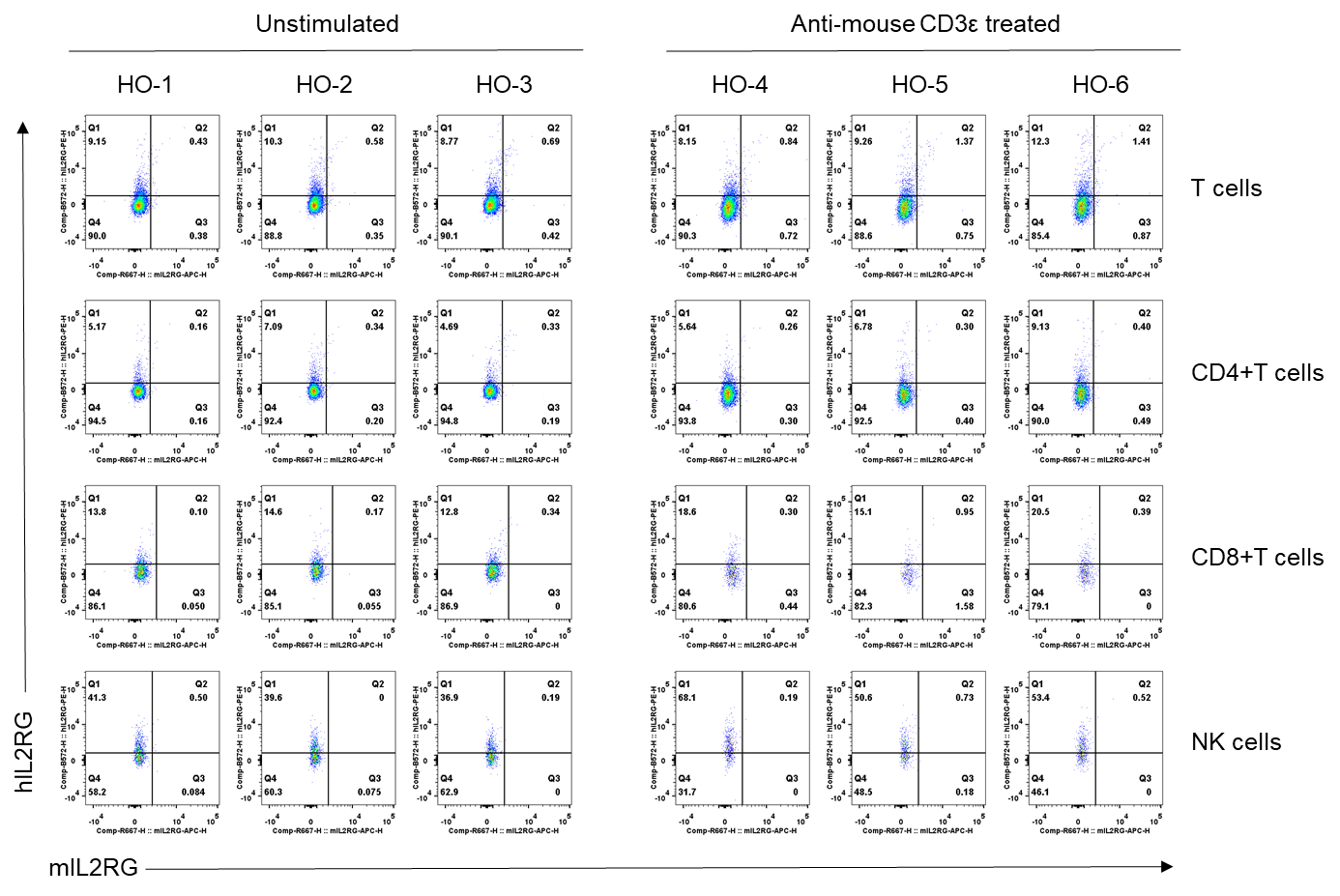
Strain specific IL2RG expression analysis in homozygous (HO) B-hIL2RB/hIL2RG/hIL15/hIL15RA/hNKG2D plus Mice by flow cytometry. Splenocytes were collected from homozygous B-hIL2RB/hIL2RG/hIL15/hIL15RA/hNKG2D plus mice (female, 7-week-old, n=3/group) stimulated with or without anti-mouse CD3ε antibody (7.5 μg/mice, i.p.) in vivo for 24 h, and analyzed by flow cytometry with species-specific anti-mouse IL2RG antibody (Biolegend, 132307) and anti-human IL2RG antibody (Biolegend, 338605). Human IL2RG was only detectable in homozygous B-hIL2RB/hIL2RG/hIL15/hIL15RA/hNKG2D plus mice.
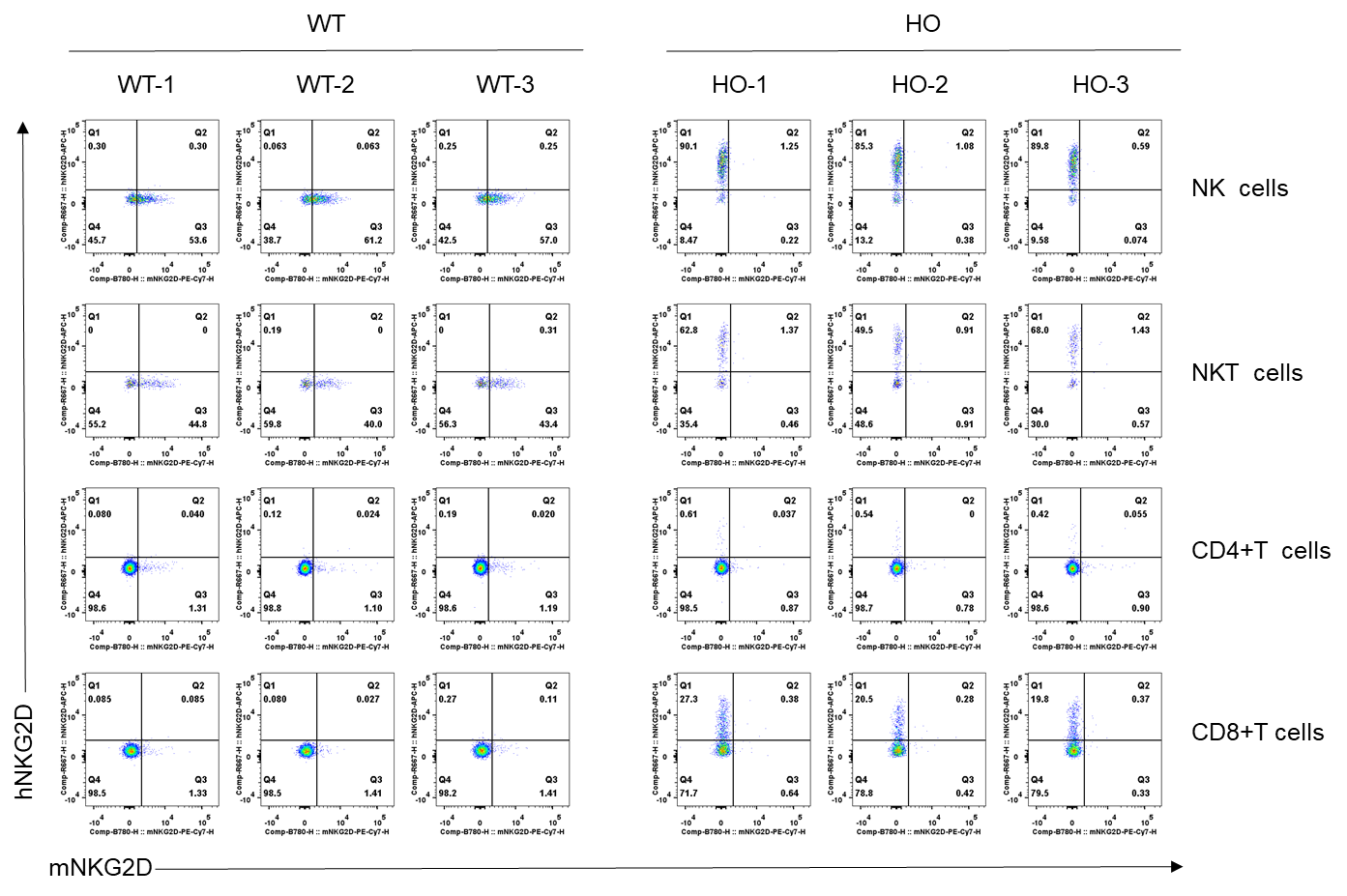
Strain specific NKG2D expression analysis in homozygous (HO) B-hIL2RB/hIL2RG/hIL15/hIL15RA/hNKG2D plus mice by flow cytometry. Splenocytes were collected from wild-type (WT) C57BL/6JNifdc mice and homozygous B-hIL2RB/hIL2RG/hIL15/hIL15RA/hNKG2D plus mice (female, 7-week-old, n=3/group), and analyzed by flow cytometry with species-specific anti-mouse NKG2D antibody (eBioscience, 2298692) and anti-human NKG2D antibody (Biolegend, 320807). Human NKG2D was only detectable in homozygous B-hIL2RB/hIL2RG/hIL15/hIL15RA/hNKG2D plus mice.
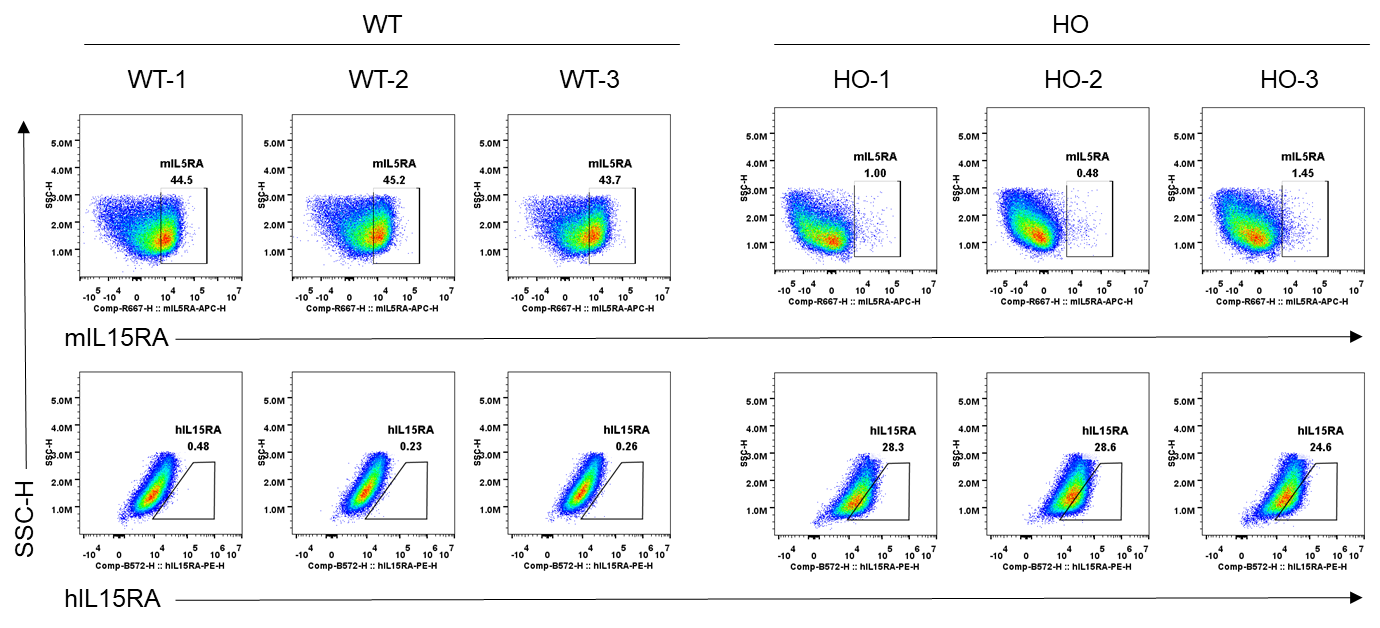
Strain specific IL15RA expression analysis in homozygous B-hIL2RB/hIL2RG/hIL15/hIL15RA/hNKG2D plus mice by flow cytometry. Bone marrow cells were collected from wild-type (WT) C57BL/6JNifdc mice and homozygous (HO) B-hIL2RB/hIL2RG/hIL15/hIL15RA/hNKG2D plus mice, and cultured in 6-well plates stimulated with GM-CSF and IL-4 for 6 days and LPS (1 μg/mL) for 18 h to induce BMDCs. Then BMDCs were collected and analyzed by flow cytometry with anti-mIL15RA antibody (BD, 568235) and anti-hIL15RA antibody (Biolegend, 330207). The mIL15RA was only detectable in wild-type mice. The mIL15RA was exclusively detectable in homozygous mice.

Strain specific IL15 expression analysis in wild-type C57BL/6JNifdc mice and homozygous B-hIL2RB/hIL2RG/hIL15/hIL15RA/hNKG2D plus mice by ELISA. Serum was collected from wild-type C57BL/6JNifdc mice and homozygous B-hIL2RB/hIL2RG/hIL15/hIL15RA/hNKG2D plus mice (female, 7-week-old, n=3/group) stimulated with 350mg/kg APAP in vivo for 18 hrs. Expression level of human IL15 was analyzed by ELISA (anti-human IL15 ELISA kit: R&D D1500). Human IL15 was exclusively detectable in homozygousB-hIL2RB/hIL2RG/hIL15/hIL15RA/hNKG2D plus mice. Values are expressed as mean ± SEM.
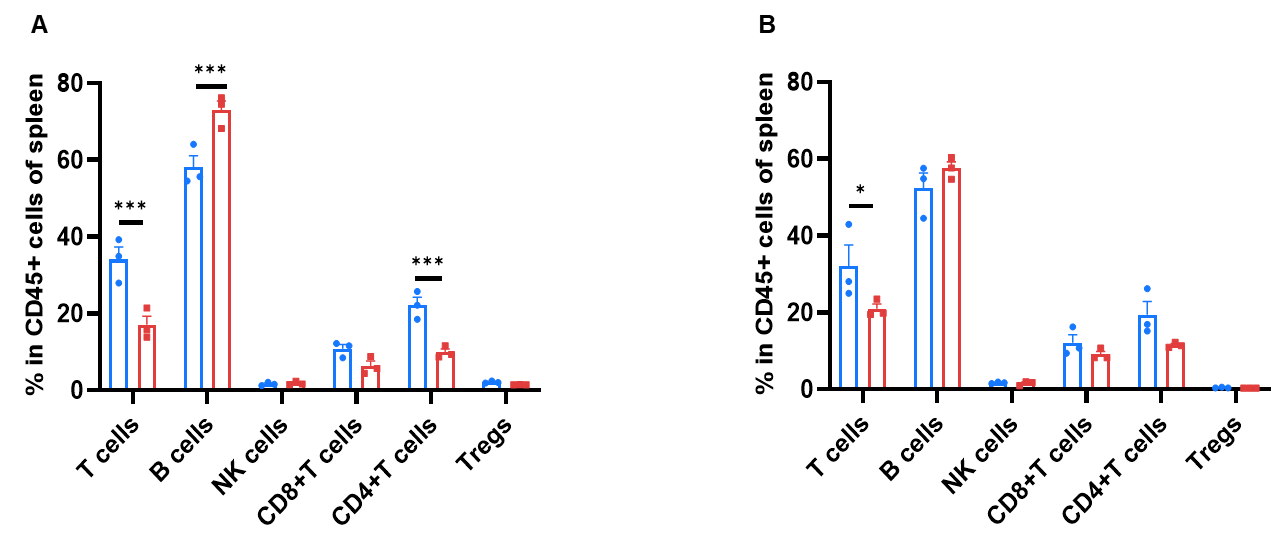
Frequency of leukocyte subpopulations in spleen and blood by flow cytometry. Splenocytes and blood cells were isolated from wild-type C57BL/6JNifdc mice and homozygous B-hIL2RB/hIL2RG/hIL15/hIL15RA/hNKG2D plus mice (female,7-week-old, n=3). Flow cytometry analysis of the splenocytes (A) and blood (B) were performed to assess the frequency of leukocyte subpopulations. Frequencies of NK cells, CD8+ T cells and Tregs in B-hIL2RB/hIL2RG/hIL15/hIL15RA/hNKG2D plus mice were similar to those in C57BL/6JNifdc mice. Frequency of T cells in B-hIL2RB/hIL2RG/hIL15/hIL15RA/hNKG2D plus mice were lower than that in C57BL/6JNifdc mice. Frequencies of B cells and CD4+ Tcells in B-hIL2RB/hIL2RG/hIL15/hIL15RA/hNKG2D plus mice were lower than that in C57BL/6JNifdc mice. Values are expressed as mean ± SEM. Significance was determined by two-way ANOVA test. *P < 0.05, **P < 0.01, ***p < 0.001.
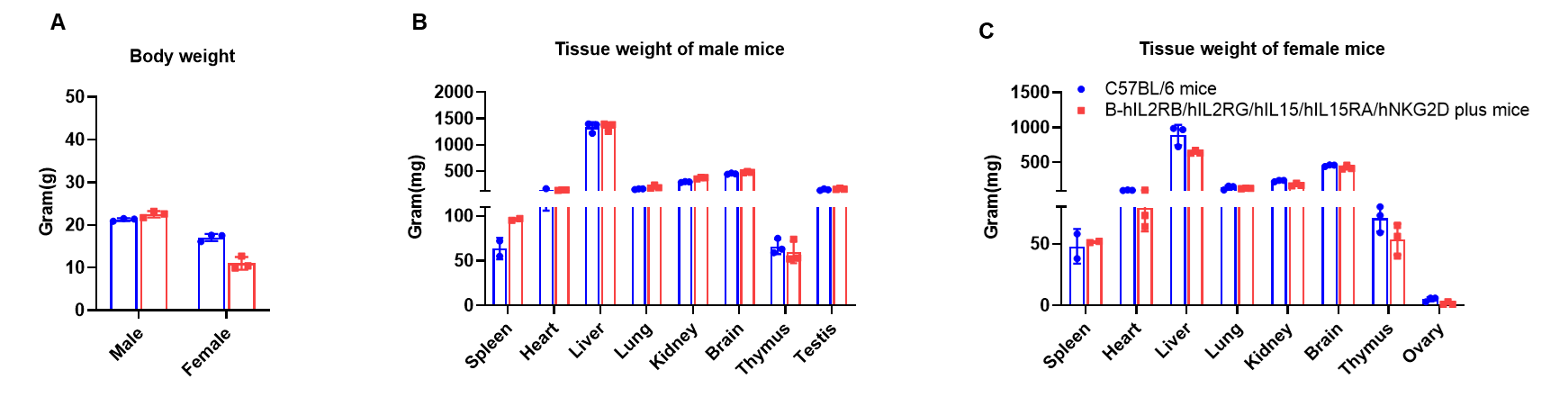
Comparison of body weights and tissues weights between C57BL/6JNifdc mice and B-hIL2RB/hIL2RG/hIL15/hIL15RA/hNKG2D plus mice. There is no significant difference in body weight or the weight of organs such as the spleen between wild-type C57BL/6JNifdc mice and B-hIL2RB/hIL2RG/hIL15/hIL15RA/hNKG2D plus mice.