
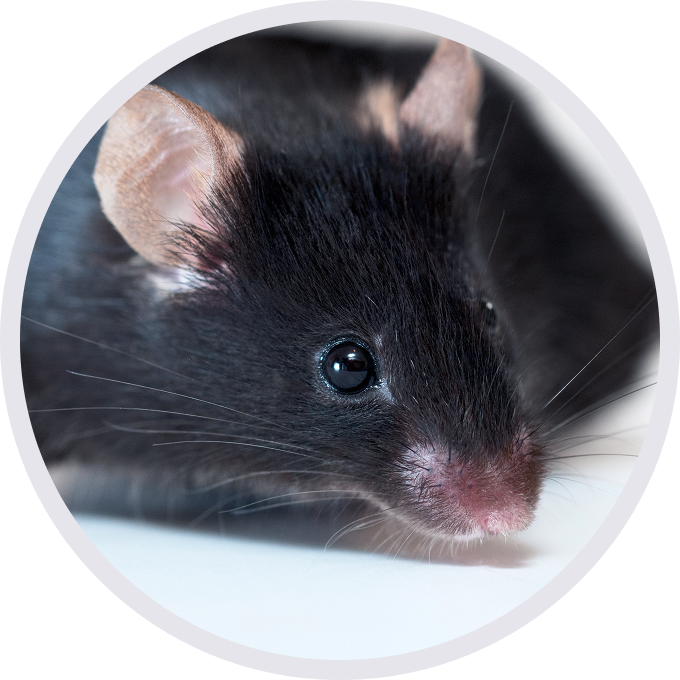

B-hCD14 mice
C57BL/6-Cd14tm1(CD14)Bcgen/Bcgen • 111130

B-hCD14 mice

Catalog Number
111130
Strain Name
C57BL/6-Cd14tm1(CD14)Bcgen/Bcgen
Strain Background
C57BL/6
NCBI gene ID
929 (Human)

このページで

  • Description
  • Targeting strategy
  • Phenotypic analysis
  • Efficacy

ポスター

すべて表示

    出版物

      Description

      CD14: A pattern recognition receptor and surface antigen

      •  Gene Information: CD14 molecule is a protein-coding gene located on chromosome 5q31.3. CD14 is pattern recognition receptor including membrane-bound CD14 (mCD14) and soluble CD14 (sCD14). 
      • Protein Expression: CD14 is predominantly expressed on monocytes and macrophages, serving as a key driver of innate immune activation. Operating as a co-receptor for bacterial lipopolysaccharide (LPS), it also binds lipopeptides and electronegative LDL, effectively bridging extracellular microbial and lipid signals to intracellular inflammatory cascades.
      •  Signaling Pathway: Assisted by LBP, CD14 binds LPS and transfers it to the TLR4/MD2 (LY96) complex. This recruits adaptors MyD88 and TIRAP, which signal through TRAF6 to drive NF-κB activation, pro-inflammatory cytokine expression, and systemic inflammation. 
      • Therapeutic Inhibition: CD14 serves as a core innate immune receptor binding LPS, lipopeptides, and electronegative LDL, driving hyperinflammatory and neurodegenerative disorders such as sepsis, ARDS, ALS, and atherosclerosis.
      Targeting strategy

      CD14 

      • The exons 1-2 of mouse Cd14 gene that encode the full-length protein were replaced by human CD14 exons 1-2 in B-hCD14 mice. 
      • The endogenous mouse promoter, 5′ UTR, and 3′ UTR regions are retained, allowing human CD14 expression to be driven by the native mouse Cd14 promoter, while endogenous mouse Cd14  transcription and translation are abolished.
      CD14 Protein Expression in PEMs

      Strain specific CD14 expression analysis in wild-type C57BL/6 mice and homozygous B-hCD14 mice by flow cytometry. PEMs (peritoneal exudate macrophages) were collected from wild-type C57BL/6 mice (+/+) and homozygous B-hCD14 mice (H/H). Mouse CD14 was detectable only in wild-type mice. Human CD14 was detectable only in homozygous B-hCD14 mice.

      Human CD14 mRNA Expression by RT-PCR in PEMs

      Strain specific analysis of CD14 gene expression in wild-type C57BL/6 mice and B-hCD14 mice by RT-PCR. Mouse Cd14 mRNA was detectable in PEMs (peritoneal exudate macrophages) of wild-type C57BL/6 mice (+/+) but not in homozygous B-hCD14 mice (H/H). Human CD14 mRNA was detectable only in homozygous B-hCD14 mice but not in wild-type C57BL/6 mice.

      Soluble CD14 Protein Expression in Serum

      Soluble human CD14 expression analysis in homozygous humanized B-hCD14 mice by ELISA. Serum was collected from wild-type C57BL/6N mice andhomozygous B-hCD14 mice (female, 7-week-old, n=3). Expression level of soluble human CD14 and mouse CD14 were analyzed by ELISA (Mouse CD14 ELISA Kit,Proteintech, KE10113; Human CD14 ELISA Kit, Proteintech, KE00338). Soluble mouse CD14 was detectable only in wild-type mice. Soluble human CD14 wasdetectable only in homozygous B-hCD14 mice.

      Functional Validation

      Mouse TNFA and mouse IL6 expression analysis in homozygous humanized B-hCD14 mice by ELISA. Mice received LPS injection (i.p, 0.4 mg/kg) 24 hours following PBS or Atibuclimab analog (in house) (i.p, 20 mg/kg) treatment. Serum was collected from homozygous B-hCD14 mice one hour after LPS injection. Expression level of mouse TNFA  and mouse IL6 were analyzed by ELISA (ELISA MAX™ Deluxe Set Mouse TNF-α, Biolegend, 430907; ELISA MAX™ Deluxe Set Mouse IL-6, Biolegend, 430304). Mouse TNFA and mouse IL6 level were significantly increased one hour after LPS injection. Pre-treatment of Atibuclimab analog significantly decreased mouse IL6 and mouse TNFA expression at one hour after LPS injection. Values are expressed as mean ± SEM. Significance was determined by one-way ANOVA test . *p < 0.05, **p < 0.01, ***p < 0.001, ns: Not statistically significant.

      * When publishing results obtained using this animal model, please acknowledge the source as follows: The animal model [B-hCD14 mice] (Cat# 111130) was purchased from Biocytogen.