


GPC3: GPC3 is a tumor-associated heparan sulfate proteoglycan that promotes cancer growth and serves as a therapeutic target.

GPC3

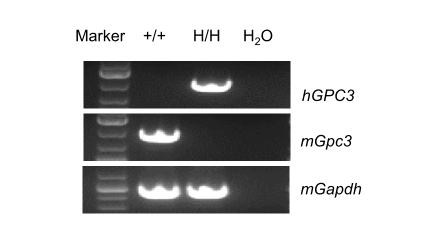
mRNA GPC3 was detectable in B-hGPC3 mice by RT-PCR and sequencing. Kidney tissues were isolated from wild-type C57BL/6 mice (+/+) and homozygous B-hGPC3 mice (H/H). Primers were designed to detect the human and mouse GPC3. Sequencing of the PCR products confirmed that the amplified sequences were consistent with database reference sequences.
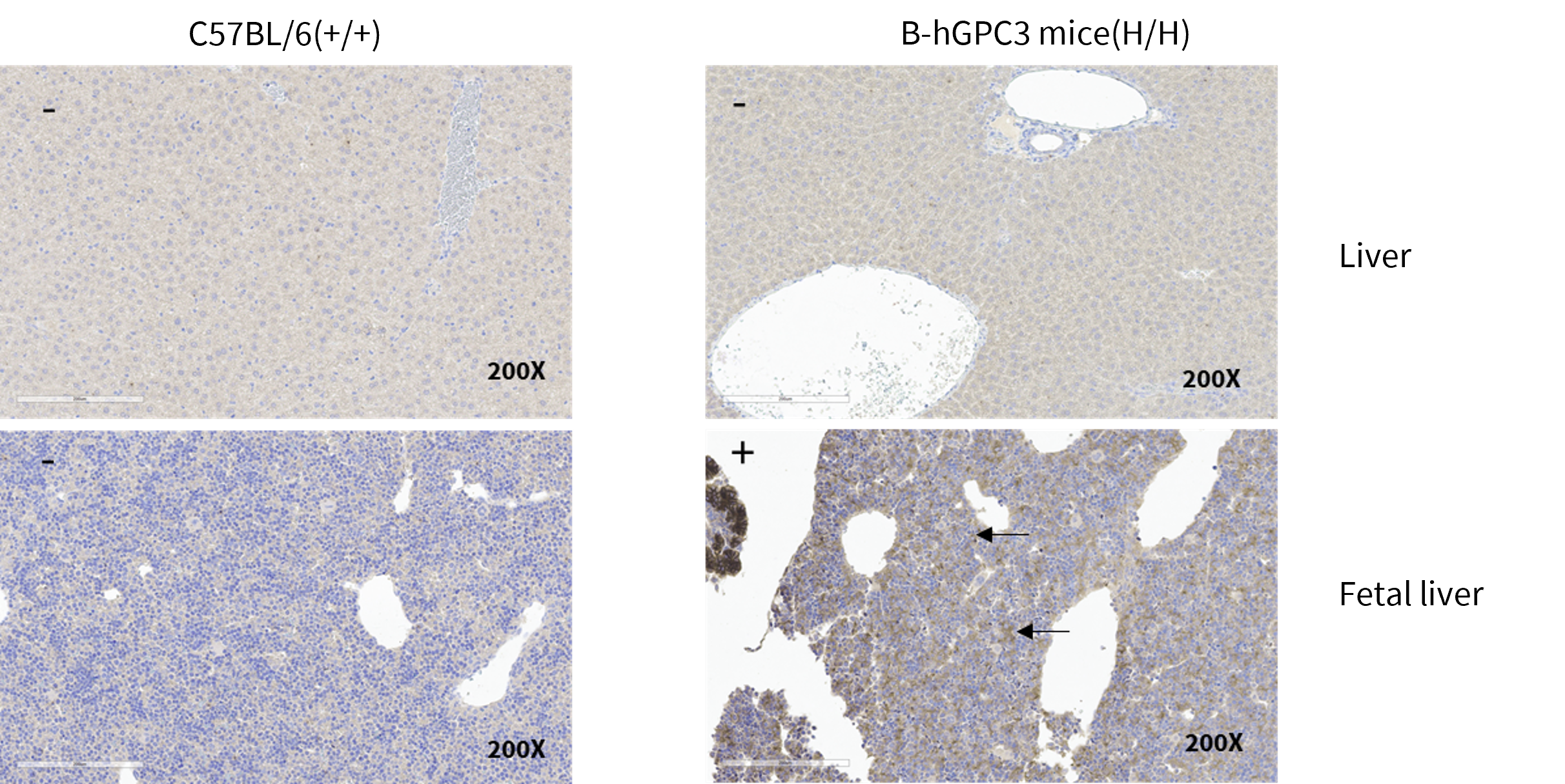
Immunohistochemical (IHC) analysis of GPC3 protein expression in C57BL/6 wild-type mice and B-hGPC3 mice. The liver and fetal liver were collected from C57BL/6 (+/+) and homozygous B-hGPC3 mice (H/H) and analyzed by IHC with anti-GPC3 antibody (GC33-hIgG1 analog, in house). The arrow indicates tissue cells with positive GPC3 staining (brown).
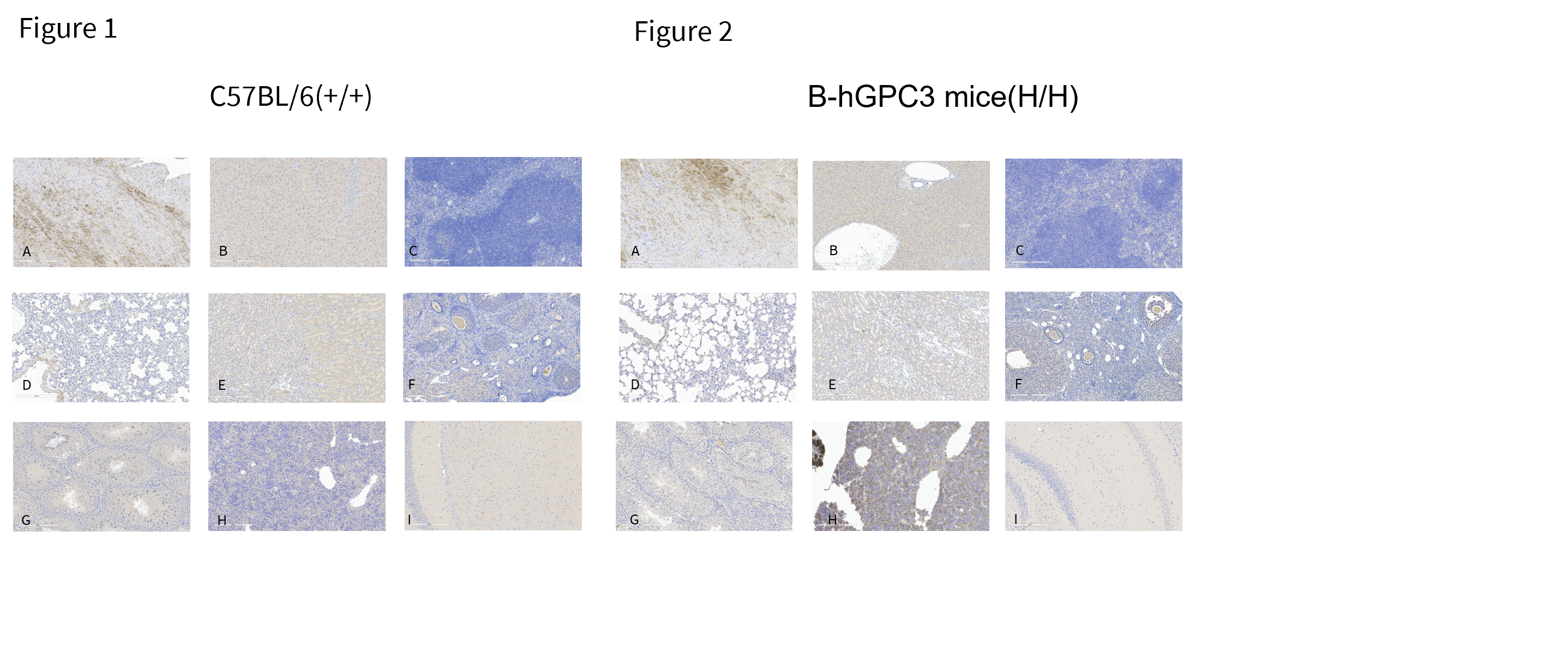
Immunohistochemical (IHC) analysis of GPC3 protein expression in C57BL/6 wild-type mice and B-hGPC3 mice. Nine major tissues were collected from C57BL/6 mice and homozygous B-hGPC3 mice (female/male, 8-week-old), and analyzed by IHC with anti-GPC3 antibody (GC33-hIgG1 analog, in house). Human GPC3 was detected in the fetal liver (H) of homozygous B-hGPC3 mice (Figure 2). There was no detectable expression of hGPC3 in various tissues of C57BL/6 (Figure 1). A summary of the expression levels in various tissues of C57BL/6 and B-hGPC3 is presented in Table 1.
Note: In both C57BL/6 and B-hGPC3 mice, staining can be observed in the heart. however, since the positive tissue (fetal liver) specifically recognizes hGPC3 with the antibody, it can be inferred that the staining in the heart is non-specific.

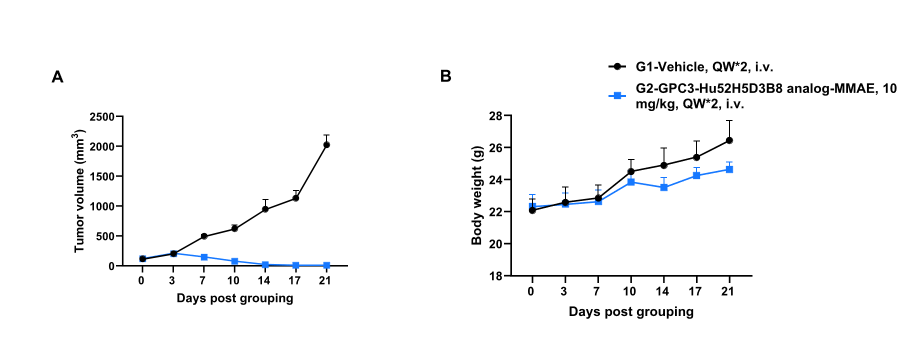
Establishment of a MC38 model in B-hGPC3 mice and in vivo efficacy study of anti-GPC3 ADC (MRG006A analog-MMAE, in-house). Murine colon cancer B-hGPC3 MC38 plus (Cat# 322039) were subcutaneously implanted into homozygous B-hGPC3 mice (female, 7-week-old, n=6). Mice were grouped when tumor volume reached approximately 100 mm3, at which time they were intravenously injected with GPC3-Hu52H5D3B8 analog-MMAE (ADC) indicated in panel. Values are expressed as mean ± SEM.
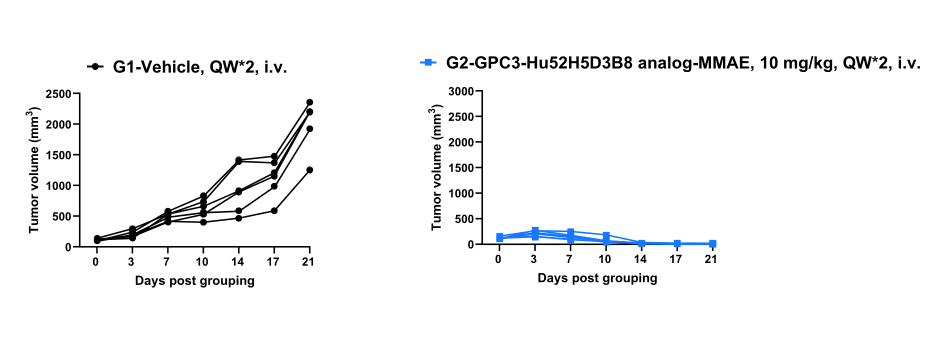
In vivo efficacy of anti-human GPC3 ADC-individualtumor growth curves.
