
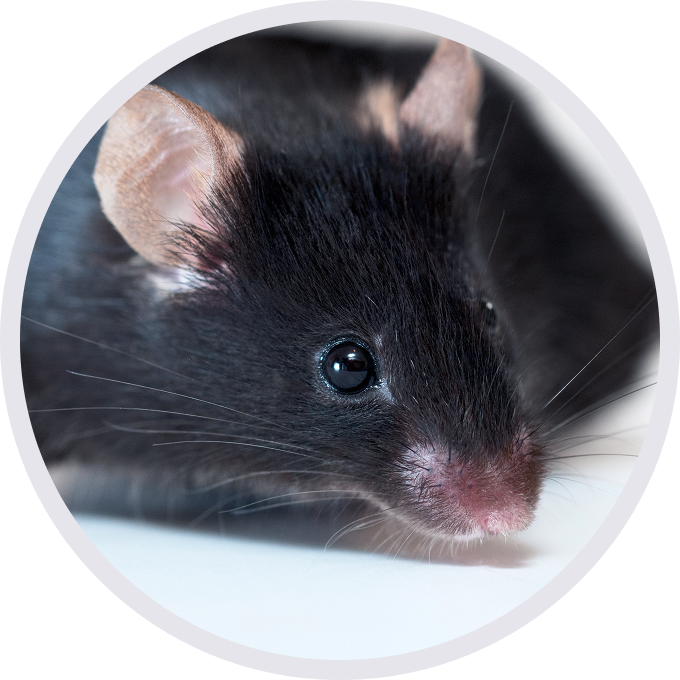

RAGE (receptor for advanced glycation end products) is expressed in more than 300 cell types, including lung tissue, and is involved in signaling pathways associated with proliferation, inflammation, and tumor progression. The AGE–RAGE axis activates intracellular signaling cascades that promote ROS generation and NF-κB activation, contributing to chronic degenerative and neoplastic diseases.
In RAGE humanized mice (B-hRAGE mice plus), exons 1–11 including the 3’UTR of the mouse Rage gene, which encode the full-length protein, were replaced by the corresponding human RAGE exons 1–11 including the human 3’UTR. This design enables expression of human RAGE in place of the endogenous mouse protein.
Validation data demonstrate species-specific expression of RAGE in this model. Mouse Rage mRNA and protein are detectable only in wild-type C57BL/6 mice, whereas human RAGE mRNA and protein are exclusively detectable in homozygous RAGE humanized mice (B-hRAGE mice plus). These findings support the utility of this model for in vivo pharmacological evaluation of human RAGE-targeted therapeutics.
Key Advantages
Validation
Applications
This product is used for pharmacodynamics and safety evaluation of drugs for various chronic degenerative diseases and neoplastic diseases.

RAGE

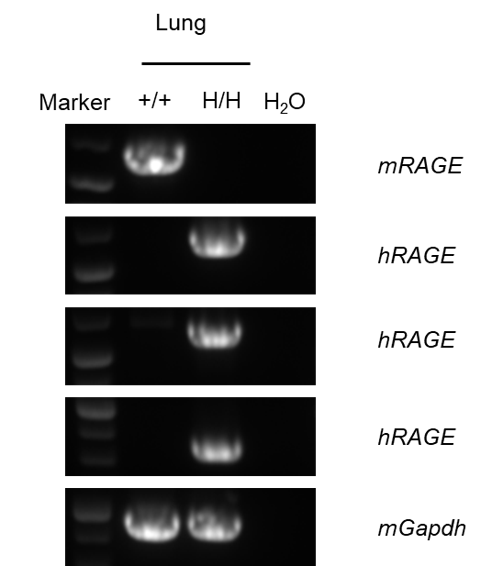
Strain-specific analysis of mouse and human RAGE mRNA expression in wild-type C57BL/6 mice and RAGE humanized mice plus by RT-PCR. Total RNA was isolated from lung tissues of wild-type C57BL/6 mice (+/+) and homozygous RAGE humanized mice plus (H/H). cDNA was synthesized by reverse transcription, followed by PCR amplification using mouse- or human-specific RAGE primers. Mouse RAGE mRNA was detected exclusively in wild-type C57BL/6 mice, whereas human RAGE mRNA was detected exclusively in homozygous RAGE humanized mice plus and was not detected in wild-type C57BL/6 mice.
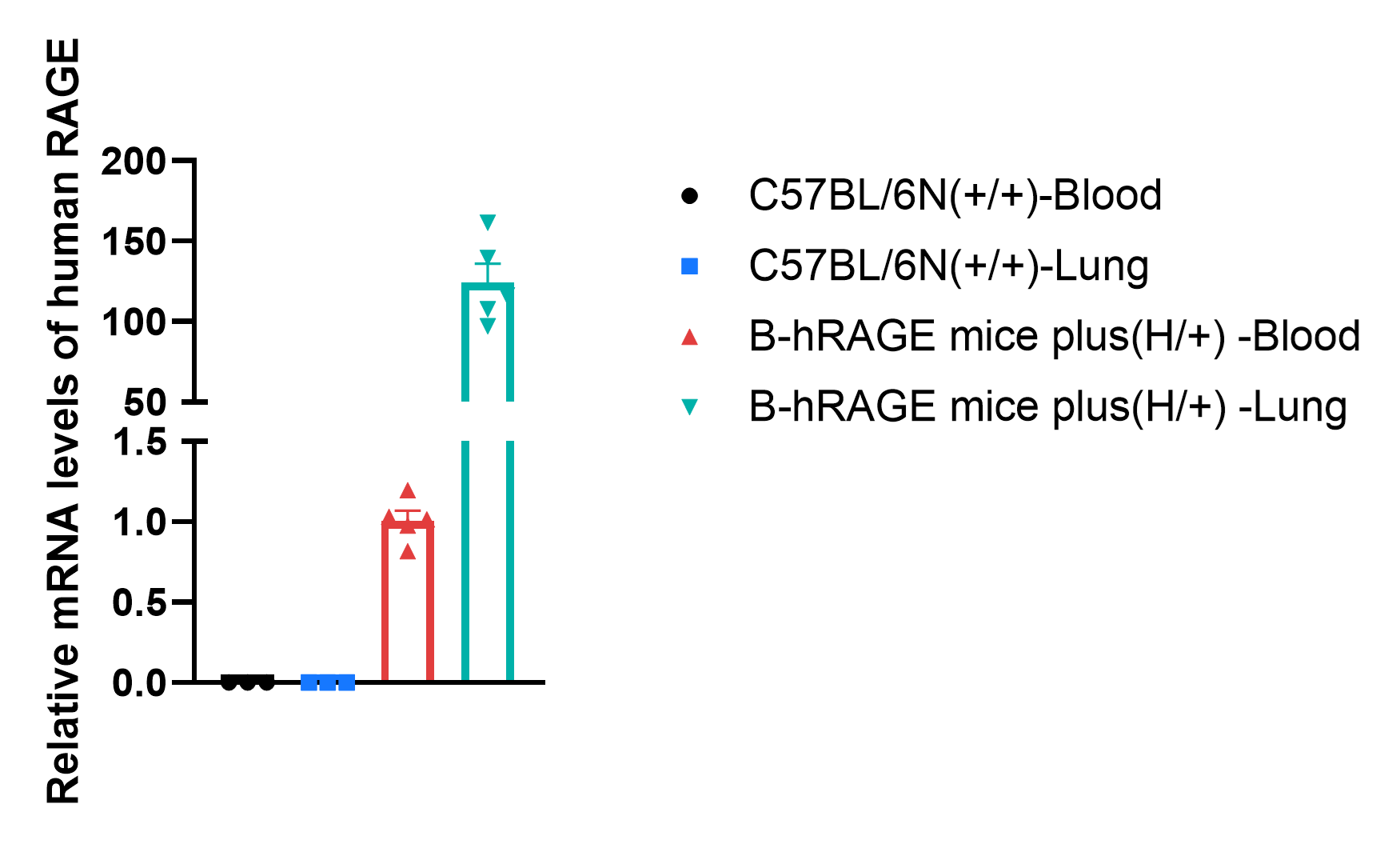
Strain-specific analysis of RAGE mRNA expression in lung and blood tissues of wild-type C57BL/6N mice and heterozygous RAGE humanized mice plus by RT-qPCR. Total RNA was isolated from lung tissues and blood samples of wild-type C57BL/6N mice (+/+, 9 weeks old, n = 3) and heterozygous RAGE humanized mice plus (9 weeks old, n = 5). cDNA was synthesized by reverse transcription, followed by quantitative real-time PCR (RT-qPCR) using RAGE-specific primers and Applied Biosystems SYBR reagents. RAGE mRNA was detected in RAGE humanized mice plus but was not detected in wild-type C57BL/6N mice. RAGE mRNA expression levels were higher in lung tissues than in blood samples from RAGE humanized mice plus.
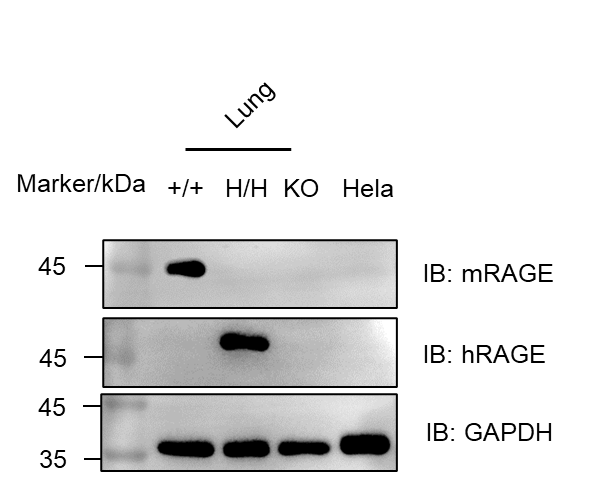
Western blot analysis of RAGE protein expression in homozygous RAGE humanized mice plus. Lung tissue lysates were collected from wild-type C57BL/6N mice (+/+) and homozygous RAGE humanized mice plus (H/H), and then analyzed by western blot with species-specific anti-RAGE antibody (Mouse/Rat RAGE Antibody, R&D, MAB1179-SP; Human RAGE Antibody, R&D, MAB11451-SP). 40 μg total proteins were loaded for western blotting analysis. RAGE was detected in lung.

Strain-specific analysis of human RAGE protein expression in serum, BALF, and lung of wild-type C57BL/6N mice and RAGE humanized mice plus by ELISA. Serum, bronchoalveolar lavage fluid (BALF), and lung tissues were collected from wild-type C57BL/6N mice (+/+) and homozygous RAGE humanized mice plus (H/H) (female, 8 weeks old, n = 3). Human RAGE protein expression levels were measured by ELISA using a human RAGE ELISA kit (R&D Systems, DRG00). Human RAGE was detected exclusively in homozygous RAGE humanized mice plus and was not detected in wild-type C57BL/6N mice. Values are expressed as mean ± SEM.

Strain-specific analysis of human RAGE protein expression in serum, BALF, and lung of wild-type C57BL/6N mice and RAGE humanized mice plus by ELISA. Serum, bronchoalveolar lavage fluid (BALF), and lung tissues were collected from wild-type C57BL/6N mice (+/+) and homozygous RAGE humanized mice plus (H/H) (female, 15 weeks old, n = 3). Human RAGE protein expression levels were measured by ELISA using a human RAGE ELISA kit (R&D Systems, DRG00). Human RAGE was detected exclusively in homozygous RAGE humanized mice plus and was not detected in wild-type C57BL/6N mice. Values are expressed as mean ± SEM.

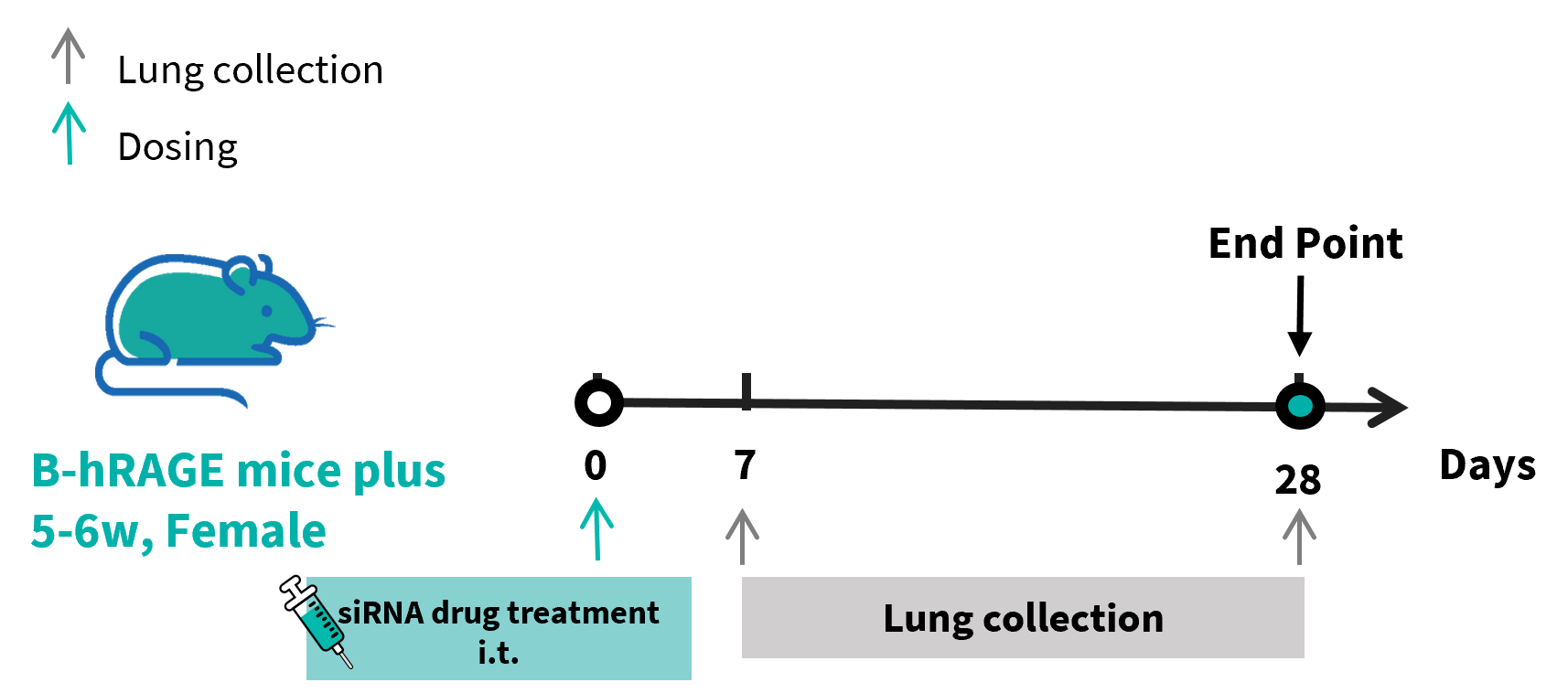
Inhibitory efficacy of human RAGE-targeting nucleic acid drugs in homozygous RAGE humanized mice plus. Homozygous RAGE humanized mice plus (female, 5–6 weeks old) were randomly divided into six groups. Mice received either a client-provided human RAGE-targeting nucleic acid therapeutic formulated in an aqueous PBS solution or PBS alone. Mice were euthanized on days 7 and 28.
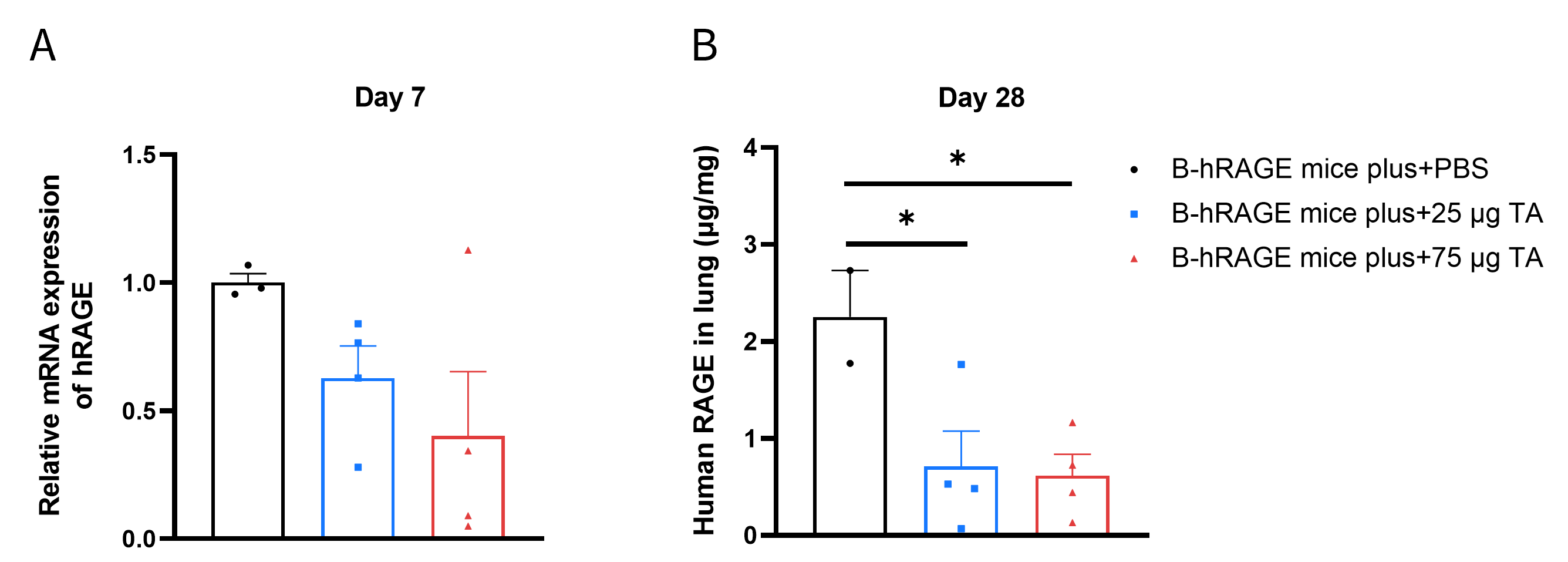
Inhibitory efficacy of human RAGE-targeting nucleic acid drugs in homozygous RAGE humanized mice plus. (A) Changes in RAGE mRNA expression levels in lung tissues on day 7 after treatment compared with pretreatment levels. (B) Changes in RAGE protein expression levels in lung tissues on day 28 after treatment. Values are expressed as mean ± SEM. Statistical significance was determined using one-way ANOVA. *p < 0.05.