Description
GLP2R MOA: A Crucial Role in Intestinal Growth and Nutrient Absorption
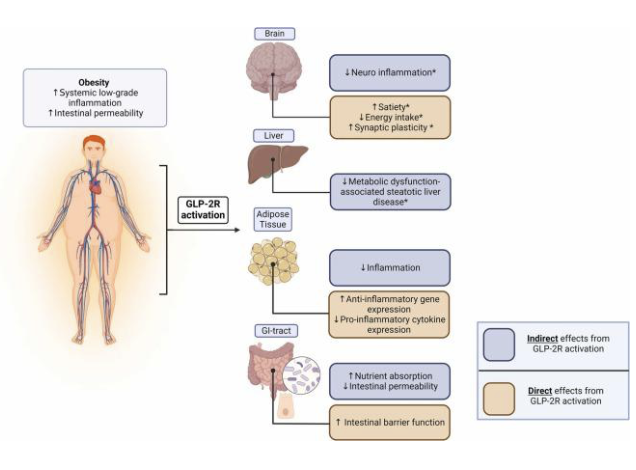
GLP2R: A Key Regulator of Intestinal Growth, Barrier Function, and Nutrient Absorption
- Gene Information: GLP2R encodes the glucagon-like peptide-2 receptor, a class B G protein-coupled receptor (GPCR). It is activated by glucagon-like peptide-2 (GLP-2), a 33-amino-acid peptide derived from proglucagon.
- Protein Expression: GLP2R is predominantly expressed in the gastrointestinal tract, particularly in intestinal subepithelial myofibroblasts, enteroendocrine cells, and enteric neurons.
- Signaling Pathway: Upon GLP-2 binding, GLP2R activates Gαs-mediated signaling, leading to increased intracellular cAMP and activation of protein kinase A (PKA). GLP2R can also recruit β-arrestins and undergo receptor internalization. Downstream signaling involves multiple pathways, including PI3K/AKT and MAPK/ERK.
- Therapeutic Agonists: GLP2R represents an important therapeutic target for intestinal diseases, particularly short bowel syndrome (SBS) and intestinal failure. GLP-2 analogs, such as teduglutide, have been developed to enhance intestinal mucosal growth, improve nutrient and fluid absorption, and reduce dependence on parenteral nutrition.
Targeting Strategy
GLP2R
- The exons 1-13 of mouse Glp2r gene that encode the whole molecule (ATG to STOP codon), including the 3’UTR were replaced by human region in B-hGLP2R mice.
- The human GLP2R expression is driven by the mouse Glp2r promoter.
- The mouse Glp2r gene transcription and translation will be disrupted.
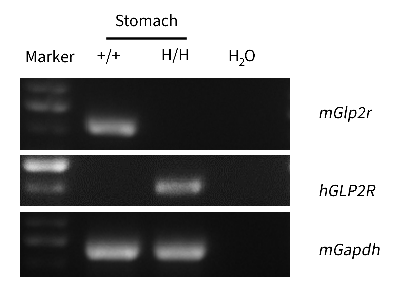
mRNA Expression Analysis of Humanized B-hGLP2R Mice
- Mouse Glp2r mRNA was only detectable in wild-type mice.
- Human GLP2R mRNA was exclusively detectable in homozygous humanized B-hGLP2R mice but not in wild-type mice.
Strain specific analysis of GLP2R mRNA expression in wild-type C57BL/6JNifdc and humanized B-hGLP2R mice by RT-PCR. Stomach RNA were isolated from wild-type C57BL/6JNifdc (+/+) and homozygous humanized B-hGLP2R mice (H/H), then cDNA libraries were synthesized by reverse transcription, followed by PCR with mouse and human GLP2R primers. Mouse Glp2r mRNA was exclusively detectable in C57BL/6JNifdc. Human GLP2R mRNA was exclusively detectable in homozygous humanized B-hGLP2R mice.
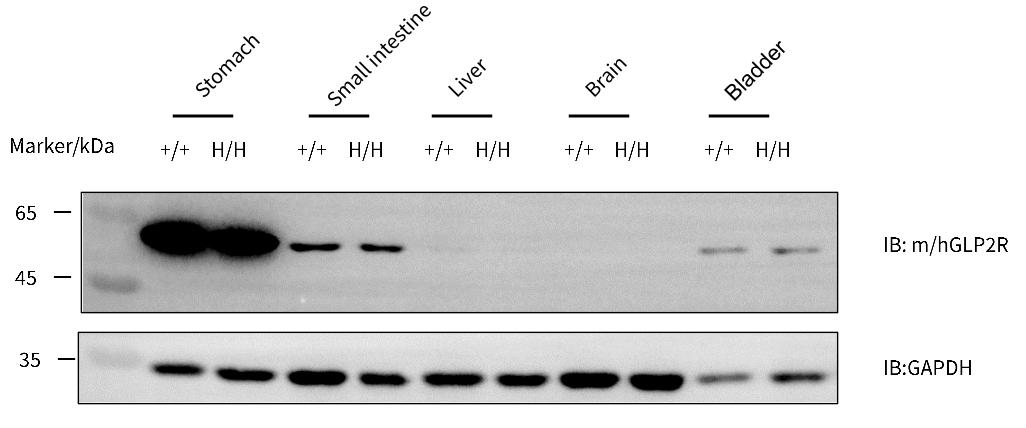
Protein Expression by Western Blot of Humanized B-hGLP2R Mice
- GLP2R was detected both in wild-type mice and homozygous humanized B-hGLP2R mice by western blot.
- The antibody cross-recognized both human and mouse GLP2R.
Western blot analysis of GLP2R protein expression in homozygous Humanized B-hGLP2R mice. Various tissue lysates were collected from wild-type C57BL/6JNifdc mice (+/+) and homozygous Humanized B-hGLP2R mice (H/H), and then analyzed by western blot with anti-GLP2R antibody (Abcam, ab181030). 40 μg total proteins were loaded for western blot analysis. GLP2R was detected in the stomach, small intestine, and bladder of wild-type mice and homozygous Humanized B-hGLP2R mice, as the antibody cross-recognized both human and mouse GLP2R.
* When publishing results obtained using this animal model, please acknowledge the source as follows: The animal model [B-hGLP2R mice] (Cat# 111322) was purchased from Biocytogen.