Description
GLP2R MOA: A Crucial Role in Intestinal Growth and Nutrient Absorption
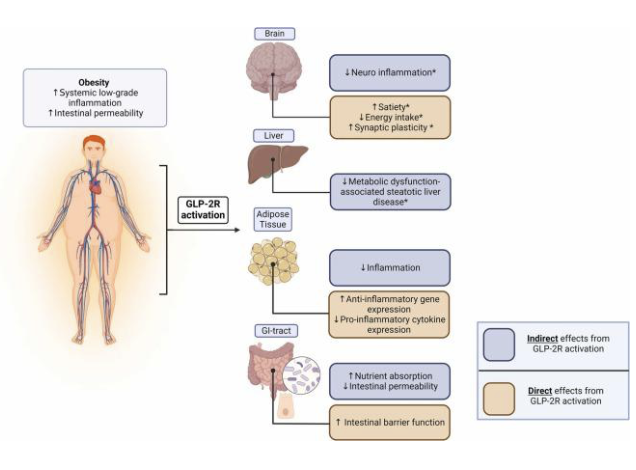
GLP2R: A Key Regulator of Intestinal Growth, Barrier Function, and Nutrient Absorption
- Gene Information: GLP2R encodes the glucagon-like peptide-2 receptor, a class B G protein-coupled receptor (GPCR). It is activated by glucagon-like peptide-2 (GLP-2), a 33-amino-acid peptide derived from proglucagon.
- Protein Expression: GLP2R is predominantly expressed in the gastrointestinal tract, particularly in intestinal subepithelial myofibroblasts, enteroendocrine cells, and enteric neurons.
- Signaling Pathway: Upon GLP-2 binding, GLP2R activates Gαs-mediated signaling, leading to increased intracellular cAMP and activation of protein kinase A (PKA). GLP2R can also recruit β-arrestins and undergo receptor internalization. Downstream signaling involves multiple pathways, including PI3K/AKT and MAPK/ERK.
- Therapeutic Agonists: GLP2R represents an important therapeutic target for intestinal diseases, particularly short bowel syndrome (SBS) and intestinal failure. GLP-2 analogs, such as teduglutide, have been developed to enhance intestinal mucosal growth, improve nutrient and fluid absorption, and reduce dependence on parenteral nutrition.
Humanized B-hGLP2R Mice: Gene Targeting Strategy
GLP2R
- The exons 1-13 of mouse Glp2r gene that encode the whole molecule (ATG to STOP codon), including the 3’UTR were replaced by human region in B-hGLP2R mice.
- The human GLP2R expression is driven by the mouse Glp2r promoter.
- The mouse Glp2r gene transcription and translation will be disrupted.
* When publishing results obtained using this animal model, please acknowledge the source as follows: The animal model [B-hGLP2R mice] (Cat# 111322) was purchased from Biocytogen.