

C57BL/6-Ntcptm1(NTCP)Bcgen/Bcgen • 113353

NTCP: Mutations in NTCP disrupt bile acid transport and confer susceptibility to HBV/HDV hepatic infection.

NTCP

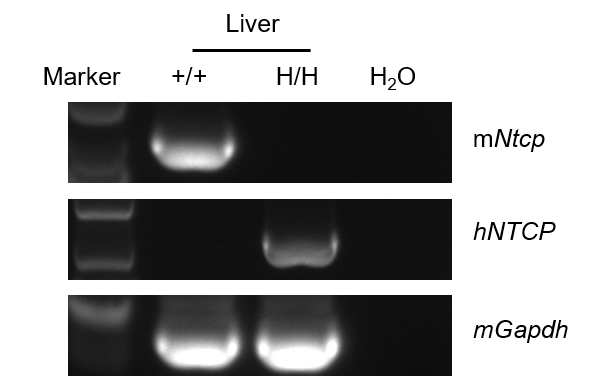
Strain specific analysis of NTCP mRNA expression in wild-type C57BL/6JNifdc and homozygous B-hNTCP mice by RT-PCR. Liver RNA were isolated from wild-type C57BL/6JNifdc (+/+) and homozygous B-hNTCP mice (H/H), then cDNA libraries were synthesized by reverse transcription, followed by PCR with mouse or human NTCP primers. Mouse Ntcp mRNA was only detectable in wild-type mice. Human NTCP mRNA was exclusively detectable in homozygous B-hNTCP mice but not in wild-type mice. Human sequences were confirmed via Sanger sequencing.

Sex specific analysis of NTCP mRNA expression in heterozygous male and female B-hNTCP mice by RT-qPCR. Liver total RNA was isolated from 12-week-old heterozygous male and female B-hNTCP mice (H/+, n=5 for males, and n=3 for females), then cDNA libraries were synthesized by reverse transcription, followed by qPCR with mouse or human NTCP primers. The mRNA expression levels of both endogenous mouse Ntcp and humanized human NTCP were higher in female mice compared to that in male mice. Values are expressed as mean ± SEM.
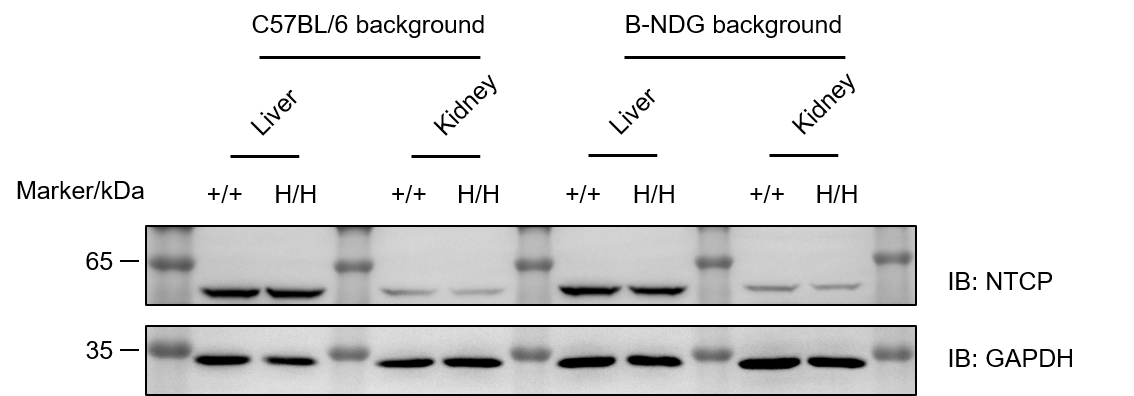
Western blot analysis of NTCP protein expression in homozygous B-hNTCP mice and B-NDG hNTCP mice. Various tissue lysates were collected from wild-type C57BL/6JNifdc mice (+/+), B-NDG mice (+/+), homozygous B-hNTCP mice (H/H) and B-NDG hNTCP mice (H/H), and then analyzed by western blot with cross reactive anti-NTCP antibody (Abcam, ab131084). 40 μg total proteins were loaded for western blot analysis. NTCP was detected in liver, but weakly detected in kidney of both homozygous mice and wild-type mice.

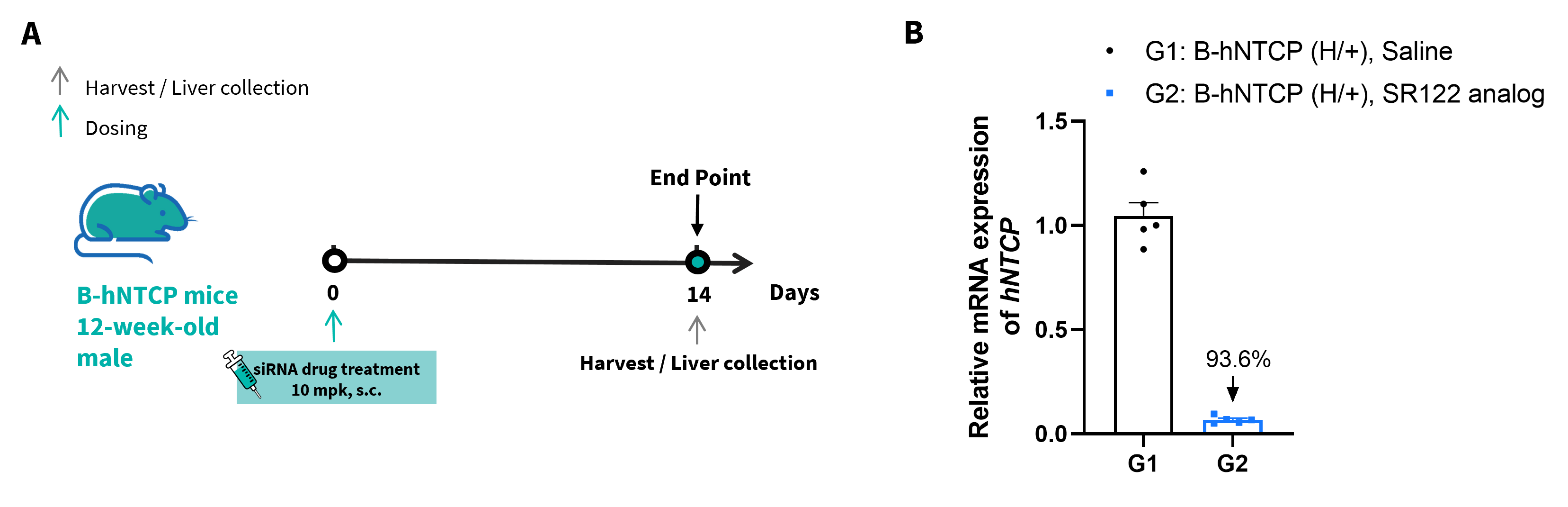
The inhibitory efficiency of the NTCP-targeted small nucleic acid drug in heterozygous B-hNTCP mice. B-hNTCP mice were randomly divided into 2 groups (n=5, 12 weeks old, male). The human NTCP-targeted nucleic acid drug (SR122 analog, synthesized according to patents) and saline were administered to the mice individually. The nucleic acid drug was administered in the form of saline aqueous solution. The mice were sacrificed on day 14. (A) The schematic diagram of experimental processing. (B) The expression of human NTCP mRNA in liver. The human NTCP mRNA in the treatment group were significantly reduced compared to the control group. Values are expressed as mean ± SEM.