C57BL/6JNifdc-Cacng1tm1Bcgen/Bcgen • 114401


Gene targeting strategy for B-Cacng1 KO mice. The genome sequences between exon 1 and exon 4 were depleted in B-Cacng1 KO mice, leading to the disruption of mouse Cacng1 gene.

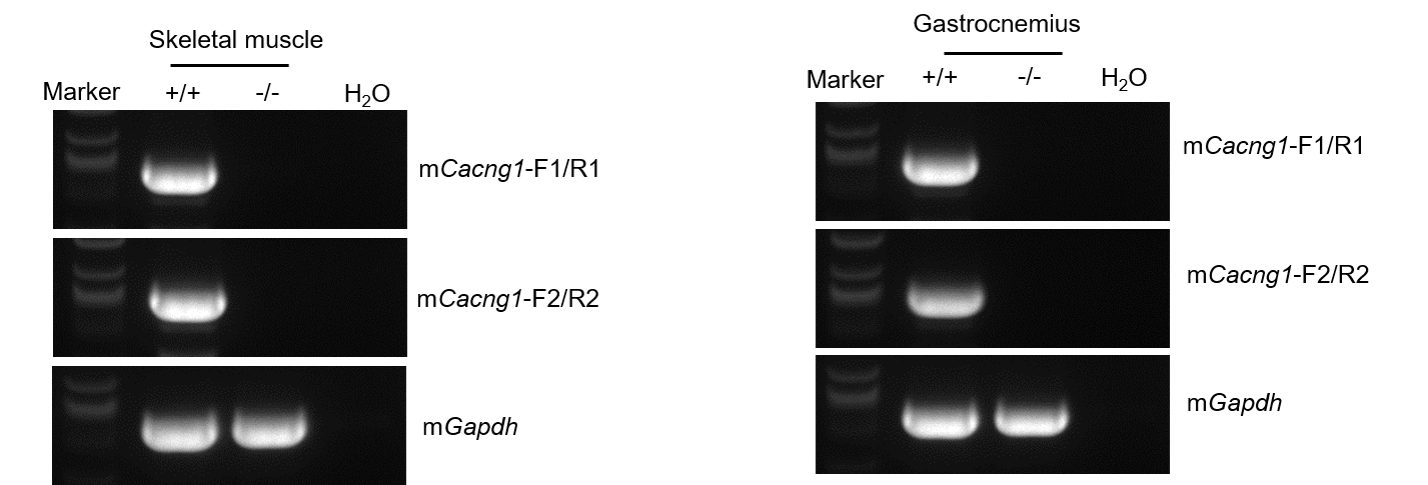
Strain specific analysis of Cacng1 mRNA expression in wild-type C57BL/6JNifdc mice and B-CACNG1 KO mice by RT-PCR. Skeletal muscle and gastrocnemius RNA were isolated from wild-type C57BL/6JNifdc mice (+/+) and homozygous B-CACNG1 KO mice (-/-), then cDNA libraries were synthesized by reverse transcription, followed by PCR with two pairs of mouse Cacng1 primers. Mouse Cacng1 mRNA was only detectable in wild-type mice, but not in B-Cacng1 KO mice.

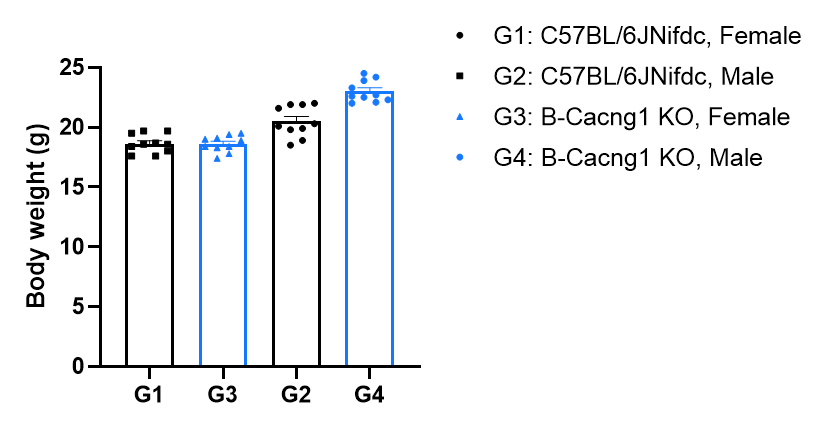
Body weight of wild-type C57BL/6JNifdc and homozygous B-Cacng1 KO mice. Body weights were recorded for 6-week-old wild-type C57BL/6JNifdc mice and homozygous B-Cacng1 KO mice (n=10 per sex).
Values are expressed as mean ± SEM.
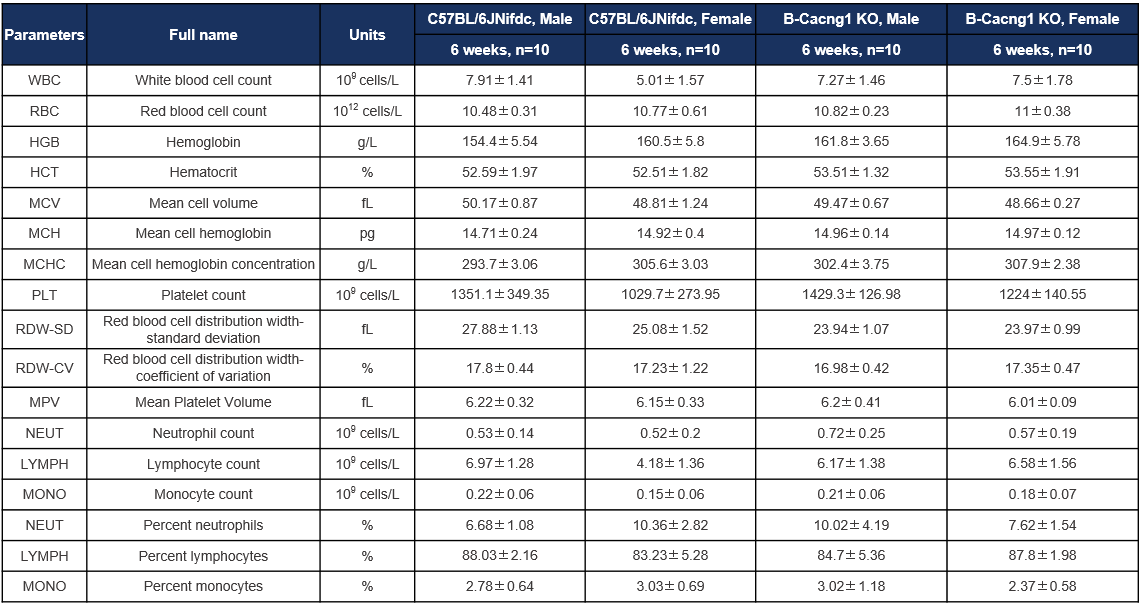
Complete blood count (CBC) of B-Cacng1 KO mice. Values are expressed as mean ± SD.
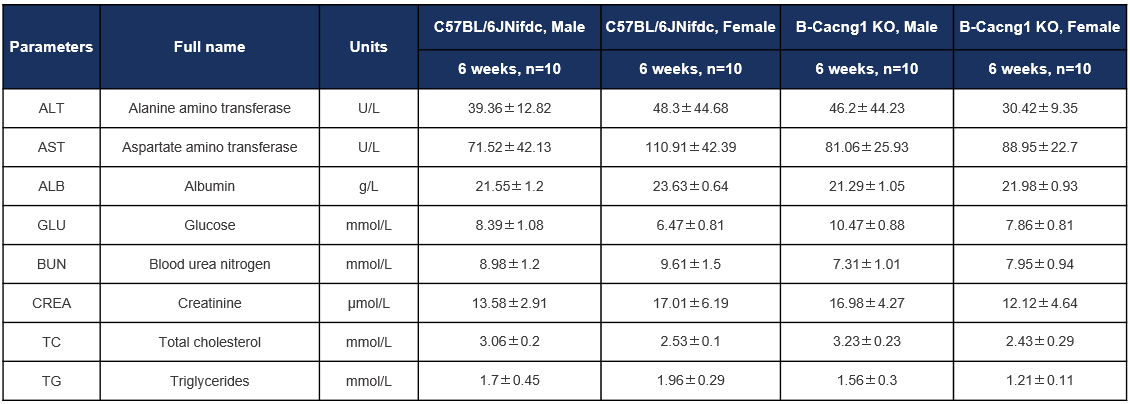
Biochemical test of B-Cacng1 KO mice. Values are expressed as mean ± SD.
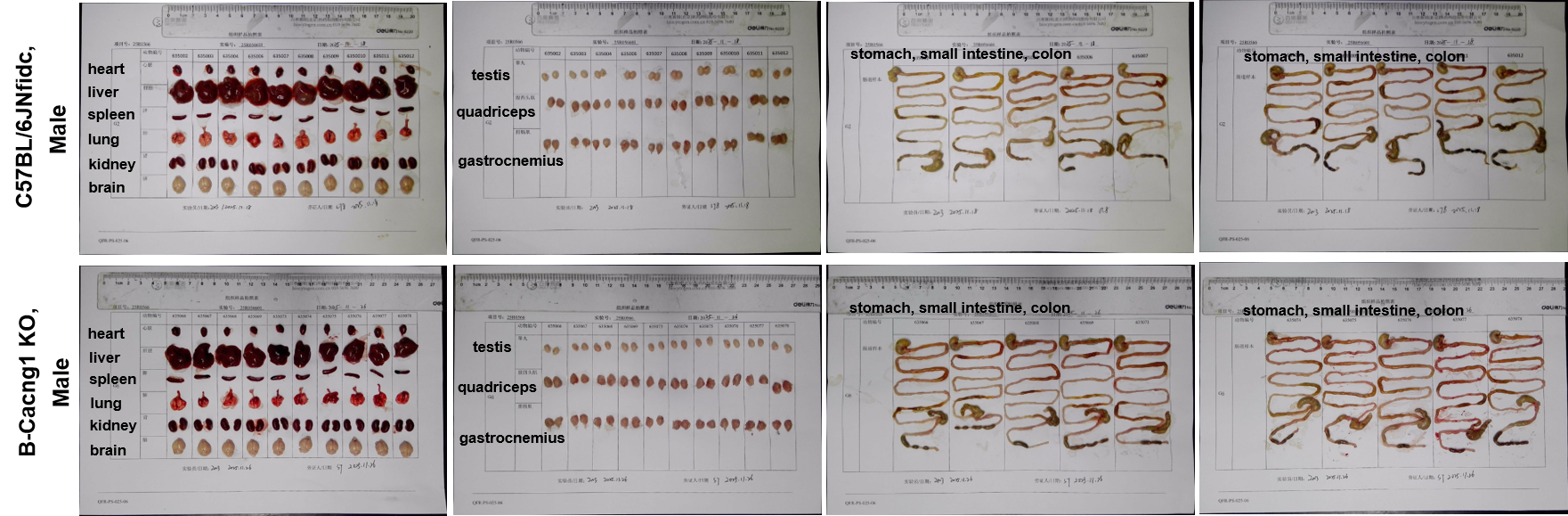
The organs of male B-Cacng1 KO mice (6-week-old, n=10).
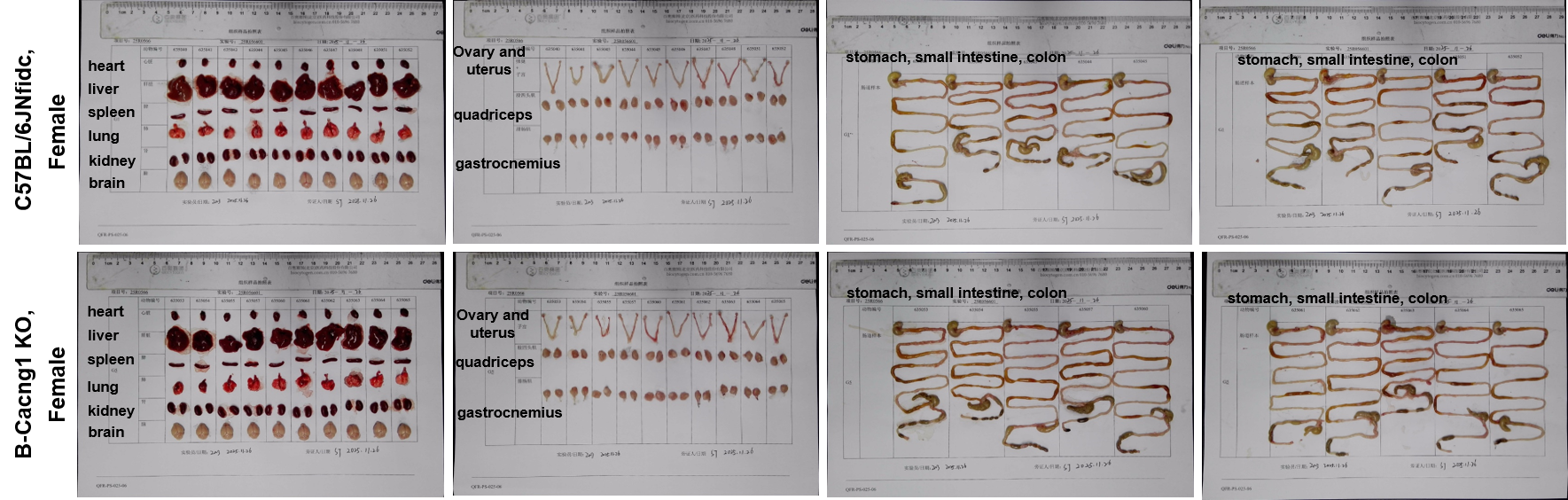
The organs of female B-Cacng1 KO (6-week-old, n=10).
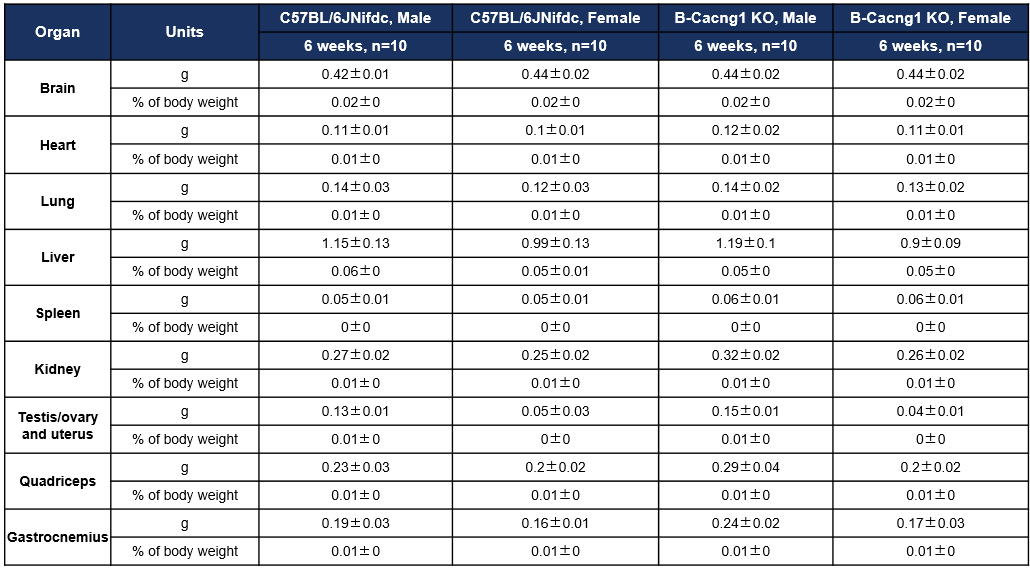
Average weight of the main organs of B-Cacng1 KO mice. Values are expressed as mean ± SD.
% of body weight means the ratio of organ weight to body weight.

Histopathological analysis of organs in B-Cacng1 KO mice. The main organs of B-Cacng1 KO mice were isolated at 6 weeks of age and analyzed with H&E staining (male, n=10; female, n=10). Results showed that no obvious abnormalities were found in all of the organs (brain, heart, lung, liver, spleen, stomach, small intestine, large intestine, quadriceps femoris, gastrocnemius, kidney, ovary and testis). Scale bar: 50 μm.