
Background
Cereblon (CRBN) is a substrate receptor of the CRL4^CRBN E3 ubiquitin ligase complex, which consists of CRBN, DNA damage-binding protein 1 (DDB1), Cullin 4 (CUL4), and regulator of Cullins 1 (ROC1). CRBN plays a critical role in the ubiquitin-proteasome system by recognizing specific substrates and mediating their ubiquitination and subsequent proteasomal degradation. Due to its ability to recruit neosubstrates in the presence of CRBN-binding compounds, CRBN has emerged as one of the most widely utilized E3 ligases for the development of immunomodulatory drugs (IMiDs), cereblon E3 ligase modulators (CELMoDs), molecular glue degraders, and proteolysis-targeting chimeras (PROTACs).
Methods
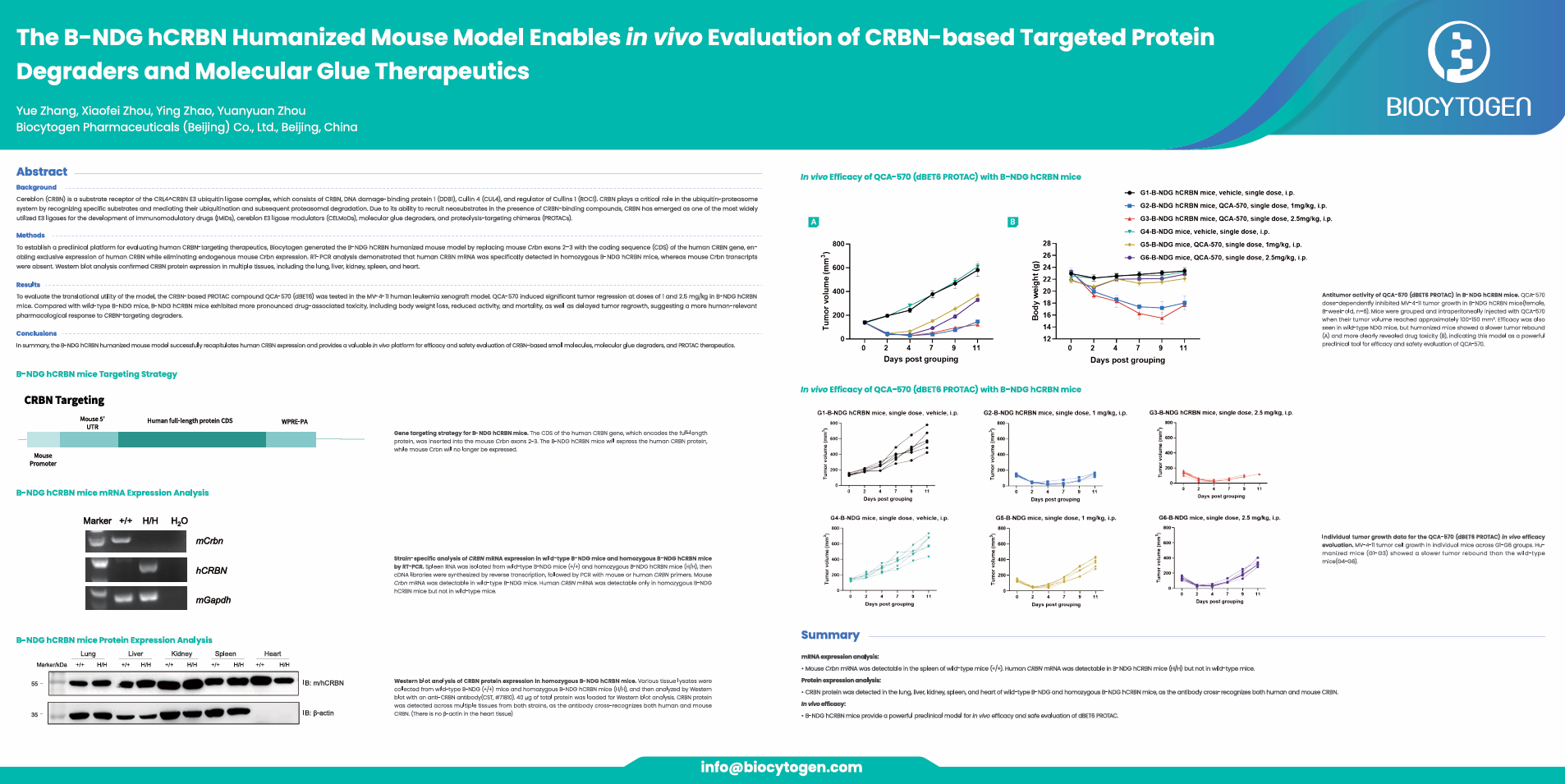
To establish a preclinical platform for evaluating human CRBN-targeting therapeutics, Biocytogen generated the B-NDG hCRBN humanized mouse model by replacing mouse Crbn exons 2-3 with the coding sequence (CDS) of the human CRBN gene, enabling exclusive expression of human CRBN while eliminating endogenous mouse Crbn expression. RT-PCR analysis demonstrated that human CRBN mRNA was specifically detected in homozygous B-NDG hCRBN mice, whereas mouse Crbn transcripts were absent. Western blot analysis confirmed CRBN protein expression in multiple tissues, including the lung, liver, kidney, spleen, and heart.
Results
To evaluate the translational utility of the model, the CRBN-based PROTAC compound QCA-570 (dBET6) was tested in the MV-4-11 human leukemia xenograft model. QCA-570 induced significant tumor regression at doses of 1 and 2.5 mg/kg in B-NDG hCRBN mice. Compared with wild-type B-NDG mice, B-NDG hCRBN mice exhibited more pronounced drug-associated toxicity, including body weight loss, reduced activity, and mortality, as well as delayed tumor regrowth, suggesting a more human-relevant pharmacological response to CRBN-targeting degraders.
Conclusions
In summary, the B-NDG hCRBN humanized mouse model successfully recapitulates human CRBN expression and provides a valuable in vivo platform for efficacy and safety evaluation of CRBN-based small molecules, molecular glue degraders, and PROTAC therapeutics.